
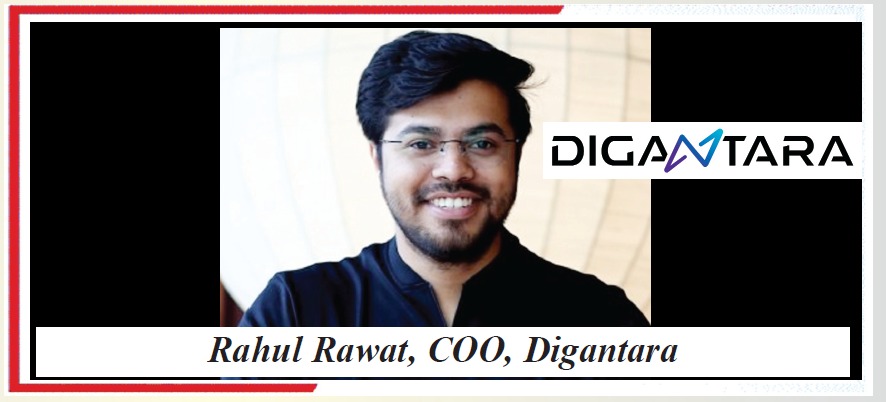
Business Remedies | Rajshree Upadhyaya | July 22,2025 | In an era where space is no longer the final frontier but a rapidly expanding commercial domain, one young Indian entrepreneur is making waves on a global scale. Rahul Rawat, the co-founder of Digantara, is redefining the space-tech landscape with a bold mission: to make Earth’s orbit safer and sustainable for future generations. At just 26, Rahul’s vision, grit, and innovation are positioning India as a serious contender in the billion-dollar space surveillance and traffic management industry.
From Small Town to Space Start-Up
Born and raised in Pauri, Uttarakhand, Rahul Rawat’s fascination with space began early. Watching satellite launches on television and reading about India’s growing prowess in space exploration sowed the seeds of curiosity. However, it was during his engineering days at Lovely Professional University that this curiosity matured into ambition. Along with his co-founders Anirudh Sharma and Tanveer Ahmed, Rahul identified a growing global problem that few were addressing – space debris and the risks it poses to satellites and future missions. Today, there are over 30,000 trackable pieces of debris orbiting Earth, and millions of smaller fragments threaten to damage active satellites and critical infrastructure. The infamous “Kessler Syndrome” – a scenario where space debris collisions create a cascade effect, rendering Earth’s orbit unusable – is no longer just science fiction. Recognizing this urgent challenge, Rahul and his team decided to act.
The Birth of Digantara
In 2018, the trio launched Digantara, India’s first private space situational awareness (SSA) company. The Bengaluru-based start-up aims to provide real-time data and predictive analytics on space traffic, debris, and satellite health. Simply put, Digantara is working to build an “Air Traffic Control for space” – a necessary system as human activity in space multiplies. Digantara’s approach is unique. Instead of relying solely on ground-based radars and telescopes, the company is deploying its own space-based sensors through small satellites. This multi-layered observation capability provides highly accurate data on even the tiniest debris fragments, something traditional systems often miss.
From Idea to Execution
Rahul’s leadership has been pivotal in transforming a university project into a venture that has captured the attention of ISRO, global space agencies, and private players alike. In 2021, Digantara was selected for funding under the Indian government’s IN-SPACe initiative, which aims to promote private sector participation in space. This recognition gave the start-up both credibility and critical financial backing. Under Rahul’s strategic guidance, Digantara is not just limited to tracking space debris. The company is developing a comprehensive Space-Mission Assurance Platform (Space-MAP) – a platform that offers risk assessment, collision alerts, and optimized flight paths for satellites. This is crucial as more private companies launch satellites for communication, navigation, and Earth observation, leading to unprecedented orbital congestion.
Recognition and Challenges
Rahul Rawat’s entrepreneurial journey has not been without challenges. Operating in a domain that requires heavy capital, deep technical expertise, and navigating complex regulatory frameworks is daunting. Yet, Rahul’s clarity of purpose, combined with his team’s technical brilliance, has allowed Digantara to steadily grow.
Their efforts have earned them international attention. Digantara was recognized among the top emerging space-tech start-ups globally, and Rahul himself has been featured in various innovation and entrepreneurship forums as a promising leader in NewSpace – the term for private space industry players.
Building for the Future
Rahul’s ambition doesn’t stop at tracking debris. His broader vision is to position India as a global hub for space situational awareness and traffic management. With space commercialization booming – from Starlink’s satellite internet constellation to ambitious Mars missions – the need for effective space governance and safety protocols is urgent. Digantara’s upcoming projects include launching more proprietary satellites to enhance their tracking network and collaborating with international agencies to create unified global space safety standards.
The Indian Space-Tech Renaissance
Rahul Rawat represents the new face of India’s space-tech renaissance – driven by private innovation, youthful energy, and a global mindset. In a country traditionally dominated by state-led space missions, entrepreneurs like Rahul are breaking barriers, making space not just a domain for exploration but also for sustainable business and safety solutions.
As Rahul Rawat and Digantara chart their course through the cosmos, one thing is clear: the future of space is not just about reaching the stars – it’s about ensuring that the pathway to them remains clear and secure. With pioneers like Rahul leading the charge, India’s role in safeguarding the space frontier is brighter than ever.
 Written & Edited By:
Rajshree Upadhyaya