


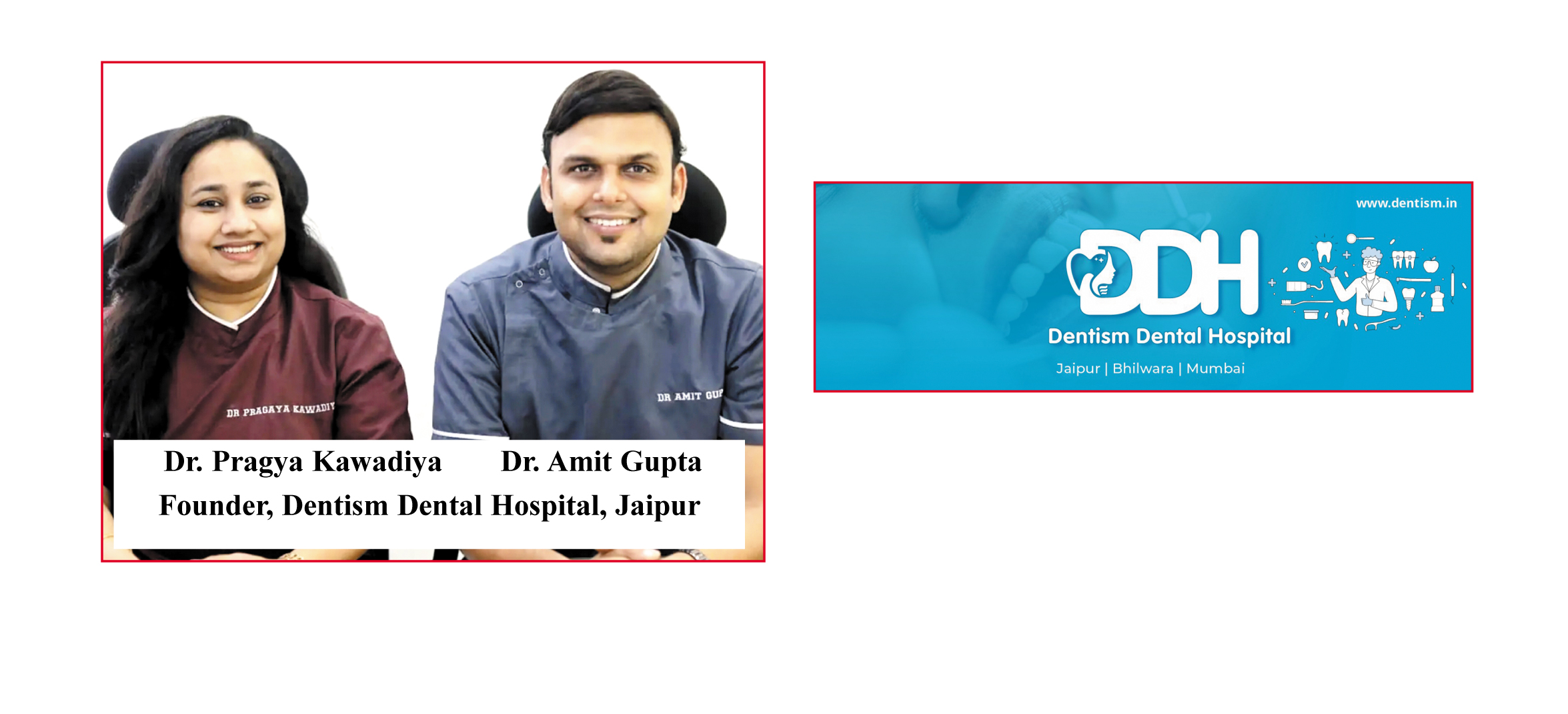
Charu Bhatia, Senior News Editor, Business Remedies, in conversation with Dr. Pragya Kawadiya, the founder of Dentism Dental Hospital, Jaipur
Dental health is increasingly being recognised as an integral part of overall well-being rather than something that needs attention only when pain or discomfort arises. With growing awareness around preventive care, smile aesthetics, digital dentistry and minimally invasive treatments, the profession has undergone a significant transformation over the past decade.
In this conversation, Dr. Pragya Kawadiya, the founder of Dentism Dental Hospital, shares her journey into Dental Sciences, the challenges of establishing a dental practice, the changing mindset of patients, the growing relevance of cosmetic dentistry and technology, and why preventive dental care should begin from childhood.
You are the founder of Dentism Dental Hospital. Please tell us about your journey so far and what inspired you to choose Dental Sciences as your career?
Answer: My inspiration for choosing dentistry actually came from a personal experience. When I was in Class 12, my mother suffered from severe dental pain, and I noticed that the dental treatment she received was not being carried out in the kind of hygienic environment I expected. That experience created my initial interest in the field and made me curious about how dental care could be improved.
I eventually took a year’s drop to prepare for the entrance examination for Dental Sciences and secured admission to Jaipur Dental College for my BDS. During my academic journey, I realised that oral health is closely connected with overall health and that dentistry is not simply about treating a painful tooth.
In 2014, I completed a certificate course in smile designing from Banaras Hindu University, followed by a course in Full Mouth Rehabilitation from Impart Education, Mumbai. I later founded Dentism Dental Hospital in Jaipur along with my husband, Dr. Amit Gupta, who is also a dentist. Today, Dentism has four branches, two in Jaipur, one in Mumbai and one in Bhilwara. The journey has been challenging but extremely fulfilling.
How has the field of dentistry changed over the past decade?
Answer: There has been a huge change in the way people perceive and approach dental health. Earlier, many patients would visit a dentist only after experiencing pain or when a dental problem had become severe. Today, awareness about preventive dental care and regular check-ups has increased considerably.
People have also become more conscious of dental aesthetics. They understand that dentistry can improve not only oral function but also the appearance of their smile and, consequently, their confidence. Treatments related to smile correction and aesthetics have therefore gained greater acceptance.
What were the major challenges you faced while establishing your own clinic in Jaipur?
Answer: One of the biggest challenges was changing the mindset of people towards dental health. At that time, awareness in Jaipur was relatively limited, and many people sought dental care only after a problem had developed.
One of the most important lessons I learnt during my studies was that prevention is better than cure. Natural teeth are always preferable to artificial substitutes, and maintaining them should be the priority.
Another challenge is the cost involved in providing quality dentistry. Advanced equipment, instruments and technology can be expensive. At the same time, personalised treatment is extremely important because every patient has different dental requirements. At Dentism, we provide a range of procedures, from tooth extraction to dental implants, while focusing on individual treatment needs.
Why are people generally fearful of visiting a dentist?
Answer: A major reason is the perception that visiting a dentist automatically means discovering a serious dental problem or undergoing a painful procedure. Unfortunately, this fear can actually worsen the situation.
When people avoid consultations because of fear, a minor problem may progress into something more complicated. Dentistry has advanced significantly, and several modern techniques allow procedures to be performed with considerably less discomfort. Patients should understand that early detection and timely treatment can often prevent the need for more complex interventions later.
What dental signs and symptoms should people never ignore?
Answer: Persistent bad breath is one sign that should not be ignored, particularly when it continues despite regular oral hygiene. If food frequently gets stuck between the teeth, it is also advisable to consult a dentist.
Similarly, if someone is able to chew comfortably only from one side of the mouth, there may be an underlying dental issue. Bleeding gums, significant tooth sensitivity and other persistent oral discomfort should also prompt a dental consultation.
Sleeping with an open mouth can contribute to oral dryness and other dental concerns, so that too deserves attention, particularly when it is persistent.
Do perfectly white teeth necessarily mean that a person has no dental problems?
Answer: Not at all. The colour of teeth is not the only indicator of dental health. Natural tooth colour varies from person to person and is influenced by several factors.
A person can have very white teeth and still have problems such as gaps, cavities, gum disease, bite-related issues or other concerns. Therefore, dental health should not be judged purely on the basis of how white someone’s teeth look.
What are some important precautions people should take to maintain their dental health?
Answer: People should pay attention to persistent acidity and discuss recurring symptoms with an appropriate healthcare professional, as acid exposure can also affect dental health.
Toothpaste selection is another area where people need to be careful. Many individuals automatically assume that Ayurvedic or medicated toothpaste is better, but not every product is suitable for everyone. Some highly abrasive formulations may cause problems with prolonged use.
Maintaining oral hygiene through regular brushing, flossing and appropriate cleaning is more important than simply choosing a toothpaste based on its label. Warm saline rinses may also provide comfort and support oral hygiene in certain situations, although they should not replace professional treatment.
How would you differentiate between general dentistry and cosmetic dentistry?
Answer: Both have different objectives, although they can sometimes overlap. General dentistry primarily deals with the diagnosis and treatment of oral health problems such as cavities, tooth pain, infections and other functional concerns.
Cosmetic dentistry focuses more on the appearance of the teeth and smile. It can address concerns such as tooth colour, spacing and the overall appearance of the smile. Options can include aligners, braces, veneers and other aesthetic procedures, depending on the individual case.
For many people, their smile is closely connected with their confidence and personality. This is one reason cosmetic dentistry has become increasingly popular.
How do you assess the role of Artificial Intelligence and technology in modern dentistry?
Answer: Technology is playing an increasingly important role in dentistry. Digital scanners, for example, can provide detailed scans of the mouth and make diagnosis and treatment planning more efficient.
Artificial Intelligence is also emerging as a supportive technology. It can assist dentists in identifying certain oral problems at an early stage and can support the diagnostic process. However, technology should complement the expertise and judgement of a trained dental professional rather than replace it.
When should regular dental check-ups begin?
Answer: Dental care should actually begin with the eruption of the first milk teeth. Parents should not assume that milk teeth do not require attention simply because they will eventually fall out.
For adults without any obvious dental problem, an annual dental examination can be a useful preventive measure. However, individuals experiencing pain, sensitivity, bleeding or any other persistent symptoms should not wait for their annual appointment and should consult a dentist earlier.
How should women take care of their dental health during pregnancy?
Answer: Pregnancy brings significant hormonal changes, and these can also influence oral health. Therefore, maintaining good oral hygiene during pregnancy is important. Brushing twice a day and maintaining proper oral hygiene should continue.
Pregnant women should also maintain a nutritious diet, including fibre-rich fruits such as apples and guavas, as appropriate. Any dental treatment during pregnancy should be planned only in consultation with both the dentist and obstetrician, particularly during the first and third trimesters and only when urgent.
What preventive measures can people adopt for better dental health?
Answer: Flossing is one of the most useful habits for maintaining oral hygiene because it helps clean areas between the teeth that a toothbrush may not reach effectively. With increasing age or depending on individual requirements, water flossers can also be considered.
Choosing the right toothpaste is important, and people should ideally seek professional advice if they have specific concerns such as sensitivity. Similarly, mouthwash should not be used indiscriminately as a substitute for brushing and flossing.
People should also understand that oral problems can sometimes manifest beyond the teeth and gums. Persistent discomfort around areas connected to the mouth should be evaluated rather than ignored.
How has your own approach to dental health changed after years of practising dentistry?
Answer: My own brushing technique has changed significantly. Earlier, I used to brush horizontally, whereas now I prefer gentle circular movements. The important lesson I learnt through dentistry is that effective cleaning does not require aggressive or forceful brushing.
Gentle and consistent oral hygiene is more beneficial than rigorous brushing. The quantity of toothpaste required is also much less than people often assume. Regular tongue cleaning, appropriate flossing, especially for people with gaps between their teeth, and maintaining overall oral hygiene are equally important.
What changes would you recommend in the curriculum of dental studies?
Answer: I believe dental education should place greater emphasis on experimental and practical learning. Theoretical knowledge is extremely important because a dentist needs a strong academic foundation to understand diseases and arrive at an appropriate diagnosis.
However, practical exposure gives students the confidence and experience required to handle real-world clinical situations. A balanced curriculum that combines strong theoretical knowledge with extensive practical learning can help produce better-prepared dental professionals.
How do you assess the role of the government in providing dental care?
Answer: Government schemes have an important role in improving access to healthcare, but dentistry has some unique challenges. Several dental procedures involve significant costs because of the equipment, materials and technology required.
Providing comprehensive, high-quality dental care under limited reimbursement structures can therefore be challenging. Greater attention to oral healthcare infrastructure and appropriate coverage for essential dental procedures could help make quality dental care more accessible.
Finally, what message would you like to give aspiring dentists?
Answer: Dentistry is a very interesting and evolving field, and I believe its relevance and demand will continue to grow. However, aspiring dentists need to remain focused, keep learning and stay authentic to the profession.