

Business Remedies | Charu Bhatia | In an era where attention spans are shrinking and user expectations are rising, the fintech sector is rapidly evolving to keep pace. Beyond security and functionality, user experience (UX) has emerged as the true differentiator. Among the most powerful UX strategies? Visual language, the smart use of design elements to build trust, simplify complex financial information, and drive engagement.
1. Minimalist
Dashboards
with Maximum Impact
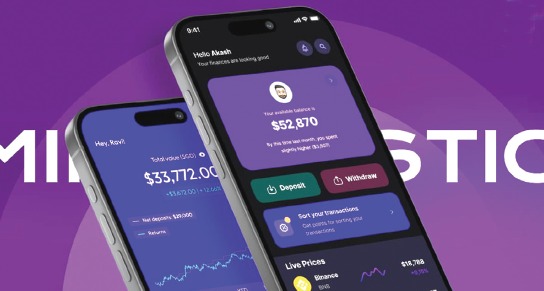
Today’s fintech users want clarity, not clutter. Leading apps are adopting minimalist dashboards that use whitespace, clean typography, and intuitive icons. Think neobanks and investment platforms that replace jargon with digestible visuals, making budgeting, spending analysis, or goal tracking feel less intimidating and more empowering.
2. Micro-Interactions
for Human-Centric
Design
Subtle animations, button feedback, loading indicators, these “micro-interactions” might seem small, but they offer big payoffs in user engagement. For example, a small animation confirming a successful payment or investment reassures the user that the system is working. This not only adds delight but also builds credibility.
3. Gamification Meets
Financial Literacy
Fintech apps are increasingly gamifying savings and investing, using badges, progress bars, or milestone animations. These visual cues transform financial tasks into rewarding experiences. Apps like CRED and Groww have tapped into this, using visual storytelling to promote consistent user action.
4. Data Visualisation:
Turning Numbers
into Narratives
Raw numbers can be overwhelming.
Smart fintech UX teams are leveraging infographics, charts, and real-time visual trackers to make data engaging. Whether it’s tracking EMI payments or comparing mutual fund returns, good visualisation helps users quickly grasp and act on financial insights.
5. Brand Colors
and Emotional Design
Fintech is no longer all blues and greys. Emerging platforms are playing with warmer palettes, softer gradients, and human illustrations to create friendlier, more relatable user environments. This emotional design helps bridge the gap between sterile finance and everyday users.
6. Dark Mode
and Accessibility
With user comfort at the forefront, dark mode is now a standard feature. More importantly, accessibility, through scalable fonts, contrast-aware colors, and screen-reader support, is becoming central to inclusive fintech design.
Visual language is more than just design, it’s a strategic tool. In fintech, where trust and clarity are paramount, using visuals to simplify, engage, and guide users is no longer optional. As competition heats up, those who master the language of design will continue to win user loyalty, and wallet share.