

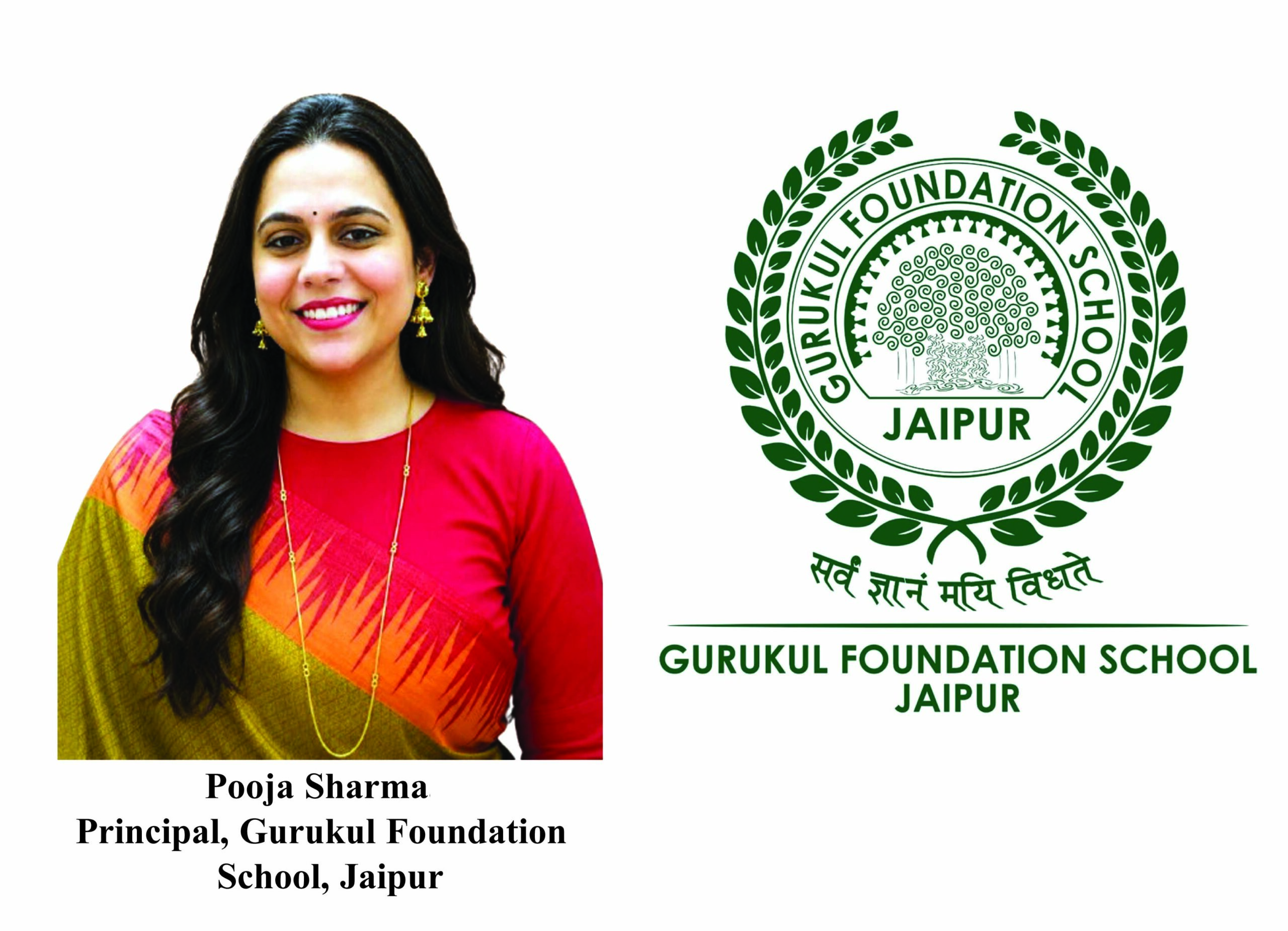
Charu Bhatia, Senior News Editor, Business Remedies in conversation with Pooja Sharma, Principal, Gurukul Foundation School, Jaipur
A child’s education is shaped by much more than academic performance. Mental well-being, healthy relationships, self-confidence, physical activity and the ability to cope with failure and pressure are equally important in helping students grow into resilient individuals. In this special conversation, Pooja Sharma, Principal, Gurukul Foundation School, Jaipur, shares her perspective on creating a safe and supportive environment for students. With an M.Sc. (Gold Medal), B.Ed., SLET and 13 years of experience in education, she discusses the role of schools and parents in managing academic pressure, developing healthy digital habits, addressing peer pressure and encouraging open communication. She also explains why education must go beyond examinations and equip children with the confidence, empathy and resilience needed to navigate life.
Q: What is the importance of paying attention to students’ mental health as well as academic achievement?
Pooja Sharma: Adolescence is one of the most crucial phases in a person’s life. It is a time of fast growth physically, emotionally, socially and intellectually. Young people are attempting to figure themselves out, develop connections and make decisions about their future.
Students have academic competitiveness, tests, career-related anxiety, peer pressure, social expectations and continual internet exposure. As instructors we tend to focus on academic success and achievement but we need to also be aware of how kids are feeling, how they are handling the challenges and whether they are confident enough to seek for help.
The well being of children cannot be the sole duty of schools. Parents, teachers and the whole school community need to work together to establish a safe and supportive environment.
Q: How can positive thinking allow pupils to cope with failure and challenges?
Pooja Sharma: Positive thinking doesn’t mean that kids should be cheerful all the time or they should overlook their concerns. It means helping people face challenges realistically, yet thinking things can better.
A low score, an attempt that did not work out or a mistake should never be a permanent tag. Students need to know that work, practice, coaching and patience can enhance performance.
Instead of simply asking “What marks did you get?”, parents and teachers might question “What did you learn?”, “What was difficult for you?” and “What can we do better next time?”. These conversations switch the focus from fear of failure to learning and growing.
As youngsters learn to accept their mistakes, learn from them and try again, over time they build resilience. This is a quality which will serve them in good stead not just in examinations but in life.
Q: How can schools and parents cope with academic pressure?
Pooja Sharma: Students need discipline, regularity in studies and a sense of responsibility. But we must not forget that each child learns in a different way and has various aptitudes.
Some youngsters will be academically gifted, while others may have outstanding gifts in sport, music, art, communication, leadership or creative pursuits. This means that parents and teachers need to have high but realistic expectations.
The message must be loud and clear, “Work hard and give your best” must not be equivalent to “Your marks define your worth.” Rather than making education a harmful competition, we can foster confidence thru effort, consistency, improvement and endurance.
Q: What role does technology play in students’ life and how can they build healthy digital habits?
Pooja Sharma: Technology has become a vital part of students life. Smartphones, social media, digital entertainment and online learning can provide beneficial opportunities but their excessive and unregulated usage can damage focus, sleep, physical activity and face-to-face conversation.
Rejecting technology should not be our answer. Instead, they have to learn to balance their digital lives. They need to know the difference between technology that helps them learn and technology that is just wasting their time.
“Reasonable boundaries on recreational screen time, protected study and sleep hours and regular breaks can develop healthy habits.” “Kids learn by example, so parents really need to practice what they preach.” The aim should be to turn technology into a valuable resource and not a continual distraction.
Q: Are sleep, physical activity and relaxation really crucial for students?
Pooja Sharma: They are really crucial. Students cannot function at their best if basic bodily demands are ignored. Good sleep, good food, regular movement and time to rest go hand in hand with concentration, energy and emotional equilibrium.
Sports, walking, cycling, yoga, stretching or simply being outdoors can be a helpful respite from long hours of studying. Students can also learn to slow down and be more in tune with their feelings with breathing exercises, meditation and mindfulness.
Therefore, along with academic learning, schools should also pay adequate significance to sports, physical education, creative activities and possibilities for relaxation.
Q: How can students be better prepared to deal with peer pressure?
Pooja Sharma: Belonging is a basic urge throughout adolescence. Friends can be a helpful influence when they inspire each other to study, take up hobbies or adopt healthy habits. But peer pressure can often make pupils make choices that aren’t good for them.
Students should learn that self-confidence also means the ability to say “no” when required. They should never feel that they have to compromise their principles or safety or well-being just to belong.
Open conversations are better than just warning students. Discuss real life scenarios and allow them to voice their opinions to build decision making abilities. Most importantly, students need to know they can go to a trusted adult even if they messed up.
Q: How important are friendships and social relationships for a child’s well-being?
Pooja Sharma: Students need meaningful relationships, a real sense of belonging. A child can be in a room filled with classmates and still be lonely or misunderstood.
Teachers may help by developing inclusive classrooms where kids feel valued and their differences are recognized. Healthy relationships can be fostered by group work, collaborative learning, sports, clubs, cultural events and creative programs.
Parents also have a crucial part to play. “Spending time with children, and taking a genuine interest in what they do, rather than always talking about schoolwork, can make a huge difference.” Sometimes a simple family talk about the day can provide a child a great feeling of security and belonging.
Q: What can adults do to make youngsters feel comfortable talking about their problems?
Pooja Sharma: Communication should be before judgment. If you feel anxious, confused or overwhelmed, there is an adult you can talk to – a parent, teacher, counselor or someone else you’re comfortable with.
It’s not enough to just say to youngsters “Talk to us”. We have to establish an environment where kids feel safe enough to communicate.” young people may withdraw if they are criticized, compared or rewarded straight away.
Calm listening doesn’t mean you agree with everything your youngster says. It involves trying to understand the situation before reacting to it. Sometimes a student may not need an answer right away. They could just need someone to listen without interrupting. This little act can create a lot of trust.
Q: What signs should instructors and parents look for that a student might require help?
Pooja Sharma: Teachers spend a lot of time with the kids and may see improvements that parents don’t perceive immediately. A student who is generally active may become reclusive, abnormally irritable, lose interest in activities or notice changes in friendships.
Such modifications should not be automatically viewed as misbehavior or laziness. Teachers and parents need to talk and try to understand what could be going on.
Students can get help before things get more complicated with early attention, supportive interactions, and expert guidance when needed. The goal is to understand students, not to categorize them.
- Why is a good cooperation between parents and schools important?
Pooja Sharma: Children are in the home and school environments, thus their well-being cannot be divided between schools and families.
Parents know their children’s personalities, routines and family conditions and teachers know them in classrooms, labs, playgrounds and social situations. If these views are respectfully held, children can get more consistent support.
Parent-school contact should not simply be when examination results are poor or when there is a disciplinary concern. Regular communication enables us to identify strengths, discuss problems and celebrate success. A solid home-school partnership communicates a powerful message to children.
Q: What is the most important thing for schools to remember while working with children?
Pooja Sharma: Every child is special. One youngster may be academically gifted but lacking in confidence. Another may be a great communicator but not good at a certain subject. Another may have their greatest strength in sport, art, music, leadership or invention.
We do not have to make every child the same, as teachers we have a responsibility. It’s about giving every child the chance to reach their potential.
Education should promote curiosity, confidence, creativity, discipline, empathy and resilience as well as academic knowledge.
Q: What do you believe should be the real aim of education?
Pooja Sharma: It is definitely a very important responsibility to prepare the students for examinations, but education should ultimately prepare the young people for something much bigger than that – the challenges of life.
A student can get good grades but still suffer if they are not confident, resilient and able to cope with setbacks. In contrast, a student who learns to work hard, tolerate mistakes, communicate openly, respect others and keep trying develops qualities that are valuable throughout life.
I think we should develop schools and households where children feel that they are valued not simply for their marks, ranks or achievements but for who they are, what they can become and how they continue to grow.
The main purpose of education is not only to prepare a youngster for the next examination. It is to prepare kids for life—with confidence in their skills, respect for others, fortitude to face challenges and the wisdom to ask for help when they need it.
When schools, parents and students work together with compassion and understanding, we do more than teach children. We help children grow up to be strong, responsible, loving and emotionally healthy human beings.