
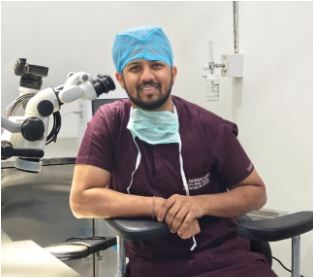
Charu Bhatia, Senior News Editor, Business Remedies in conversation with Dr. Saurabh Gupta, Onco-Plastic, Trauma and General Laparoscopic Surgeon at Rishab Multispeciality Hospital, Jaipur
 With advancements in medical science transforming the landscape of modern healthcare, surgical expertise, precision and patient-centric care have become more important than ever. Dr. Saurabh Gupta, Onco-Plastic, Trauma and General Laparoscopic Surgeon at Rishab Multispeciality Hospital, Jaipur, has built his medical journey around these very principles. A first-generation doctor with a strong academic background from SMS Medical College, Jaipur, he brings a keen interest in surgical innovation and minimally invasive techniques to his practice. In this conversation with Business Remedies, Dr. Gupta reflects on his journey into medicine, the evolution of surgical technologies, the growing scope of laparoscopic procedures, challenges in contemporary healthcare and the importance of rebuilding trust in doctor-patient relationships. He also shares valuable insights for aspiring medical professionals and emphasises why patient welfare must always remain at the heart of medical practice.
You are a surgeon at Rishab Multispecialty Hospital, Jaipur. Tell us about your journey so far and what inspired you to pursue medicine and surgery as a career.
A: I belong to Firozabad, Uttar Pradesh, and I am a first-generation doctor in my family. My medical journey began in 2012 when I moved to Kota to prepare for the pre-medical entrance examination and got selected in MBBS. Subsequently, I pursued MS in General Surgery from SMS Medical College, Jaipur. I completed my MBBS in 2019 and went on to complete my MS in 2022. I further pursued super-specialisation in Plastic Surgery from SMS Medical College, completing my formal medical education in 2025. Thereafter, I joined Rishab Multispecialty Hospital, Jaipur.
As far as my inspiration is concerned, my family played an important role in shaping my decision. Growing up, I realised how important it is to have a doctor within the family, someone who can guide and provide medical assistance when needed. Apart from that, I have always been fascinated by biology and the complexity of the human body.
During my college days, anatomy was one of my favourite subjects. I was particularly drawn towards understanding how the human body functions, identifying problems and finding practical solutions. There is a quote from our anatomy classes that has stayed with me: “A dead body teaches the living.” I was always inclined towards the practical aspects of medicine, especially procedures and surgeries, rather than limiting myself to prescribing medicines. This combination of scientific curiosity and the desire to make a tangible difference in people’s lives inspired me to pursue surgery.
What kinds of surgeries do you perform, and what makes this field particularly fulfilling for you?
A: My surgical practice covers different areas, including general, oncological and plastic surgery. Each branch comes with its own challenges and responsibilities. What makes surgery particularly rewarding is the opportunity to bring about a significant improvement in a patient’s life.
Surgery is not just about treating a disease or correcting a physical problem. In many cases, it also helps restore a patient’s confidence, dignity and self-esteem. Particularly in plastic and reconstructive surgery, the impact can go beyond physical recovery. It can help patients regain their sense of normalcy and confidence. Knowing that our work can give someone a fresh start is one of the most satisfying aspects of this profession.
How have surgical technologies and techniques evolved over the years?
A: Surgical technology has advanced tremendously. Earlier, patients often required prolonged hospitalisation and several weeks of recovery after an operation. Today, with the introduction of minimally invasive techniques, many patients can return to their routine activities much sooner.
Laparoscopic surgery is a significant example of this transformation. In procedures such as gallbladder removal, patients can often resume light activities and even office work from the following day, depending on their recovery and medical condition.
We have also witnessed remarkable developments in microscopic and precision-based surgeries, which have improved surgical outcomes. Many procedures that once required large incisions can now be performed through minimally invasive approaches. Medical research is also exploring highly complex possibilities, including face transplantation. These developments demonstrate how rapidly the field is progressing. Ultimately, the objective of technological advancement is to make surgery safer, more precise and less physically demanding for patients.
What factors do you consider before recommending surgery to a patient?
A: Surgery should never be the first or automatic recommendation. The decision must be based on a proper clinical assessment and accurate diagnosis.
We begin by understanding the patient’s symptoms, medical history and clinical condition. This is followed by relevant investigations, imaging and other diagnostic procedures. Whenever required, a biopsy is also recommended, particularly when there is uncertainty regarding the nature of a disease.
Once we have sufficient information, we evaluate whether the condition can be managed through medication or other non-surgical methods. If the problem cannot be adequately corrected through conservative treatment, or if surgery is necessary to prevent further complications, we discuss the available surgical options with the patient.
What are the major challenges surgeons face in today’s healthcare environment?
A: One of the biggest challenges today is the circulation of incomplete or misleading medical information on social media and the internet. Patients frequently search for their symptoms online and arrive at consultations with a preconceived diagnosis. While access to health information is useful, it can also create unnecessary anxiety and confusion.
A major part of our responsibility is therefore to explain the patient’s actual condition and clarify misconceptions. Every individual is different, and medical treatment cannot follow a one-size-fits-all approach. It must be personalised according to the patient’s condition, medical history and requirements.
Another concern is the gradual erosion of trust between doctors and patients. Treatment outcomes depend on cooperation, communication and mutual understanding. Patients need to understand that online information cannot replace a doctor’s clinical experience and individual assessment.
Where does India stand in terms of surgical advancements and global healthcare?
A: India has made considerable progress in surgical care and medical infrastructure. The country now offers a wide range of advanced surgical procedures, often at significantly more affordable costs than many developed countries.
This has contributed to the growth of medical tourism. Patients from different parts of the world travel to India for specialised treatment because they can access experienced medical professionals and quality healthcare at comparatively reasonable prices.
In several countries, patients may have to wait for months to secure specialist appointments or undergo planned procedures. India offers greater accessibility in many healthcare settings. The combination of skilled professionals, advanced techniques and cost-effective treatment has strengthened India’s position as an important healthcare destination.
However, there is still considerable scope for improvement, particularly in strengthening public healthcare infrastructure, increasing specialist availability and ensuring equal access to advanced treatment.
How do you handle emotionally challenging situations and counsel patients during difficult medical decisions?
A: The foundation of counselling is honest and accurate communication. Patients and their families deserve to understand the seriousness of the condition, the available treatment options and the possible consequences of delaying treatment.
One principle I strongly believe in is that medical decisions must be guided by clinical judgement rather than emotions alone. For instance, in a patient suffering from severe gangrene, if the infection is spreading and amputation becomes necessary to save the patient’s life, we must explain the situation clearly and recommend the procedure.
Although such decisions are emotionally difficult, preserving life must remain the foremost priority. Once the immediate threat is addressed, we can explore rehabilitation and reconstructive options, including artificial limbs where appropriate.
I also use my social media platforms to share credible information about medical conditions and procedures so that people can make more informed healthcare decisions.
How would you describe the doctor-patient relationship in today’s time?
A: The doctor-patient relationship has undergone considerable changes over the last decade. Unfortunately, there has been a noticeable decline in mutual trust. One reason is the way surgical outcomes are sometimes perceived. When a procedure is successful, the credit may be attributed to the hospital or its infrastructure, whereas complications often lead to the individual doctor being held responsible.
This creates an environment in which doctors may find it increasingly difficult to communicate freely with patients and their families. Commercialisation of healthcare has also contributed to concerns about whether patient welfare always remains the primary consideration.
There are challenges within the government healthcare system as well, including inadequate vacancies, staff shortages and an excessive administrative workload for resident doctors. Young doctors need more opportunities for practical training and clinical exposure rather than being burdened with paperwork.
Ultimately, rebuilding trust requires transparency, ethical medical practice, better communication and a healthcare system that prioritises patient welfare.
What are some common myths surrounding laparoscopic surgery?
A: One common misconception is that laparoscopic surgery is somehow less effective than conventional open surgery. In reality, for appropriately selected patients and suitable procedures, laparoscopy offers several advantages, including smaller incisions, reduced postoperative pain, shorter hospital stays and faster recovery.
Another misconception is that modern medicine is entirely a foreign concept. Medical science has evolved through contributions from researchers and practitioners across the world, including India. Today’s healthcare is a combination of global scientific developments and indigenous medical knowledge.
People should also avoid assuming that any treatment system or medicine is automatically safe simply because it is traditional or natural. Every treatment must be evaluated scientifically, and patients should consult qualified professionals before taking medication.
How do genetics, lifestyle and environmental factors contribute to the development of diseases?
A: Diseases are often the result of an interaction between genetic predisposition and environmental or lifestyle factors. Our genes can influence our susceptibility to certain conditions, but their expression and impact may also be affected by nutrition, physical activity, environmental exposure and daily habits.
For instance, inadequate nutrition, unhealthy routines and exposure to environmental pollutants can increase the risk of several health conditions. This is why preventive healthcare is so important.
What message would you like to share with aspiring medical professionals?
A: My advice to aspiring doctors is to build a strong foundation during their undergraduate education. Studying theoretical subjects is important, but practical training and clinical exposure are equally essential. Medicine is a profession in which knowledge must translate into the ability to make the right decisions and treat patients effectively.
More importantly, young doctors must have clarity about why they have chosen this profession. The primary objective should always be patient care. Financial stability is important in every profession, but money should not become the driving force behind medical decisions.
A doctor’s intention, dedication and determination to improve patients’ lives are what ultimately make the profession meaningful. There are several challenges in the healthcare sector, including limited government vacancies and intense competition for specialist positions. However, these challenges should not discourage those who genuinely wish to serve.
At the end of the day, the greatest satisfaction for a doctor comes from knowing that their knowledge and skills have helped someone recover, regain confidence or get a second chance at life. That, for me, is the true purpose of being a doctor.