


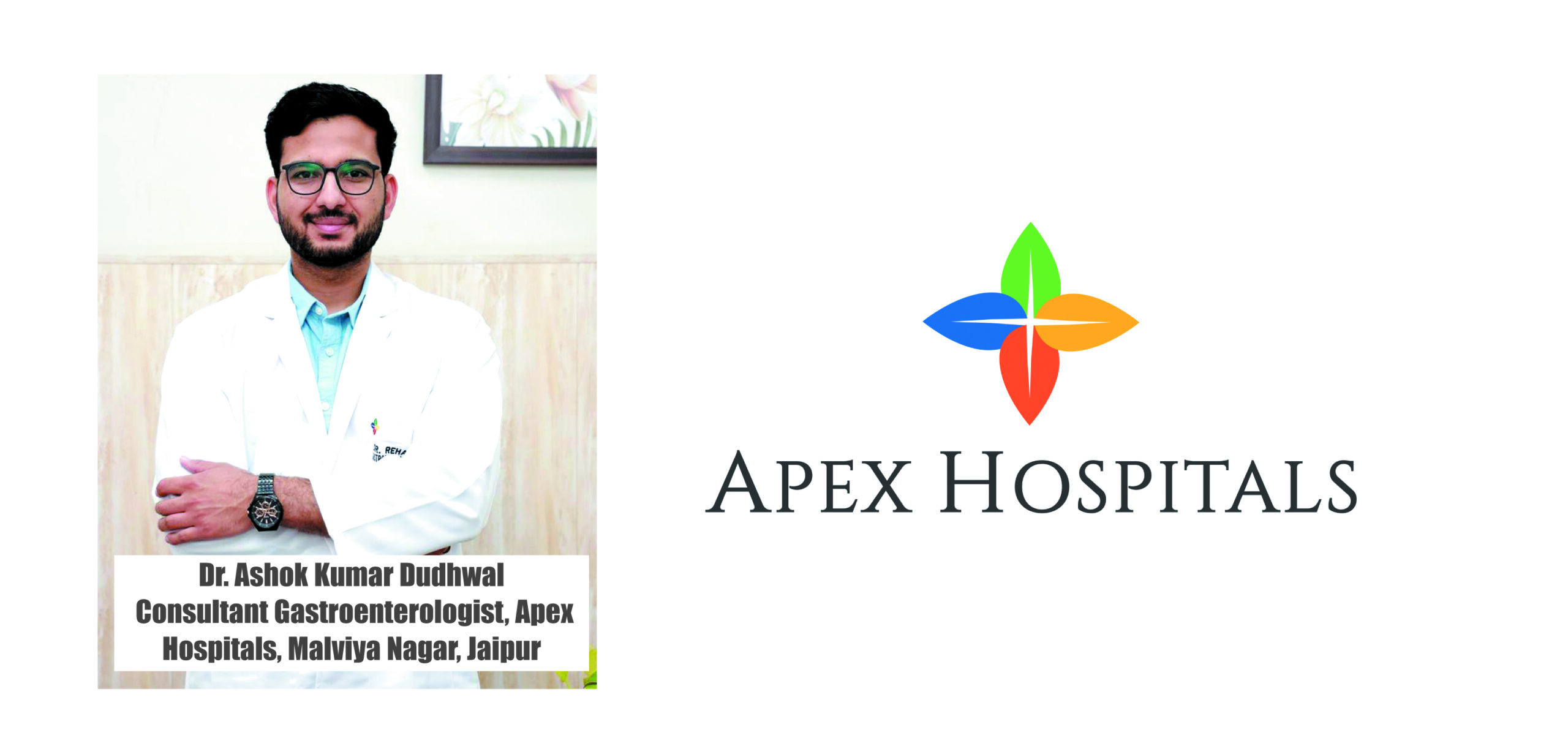
Gastroenterology has evolved dramatically over the past few decades, moving from conventional diagnostic methods to sophisticated, minimally invasive procedures supported by advanced imaging, artificial intelligence and precision medicine. At the same time, lifestyle-related conditions such as fatty liver disease, obesity, digestive disorders and stress-related gut problems are becoming increasingly common. In this conversation, Dr. Ashok Kumar Dudhwal, Consultant Gastroenterologist at Apex Hospitals, Malviya Nagar, Jaipur, discusses his journey into medicine, the changing landscape of gastroenterology, common digestive and liver disorders, the importance of lifestyle, emerging technologies and the future of the speciality. He also shares an important message for young medical aspirants about empathy, ethics and the true purpose of healthcare.
You are a renowned gastroenterologist at Apex Hospitals, Malviya Nagar, Jaipur. Tell us about your journey so far and what inspired you to choose medicine?
Answer: I belong to Jobner, near Jaipur, and my inspiration to enter medicine came from my uncle, who was also a doctor. His profession and the opportunity to serve people influenced me greatly. I completed my MBBS from AIIMS, Delhi, in 2018 and subsequently pursued my MD in Medicine from the same institute. I then went on to specialise further and completed my DM in Gastroenterology in 2025. Since then, I have been serving at Apex Hospitals, Malviya Nagar, Jaipur. The journey has been demanding but extremely rewarding because medicine gives you the opportunity to directly make a difference in people’s lives.
How has gastroenterology evolved over the years?
Answer: Gastroenterology has undergone a remarkable transformation. During the 1990s, endoscopes were used for diagnosing and treating gastrointestinal problems, but the instruments were relatively rigid and procedures could be uncomfortable. With the introduction and advancement of fibre-optic endoscopy, doctors gained better access and visibility. Gradually, high-definition imaging and other advanced technologies improved the ability to identify abnormalities within internal organs.
Today, many procedures that earlier required more invasive surgical approaches can be performed through endoscopic techniques. Procedures have become considerably less painful and more precise. Technologies such as endoscopic ultrasound, or EUS, have further expanded the possibilities. EUS-guided interventions can, in selected cases, help drain collections or treat conditions by creating an internal pathway with the help of a stent. This progression has made diagnosis and treatment more effective and minimally invasive.
What are some of the common gastrointestinal and liver problems you encounter in clinical practice?
Answer: We see patients with a wide range of conditions. These include chronic liver disease, cirrhosis, fluid accumulation in the abdomen, complications related to hepatitis and fatty liver disease. We also manage pancreatic disorders, including pancreatic swelling and cystic lesions, which may be associated with factors such as alcohol consumption and smoking.
Gallstones, gastritis, peptic ulcers, abdominal pain, blood in the stool and functional dyspepsia are also common. Functional dyspepsia can be associated with disturbances in the gut-brain axis. The spectrum is therefore quite broad, ranging from common digestive complaints to complex liver, pancreatic and gastrointestinal disorders.
What lifestyle changes would you recommend for maintaining good gut and liver health?
Answer: Regular physical activity is extremely important. A person can choose any sustainable form of exercise, whether it is going to the gym, cycling or brisk walking. Ideally, one should aim for at least 30 minutes of physical activity every day.
Diet also plays a major role. Processed foods should be limited, while excessive consumption of oil, unhealthy fats and sugary products should be avoided. Some individuals may have lactose intolerance, making it difficult for them to digest milk and dairy products. Such people need to identify and manage their triggers.
Alcohol can significantly affect liver health and should ideally be avoided, particularly in people with liver disease. Smoking is harmful not only to the digestive system but to overall health and should be stopped. A healthy lifestyle remains one of the most effective tools for preventing several gastrointestinal and liver-related conditions.
What are the major reasons behind fatty liver disease?
Answer: Fatty liver is essentially a finding, and it can have multiple causes. Excessive alcohol consumption is one important cause. Obesity, high cholesterol and metabolic problems can also contribute. Certain long-term medications may affect the liver, and this needs to be assessed on an individual basis.
When significant liver fat is present in association with metabolic risk factors and without alcohol being the primary cause, it may be classified under the newer terminology of MASLD, or metabolic dysfunction-associated steatotic liver disease.
Lifestyle modification remains extremely important. Weight reduction can substantially improve liver health, and losing around 10 per cent of body weight can be beneficial in appropriate patients. Newer medicines, including drugs such as semaglutide, are also being studied for their potential role in metabolic liver disease, but they should be used only under medical supervision. Regular exercise, dietary changes and calorie monitoring can support sustainable weight management.
How are AI and advanced technologies changing gastroenterology?
Answer: Technology has transformed both diagnosis and treatment. We now have advanced endoscopic procedures that allow us to treat conditions without conventional surgery. One example is POEM, or Peroral Endoscopic Myotomy, a minimally invasive procedure performed through the mouth using an endoscope. It can be used for certain swallowing disorders by cutting specific muscle fibres without an external incision.
Another technique is ESD, or Endoscopic Submucosal Dissection, which can help remove certain larger polyps and selected early-stage cancers from the gastrointestinal tract. EUS-guided gastroenterostomy is another advanced intervention in which a new connection between the stomach and small intestine can be created using a specialised stent in selected patients.
Artificial intelligence is also becoming increasingly useful. AI-assisted endoscopy and colonoscopy can help identify suspicious lesions and improve detection of early abnormalities, including potentially cancerous growths. Early detection can ultimately lead to earlier treatment and better outcomes.
What is the biggest misconception people have about gastrointestinal and liver health?
Answer: One common misconception is that certain over-the-counter or herbal products are automatically beneficial for the liver. For example, many people believe that Liv.52 or Ayurvedic herbal preparations are proven treatments for liver disease. However, patients should understand that scientifically established treatment depends on the specific liver condition, and self-medication can sometimes be harmful.
People also tend to self-medicate gastrointestinal symptoms. Occasional acidity may sometimes be managed with medicines such as pantoprazole after appropriate medical advice, but persistent symptoms should not be ignored. Warning signs such as recurrent vomiting, continuous abdominal pain, anaemia, unexplained weight loss or blood in the stool require proper medical evaluation. Patients should consult a gastroenterologist rather than repeatedly treating symptoms on their own.
What are the important areas of research in gastroenterology today?
Answer: There is significant research focused on developing more effective medicines for MASLD and related metabolic liver diseases. Researchers are also studying the causes and mechanisms behind conditions such as irritable bowel syndrome. Pancreatitis is another important area because, in many patients, the exact underlying cause may remain unclear. Understanding the biological mechanisms behind these disorders could eventually lead to targeted therapies.
How does stress affect gastrointestinal health?
Answer: Stress has a strong influence on the gut-brain axis and can worsen conditions such as irritable bowel syndrome and functional dyspepsia. However, stress is rarely the only underlying cause. Changes in the gut microbiome, low-grade intestinal inflammation, food sensitivities and genetic factors may also contribute.
This is why gastrointestinal disorders need to be approached comprehensively. Managing stress, maintaining physical activity, eating appropriately and seeking medical evaluation when symptoms persist are all important.
How do you see gastroenterology evolving over the next decade?
Answer: The coming decade is likely to bring major advances. We can expect more effective treatments for MASLD and an increasing number of minimally invasive endoscopic therapies for gastrointestinal conditions. Research into IBS and other functional gastrointestinal disorders may also lead to better targeted treatments.
As technology, AI and endoscopic expertise continue to advance, diagnosis is likely to become more accurate while several procedures may become safer and less invasive.
Finally, what message would you like to give young medical aspirants?
Answer: My message is simple: medicine should not be chosen merely as a means of earning money. It is a profession that requires commitment, ethics and empathy. If you genuinely want to serve people and can understand and feel their pain, medicine can be an extremely fulfilling career.
The satisfaction that comes from helping a patient recover and improving someone’s quality of life is itself a great reward. Young doctors should therefore enter the profession with compassion, integrity and a genuine desire to serve society.