

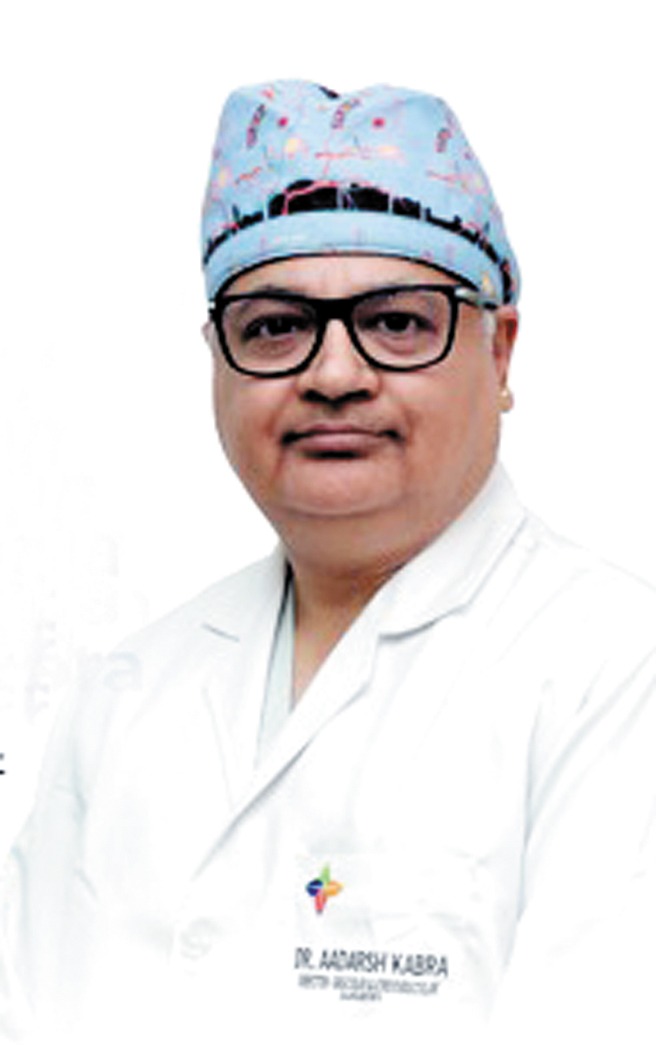
Charu Bhatia, Senior News Editor, Business Remedies, in conversation with Dr. Aadarsh Kabra, Senior Vascular Surgeon, Apex Hospitals, Jaipur
Vascular diseases are emerging as a significant yet often overlooked health concern in India, affecting millions across age groups. From varicose veins to life-threatening conditions like deep vein thrombosis and peripheral artery disease, timely diagnosis and specialised care remain critical for effective management. In this exclusive interaction, Dr. Aadarsh Kabra, Director, Vascular and Endovascular Surgery, at Apex Hospitals, Jaipur, sheds light on the most common vascular disorders, their early warning signs, evolving diagnostic techniques, and the pressing need for awareness and specialised training in the field. Drawing from years of clinical expertise, he offers valuable insights into prevention, treatment advancements, and the challenges facing vascular healthcare in the country.
Question: You are a renowned vascular surgeon in India with extensive experience. Could you elaborate on the most common vascular conditions you encounter in your practice?
Answer: In my clinical experience, one of the most prevalent vascular conditions is varicose veins, affecting nearly 30 to 40 percent of the population. Interestingly, a significant proportion of individuals remain asymptomatic, which often leads to delayed diagnosis. When symptoms do manifest, patients commonly report pain, swelling, itching, and a sense of tiredness in the legs. In rare cases, bleeding may also occur. The veins often become dilated and tortuous, giving them a characteristic serpentine appearance.
If left untreated, the condition can progress to skin discolouration and, in severe cases, lead to ulcer formation even after minor trauma. These ulcers can be extremely painful and challenging to heal. It is crucial to emphasise that treatment should focus on addressing the underlying venous insufficiency rather than merely alleviating symptoms. Women are particularly susceptible during pregnancy due to hormonal and physiological changes, while in men, genetic predisposition plays a more significant role. Ageing and sedentary lifestyles further exacerbate the risk.
Another commonly encountered condition is Chronic Deep Vein Thrombosis. This occurs due to partially opened deep veins in the muscles after an old episode of Acute Deep Vein Thrombosis. The main reason for the partial opening is inadequate/ suboptimal treatment. Webs can form in these deep veins leading to abnormal blood flows in these veins. Pain, swelling, tiredness, heaviness are common symptoms associated with Chronic DVT. Bursting pain in the calf on walking is a frequent problem. Chronic DVT can lead to recurrent episodes of Acute DVT.
A more severe category includes Peripheral Artery Disease (PAD) and gangrene. PAD is primarily associated with risk factors such as smoking and diabetes. It results in reduced blood flow to the extremities, leading to severe pain, especially while walking, and in advanced cases, tissue death. The affected digits may turn dark due to lack of oxygenated blood supply. Diagnosis and treatment are largely guided by angiographic findings, as the disease can affect any region from the abdomen to the toes. PAD can be likened to a leg, requiring urgent medical attention in advanced stages.
Additionally, Acute Deep Vein Thrombosis represents a more critical and life-threatening variant, where large veins in the muscles or abdomen develop clots. This condition is often seen in post-operative patients, particularly those undergoing knee or hip fracture surgery, or in women following childbirth. The pain and swelling are severe and unresponsive to standard treatments like rest or medication. A major risk is pulmonary embolism, where the clot travels to the lungs. Preventive strategies such as IVC filter placement may be employed in select cases, but definitive treatment often necessitates urgent clot removal.
Question: Why do you think vascular diseases often go undiagnosed or are detected late in India?
Answer: It would be inaccurate to state that vascular diseases are entirely undiagnosed in India; rather, the issue lies in delayed diagnosis and inappropriate referral pathways. Timely access to a qualified peripheral vascular surgeon remains a significant challenge. Historically, treatment methodologies were limited, particularly in the 1980s, but the field has since evolved considerably.
 However, even today, many patients are treated by practitioners who may not have specialised training in vascular medicine. Consequently, patients with vascular conditions are often admitted under cardiology or general surgery departments, where the primary focus may not be on vascular-specific issues. This fragmentation in care contributes to suboptimal outcomes.
Moreover, a considerable number of patients seek medical attention only in advanced stages of the disease, when intervention options are limited. This delay is one of the primary reasons for the high incidence of amputations, which could otherwise be avoided with early and appropriate treatment.
Question: Does the body provide early warning signs for vascular diseases?
Answer: Yes, the body invariably provides early warning signals, but these are often subtle and easily overlooked. Symptoms such as leg pain, intermittent swelling, skin changes, or a sensation of heaviness should not be dismissed as trivial. Vascular diseases typically develop over months or even years, providing ample opportunity for early detection.
The key lies in recognising and acting upon these initial symptoms. Ignoring them can allow the condition to progress to more severe stages, complicating treatment and recovery. Public awareness regarding these early indicators is crucial for improving outcomes.
Question: What preventive measures would you recommend for maintaining healthy blood vessels?
Answer: Prevention plays a pivotal role in vascular health. A balanced lifestyle incorporating regular physical activity and a nutritious diet is fundamental. Exercise improves blood circulation and helps maintain vascular integrity. Activities such as walking, jogging, yoga, or even moderate aerobic workouts can be highly beneficial.
Equally important is the management of underlying conditions such as diabetes, which significantly increase the risk of vascular complications. Smoking, including passive exposure, is one of the most detrimental factors for vascular health and should be strictly avoided. Excessive alcohol consumption should also be curtailed.
Question: How have advancements in diagnostic techniques improved vascular healthcare outcomes?
Answer: The evolution of diagnostic modalities has been transformative for vascular medicine. Earlier, diagnosis relied on relatively basic and often imprecise methods. Today, advanced imaging techniques such as ultrasound, CT and MRI scans provide detailed and accurate visualisation of blood vessels.
Angiogram has become a cornerstone in diagnosing vascular conditions, enabling clinicians to pinpoint the exact location and severity of blockages. These advancements have facilitated early detection, precise intervention, and improved patient outcomes.
Additionally, there is now greater interdisciplinary collaboration between vascular surgeons, cardiologists, physicians, nephrologists and diabetologists, allowing for a more comprehensive approach to patient care. This integrated model ensures that underlying risk factors are addressed alongside the primary vascular condition.
Question: There are several myths surrounding vascular surgery. Could you clarify some of them?
Answer: Indeed, misconceptions about vascular diseases and their treatment are widespread. One of the most prevalent myths is that conditions like gangrene or PAD inevitably lead to amputation. This is not true. With timely diagnosis and appropriate intervention, many limbs can be salvaged. It is often recommended that a gangrenous toe has to be amputated immediately, without first improving the blood supply. This only leads to worsening of the problem. The priority here improving the blood supply first, and then tackle the Gangrene Toe.
Another concerning trend is the reliance on unqualified practitioners or so-called “miracle healers.” Such practices can delay proper treatment and worsen the patient’s condition. There is a pressing need to raise awareness about the importance of consulting certified vascular specialists.
It is also important to highlight that modern vascular surgery has advanced significantly, with a shift towards minimally invasive procedures. These techniques reduce recovery time, minimise complications, and improve overall patient outcomes. I urge the patients that they should exercise due diligence in verifying the credentials of their healthcare providers to ensure that they receive evidence-based and specialised care.
Question: What gaps currently exist in vascular surgery training programmes in India?
Answer: One of the major challenges is the uneven distribution of training centres across the country. A significant concentration of vascular surgery training institutes is located in South India, while North India has relatively limited opportunities.
Furthermore, vascular surgery is still not widely recognised as a distinct discipline in many medical colleges, leading to a lack of structured educational pathways. This gap contributes to a shortage of trained specialists and perpetuates the issue of mismanagement by non-specialists.
Another critical concern is the presence of unqualified individuals posing as peripheral vascular and endovascular surgeons. This not only undermines the credibility of the field but also endangers patient safety. Strengthening training infrastructure, increasing awareness, and enforcing stricter regulatory standards are essential steps towards addressing these challenges.