

Charu Bhatia, Senior News Editor, Business Remedies in conversation with Dr. Aadarsh Kabra, Senior Vascular Surgeon at Apex Hospitals, Jaipur
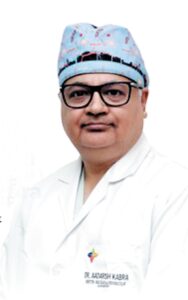 Vascular diseases are emerging as a major public health concern in India, fuelled by the rising prevalence of diabetes, chronic kidney disease, hypertension and tobacco use. Yet, despite remarkable advances in minimally invasive vascular interventions, many patients continue to seek medical care only after irreversible complications such as critical limb ischemia, gangrene or aneurysms have developed. As newer technologies, including laser atherectomy, intravascular lithotripsy and drug-coated devices, reshape the field of vascular surgery, the focus is increasingly shifting towards early diagnosis, personalised treatment and limb preservation.
In this exclusive conversation with Editorial Team of Business Remedies, Dr. Aadarsh Kabra, Senior Vascular Surgeon at Apex Hospitals, Jaipur, offers an in-depth perspective on the evolving landscape of vascular care. He explains how specialists decide between endovascular interventions and open surgery, discusses the growing burden of peripheral artery disease (PAD) among high-risk populations, examines the promise and limitations of emerging therapies, and shares why strengthening specialist training, screening programmes and vascular healthcare infrastructure will be critical to improving patient outcomes across India.
Question: How do you decide whether a patient should undergo endovascular treatment or open surgery?
Answer: The choice between endovascular treatment and open surgery is never based on a single factor. It depends entirely on the patient’s overall clinical condition, the severity and location of the vascular disease, and the findings from angiographic investigations.
Before recommending surgery, we assess whether the patient is medically fit to undergo the procedure. Existing comorbidities such as diabetes, kidney disease, heart disease and other chronic illnesses significantly influence treatment planning. Open surgery is generally reserved for more severe cases where it offers the best chance of restoring blood flow, while minimally invasive endovascular procedures are preferred whenever they are appropriate and likely to provide good outcomes. Ultimately, every patient requires an individualised treatment plan rather than a standard approach.
Question: How closely are cardiology and vascular health connected?
Answer: The heart and blood vessels function as a single integrated system. The heart pumps oxygen-rich blood throughout the body, while arteries and veins transport blood to and from every organ and tissue. Any problem affecting one part of this system inevitably impacts the other.
Question: What are the latest advancements in the treatment of Peripheral Artery Disease (PAD)?
Answer: Treatment options for PAD have advanced considerably in recent years. Today, several specialised technologies allow us to diagnose and treat arterial blockages with greater precision and less invasiveness.
Among the important innovations are specialised atherectomy devices, which are designed to remove plaque deposits from blocked arteries. Laser technology has also become increasingly useful. Non-invasive laser-based diagnostic tools help assess blood flow, while laser atherectomy catheters use controlled ultraviolet energy to safely remove complex arterial blockages during minimally invasive procedures.
Another significant advancement is intravascular lithotripsy, which is particularly beneficial for patients with heavily calcified arteries. The technology uses sound waves to break down hardened calcium deposits, making it easier to restore blood flow.
Drug-coated balloons are another important development. While these technologies have improved treatment outcomes, they are expensive and therefore suitable only for carefully selected patients. It is also important to understand that vascular diseases are chronic conditions. Most patients require lifelong medication alongside regular follow-up.
Question: What vascular complications are commonly seen in patients with diabetes and kidney disease?
Answer: Diabetes and chronic kidney disease are among the strongest risk factors for serious vascular complications. Patients with kidney disease often develop extensive calcium deposits in the arteries, particularly below the knee. These calcified blockages make treatment more challenging and significantly increase the risk of reduced blood flow, chronic wounds and, in severe cases, gangrene.
Diabetes presents another major concern. The disease damages blood vessels over time, and the risk becomes even greater if the patient smokes. Even minimal tobacco use can accelerate arterial blockages throughout the body, from the abdominal vessels to the arteries supplying the legs. Such patients are at a much higher risk of limb-threatening complications if the disease is not detected and treated early.
Question: What role do regenerative medicine and stem-cell therapies currently play in vascular care?
Answer: At present, the role of regenerative medicine and stem-cell therapy in vascular surgery remains limited. For most patients, the fundamentals of vascular care remain unchanged. Quitting smoking, adopting a healthy lifestyle, exercising regularly and taking prescribed medications consistently are still the most effective ways to slow disease progression and improve long-term outcomes. These measures often have a great impact.
Question: How can vascular care be expanded to Tier 2 and Tier 3 cities?
Answer: Improving access to vascular care is one of India’s biggest healthcare challenges. The number of trained vascular surgeons remains limited, and specialised services are concentrated mainly in larger cities.
Strengthening peripheral healthcare centres is essential. Doctors working at local hospitals should be trained to recognise vascular diseases early, initiate basic management and stabilise patients before referring them to specialised centres when necessary.
Public awareness is equally important. Many people ignore early symptoms of peripheral artery disease until serious complications develop. At the same time, it is worth remembering that not every patient with PAD requires surgery. In many cases, lifestyle modifications, structured exercise programmes and medical therapy can successfully control the disease.
Rehabilitation should also form an important part of vascular care, involving not only the patient but also family members who play a vital role in long-term disease management.
Question: What role can public-private partnerships play in strengthening vascular healthcare?
Answer: Public-private partnerships have the potential to significantly improve vascular healthcare infrastructure by expanding access to specialised services, modern technology and training programmes.
However, infrastructure alone cannot solve the problem. The biggest challenge remains the shortage of qualified vascular surgeons. Unless more specialists are trained, even well-equipped healthcare facilities may struggle to provide comprehensive vascular care.
Question: What changes would you like to see in vascular surgery education?
Answer: I believe improvements should begin during undergraduate medical education. Medical students should receive greater exposure to vascular diseases through practical clinical training rather than relying primarily on theoretical knowledge.
Students should have opportunities to manage a wider variety of vascular cases and become familiar with advanced treatment techniques. At the postgraduate level, more general surgery residents should be encouraged to pursue super-specialisation in vascular surgery. Expanding the workforce is essential if India is to meet the growing burden of vascular disease.
Question: When should people start getting screened for vascular diseases?
Answer: Screening recommendations depend on an individual’s risk profile.
For healthy adults without major risk factors, vascular screening should begin around the age of 40. However, patients with diabetes require closer monitoring because they are at a substantially higher risk of developing peripheral artery disease. Regular screening at appropriate interval, approximately every five years or as advised by a doctor, can help detect disease before complications become severe.
Question: Does genetics play a major role in vascular diseases?
Answer: Genetic factors contribute to only a small proportion of vascular diseases. Most cases are related to lifestyle factors and chronic medical conditions such as diabetes, hypertension and smoking.
One notable genetic condition is Marfan syndrome, a connective tissue disorder that affects the skeleton, eyes, heart and blood vessels. Individuals with Marfan syndrome have a significantly increased risk of developing arterial aneurysms and aortic dissections.
Early diagnosis and regular monitoring are essential for these patients because timely intervention can prevent life-threatening complications.
Question. Why is vascular treatment often considered expensive?
Answer: The cost of vascular treatment varies greatly because every patient presents differently. There is no universal treatment plan. Decisions are based on angiographic findings, the severity of disease, associated medical conditions and the type of intervention required.
One of the greatest challenges is preventing limb amputation. Saving a limb often requires complex procedures, multiple interventions and advanced medical devices, all of which increase treatment costs. The specialised implants and technologies used in vascular surgery are expensive, and continuous technological advancements also contribute to higher healthcare expenses. Our objective is always to provide the most appropriate treatment while keeping costs as reasonable as possible.
Dr. Aadarsh Kabra concludes that while modern vascular treatments have become increasingly sophisticated, early diagnosis, lifestyle modification, smoking cessation, regular screening and timely referral remain the most powerful tools in preventing severe complications such as limb loss. He believes expanding specialist training and improving awareness at both the public and primary healthcare levels are essential to delivering better vascular care across the country.