
Jaipur | Charu Bhatia
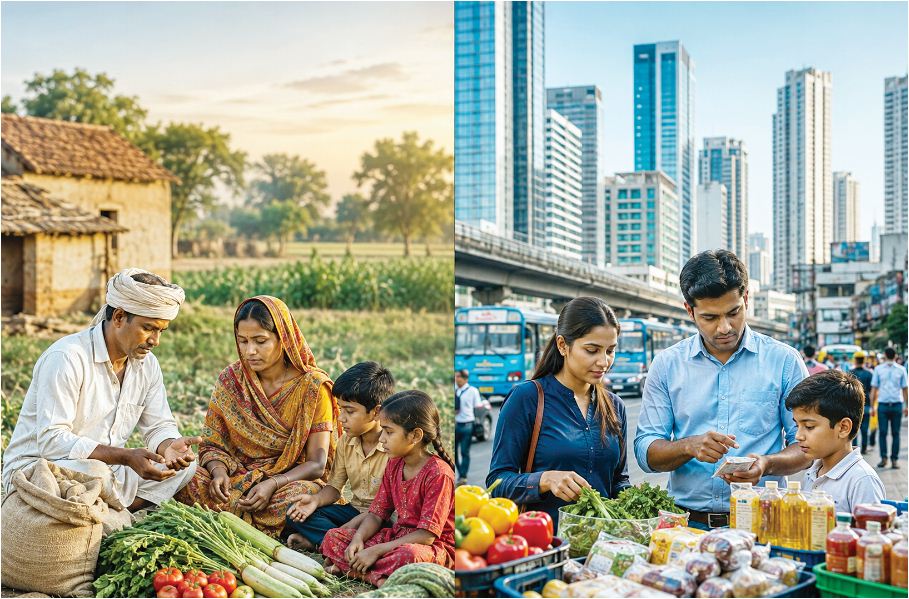
Inflation is often discussed as a single national number, but the impact of rising prices can vary sharply between urban and rural India. Differences in spending patterns, food consumption, housing costs, income sources and access to goods mean that the same inflation rate can translate into very different experiences for households and businesses.
For companies, understanding this urban-rural divide is becoming increasingly important. Consumer demand, pricing strategies and product choices can change depending on how inflation affects different sections of the population.
Food Prices Matter More In Rural Consumption
Food typically has a larger share in rural household spending than in urban consumption. As a result, changes in prices of vegetables, cereals, pulses, edible oils and other essential commodities can have a more noticeable impact on rural purchasing power.
When food inflation rises, rural households may have to redirect spending away from discretionary products. This can affect demand for categories such as consumer durables, apparel, personal care products and other non-essential goods.
Urban households, meanwhile, often have more diversified spending patterns. While food remains important, expenses such as rent, transportation, education, healthcare, utilities and services can represent a larger portion of monthly budgets.
Housing And Services Shape Urban Inflation
The cost-of-living challenge in cities is closely linked to housing and services. Rent, commuting expenses, school fees, eating out and personal services can add significant pressure to urban household budgets.
Even when food prices moderate, rising rents or transportation costs can keep the overall cost of living high for city residents. This also creates different business opportunities, particularly for companies offering affordable mobility, housing solutions, convenience services and value-oriented products.
Income Patterns Also Make A Difference
The ability to absorb higher prices depends not only on inflation but also on how incomes change. Rural economies have stronger links to agriculture and seasonal employment, making household earnings sensitive to crop conditions, commodity prices and local employment opportunities.
Urban incomes are generally more diversified, with salaried employment and service-sector jobs providing different income patterns. However, urban consumers also face higher fixed expenses, which can limit their ability to respond when prices increase.
What It Means For Businesses
The urban-rural inflation divide is influencing how companies approach India’s vast consumer market. A product that sells well in a metropolitan city may require different pricing, packaging or distribution strategies in smaller towns and rural markets.
Companies are increasingly looking at smaller pack sizes, value pricing and region-specific offerings to reach price-conscious consumers. At the same time, premium products continue to find demand among urban consumers with higher disposable incomes.
One Economy, Different Inflation Experiences
India’s inflation story cannot be understood only through a headline number. For businesses, the more important question is how changing prices affect actual consumer behaviour across different markets.
As India’s consumption economy expands, companies that understand these differences, from food spending and housing costs to income patterns and purchasing power, may be better positioned to identify growth opportunities. The urban-rural inflation divide is therefore not just an economic statistic; it is becoming an important factor shaping India’s next phase of consumer and business growth.