


Jaipur | Charu Bhatia
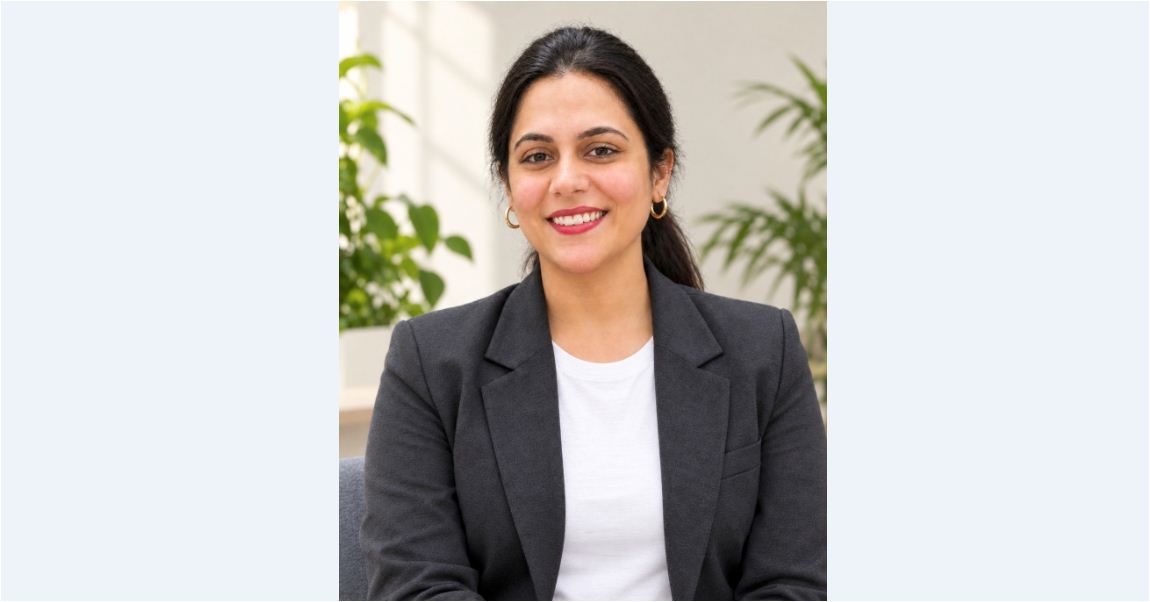
Pooja Sharma, Principal, Gurukul Foundation School, Jaipur, discusses her views on helping children face board exams with preparation, not panic. She is a Master’s in Biotechnology (Gold Medal), B.Ed, SLET with 13 years of experience in education. She believes success in the examination is a result of consistency, realistic planning, healthy routines and emotional support and not by last minute pressure.
 Q: Why students are so much anxious about board examinations?
Pooja Sharma: Board examinations are taken seriously as students know that their achievement is important for academics. But often the worry gets bigger than the test itself. Students start thinking of marks, comparisons, expectations and future all at once. It is not necessarily the quantum of syllabus. Sometimes it is the not knowing where to start, the uncertainty. Once kids have a strategy and are working steadily toward it, much of that fear naturally dissipates.
Q: When should students ideally begin serious preparation for their board examinations?
Pooja Sharma: There shouldn’t be a date to start preparing. “This should be a gradual process over the school year.” Students should endeavor to learn things when they are taught, not wait until exam season. Then regular revision becomes so much simpler. With board exams on the corner, students should focus on revising what they already know rather than trying to study the entire syllabus from scratch. Early preparedness does not signify studying for many extra hours. This involves not sitting on work unnecessarily.
Q: What is the first thing students should do when starting board preparation?
Pooja Sharma: Sit with the curriculum and perform a fair assessment of your preparation. Students can divide the syllabus into three easy groups; topics they know well, topics that need revision and topics they have not understood fully. This gives them a real sense of place. I usually think that students should replace the thought, “I have so much left,” with “What can I get done today?” A big syllabus is manageable when broken down into smaller tasks.
Q: How should students build a study timetable that they will actually stick to?
Pooja Sharma: The schedule has to be created for the real student and not for some hypothetical student who can study for twelve hours without feeling weary! Students should also consider their school timings, tuition or coaching classes, sleep, food and other responsibilities. Then they can choose realistic study periods. It is preferable to have three attainable goals and accomplish them rather than to put up an overly ambitious timeline and be disappointed each day. A timetable should give guidance, not another source of stress.
Q: Should students study one subject for numerous hours or switch courses often?
Pooja Sharma: “No one size fits all” But if you study the same subject for very extended periods of time your concentration may sometimes decrease. Students can switch between subjects, or between types of work. For example, after working on a tough mathematical topic, students may revise a chapter in a language subject. The trick is to keep your mind active. There should be a reason for the study session, not just sitting with a book for a certain amount of time.
Q: What may students do if they are terrified of subjects or chapters?
Pooja Sharma: Not tackling one hard chapter makes the anxiety that much bigger. Students should determine exactly what is tough. Is that the idea? Is it recalling information? Does it answer questions? Or is it just that they have not practised enough? When they find out the problem, they can ask the guidance from their teacher, practice step by step and get confidence gradually. There is nothing wrong with “I don’t know what this means.” Seeking guidance is a responsible way of preparing.
Q: How crucial is revising vs learning new topics?
Pooja Sharma: Revision is really crucial. Just because you have learnt something once does not mean that it will automatically be available to you during an examination. Students should revise regularly and not leave all revision till the last minute. Short revision cycles can be extremely powerful, allowing pupils to repeat crucial topics before they are forgotten. Focused revision is more effective the closer you get to the exam. At that stage, students should focus on consolidating their preparation rather than continually seeking new study material.
Q: A lot of students spend a lot of time making notes. Is it always a help?
Pooja Sharma: Notes can be really helpful, as long as they serve a purpose. Sometimes students would take hours perfecting the design of their notebooks and very little time revising the content. Notes should allow pupils to recall the relevant information quickly. Useful for revision are short summaries, formulas, definitions, illustrations, keywords and tough points. You don’t have to rewrite an entire textbook just to feel like you’re preparing.
Q: How will pupils know when they are truly ready?
Pooja Sharma: One of the best approaches is to test yourself not looking into the book. Shut the book and attempt to remember what you have learned. Write answers, solve problems, explain a subject verbally or try a practice paper in test settings. If a student can only identify an answer after seeing it in a book, the topic may need to be reviewed more actively. Real preparation is when pupils can recollect and apply what they have learnt by themselves.
Q: What is the use of old years’ papers and sample papers?
Pooja Sharma: They are extremely helpful to know about experience of examination. Students should try to write full papers within the time allocated. This allows them to see how fast they write, where they spend too long and which question kinds require more attention. But finishing a paper should not be the end of the practice. Students should review their blunders later on. A mistake will tell you what should be improved before the real test.
Q: Do we need to solve sample papers daily in the last days of preparation?
Pooja Sharma: Not really. Practice should be combined with revision. “If a student still finds it difficult to get through basic concepts, it might not be paper after paper that solves the real problem.” First reinforce the fundamentals, then practice the application. As the exam approaches, students can do more timed-paper preparation as they require. The aim is not to produce a big volume of finished papers but rather to enhance the comfort level and accuracy of the test format.
Q: How would you advise pupils to handle time during the real board exam writing?
Pooja Sharma: Time management starts before the exam. Students need to write entire papers and need to keep an eye on the clock. They ought to read the paper well before rushing to replies during the exam. They should have a ballpark figure of how much time they can spend on various areas. If a question is taking too long, it’s better to leave it and come back to it later, rather than let one difficult question use up valuable time.
Q: What if pupils forget an answer during the examination?
Pooja Sharma: First, don’t panic. Anxiety can make it harder to remember something that you do in fact know. Take a minute, skip to another question, then come back to the hard one later. Sometimes the solution comes back when the mind isn’t under immediate pressure anymore. Students should also read the question carefully. Sometimes the question is worded in such a way that it provides them a clue as to what is being asked.
Q: How do pupils cope with the strain of parental and teachers’ expectations?
Pooja Sharma: Expectations are mostly out of concern but students may sometimes feel it as pressure. Parents and teachers should be encouraged to focus on effort, preparation and improvement rather than always talking about marks. Students need to communicate when they are feeling overwhelmed too. A simple chat, such as, “I’m finding this chapter difficult” or “I need help planning my revision” can help to prevent stress building up in silence.
Q: What things parents should not do during board exams season?
Pooja Sharma: Comparisons should not be made constantly. Telling a child that another student studies more, scores higher or gets up earlier is hardly ever a helpful approach. Every student has a different learning style. Parents have to establish a positive atmosphere at home. And at times, a quiet room, regular meals, enough sleep and a comforting discussion might do more for a child’s preparedness than constant reminders about marks.
Q: How crucial is sleep with exams coming up?
Pooja Sharma: Very crucial. Sleep is not a barrier to preparation, it is part of preparation. Sometimes students think that if they stay up late, they are working harder. But if they are tired the next day, it may affect their concentration and memory. Students who have a fairly constant pattern of sleep might start study sessions with a fresher head. There is no point in doing an extra chapter and being too fatigued to remember what you studied.
Q: What about food and physical activity during board preparation?
Pooja Sharma: As exams come nearer, students should not quit their daily routine altogether. Regular meals, sufficient water intake and occasional physical action helps to keep the energy levels up through the day. A quick stroll, a stretch or a few minutes outside can be a good respite from continuous study. Students sometimes feel that any time away from their books is squandered. No, that’s not right. In fact, a short, meaningful break can help individuals get back to their task with better attention.
Q: What should students’ attitude be towards their mobile phones during the preparation?
Pooja Sharma: Technology can be a double-edged sword. Students might require mobile phones for educational films, communication or study materials, but they should determine when and how they use them. If you’re doing focused study, keeping the phone away or turning off needless notifications can make a big impact. Another key element is the comparison on social media. It can put pressure on you to see what everyone else is learning, how many hours they say they have studied or how confident they seem. Students should focus on their own preparation.
Q: Do some students feel guilty about taking a break? What would you say to them?
Pooja Sharma: Time pass is not same as wasting time. It is quite natural for a student who has spent some time studying with focus to take a little vacation. Main thing is to get back to the task as scheduled. Students need to grasp the distinction between resting on purpose vs procrastinating. Rest is replenishing. Procrastination is evading labor without feeling good about it.
Q: How can students stop obsessing over their results?
Pooja Sharma: Results are essential but they are not always in the hands of the students. What they can control is the preparedness for tomorrow. “What if I don’t get the marks I want?” If pupils are always thinking,*, they get distracted from the work that can really boost their performance. I tell pupils to think of the next helpful task they can perform. Revise a chapter, answer five questions, clear a doubt or finish a portion of the syllabus. It’s the little things that are making progress.
Q: What if a student compares his or her preparedness with friends?
Pooja Sharma: Comparison may be a very deceiving thing. It may take one student more time to learn an idea and another more practice to remember it. Instead of asking “How far along is my friend?”, students should ask themselves, “What have I improved since last week?” Healthy competition can be a motivator, but preparation should finally be a personal duty. Your goal is to be better prepared than you were yesterday.