
Jaipur | Charu Bhatia | India’s ambitions of becoming a global manufacturing powerhouse depend on more than just producing quality goods, they also hinge on how quickly and efficiently those products can reach international markets. Recognising this, the country is investing heavily in modernising its logistics ecosystem, transforming the journey from factory floors to foreign ports.
For decades, high transportation costs and fragmented infrastructure have posed challenges for Indian businesses. Logistics costs in India have traditionally been estimated at around 13-14% of GDP, significantly higher than the 8-10% seen in many developed economies. These inefficiencies have made Indian products less competitive in global markets.
Today, that landscape is changing rapidly.
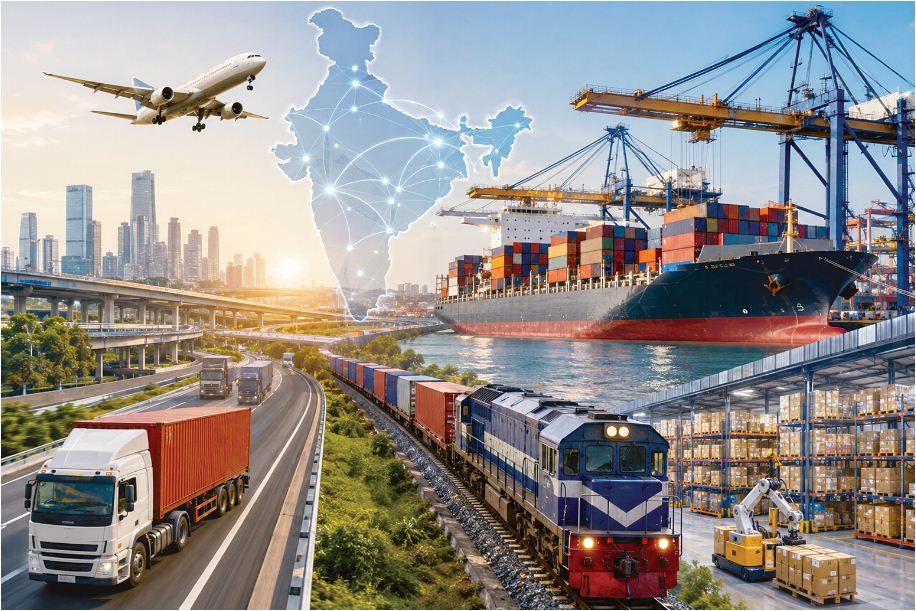
The government’s flagship initiatives, including PM Gati Shakti, the National Logistics Policy, Bharatmala, Sagarmala and Dedicated Freight Corridors (DFCs), are creating an integrated transport network that connects manufacturing hubs with highways, railways, ports and airports. The objective is simple: move goods faster, reduce costs and improve supply chain reliability.
Dedicated Freight Corridors are emerging as a game changer. By separating freight trains from passenger traffic, these corridors enable faster cargo movement, reduce transit delays and improve delivery schedules. Manufacturing clusters in states such as Gujarat, Maharashtra, Uttar Pradesh and Haryana are expected to benefit significantly from quicker access to ports.
Ports, too, are undergoing a transformation. Modernisation projects under the Sagarmala programme are expanding cargo-handling capacity, improving turnaround times and strengthening India’s position in global maritime trade. New deep-water ports and upgraded container terminals are helping exporters ship goods more efficiently while reducing congestion.
The logistics makeover is also extending beyond roads and railways. Warehousing is becoming increasingly organised, with smart logistics parks, automated storage systems and digital inventory management improving efficiency. Technology-driven solutions such as GPS tracking, AI-powered route optimisation and electronic documentation are reducing delays and enhancing supply chain visibility.
These improvements are particularly significant for micro, small and medium enterprises (MSMEs), which account for nearly half of India’s exports. Better connectivity enables smaller manufacturers to access domestic and overseas markets more easily while lowering transportation expenses and improving delivery timelines.
Consumers also stand to benefit. Faster and more efficient logistics can reduce product costs, minimise supply disruptions and improve the availability of goods across the country.
Challenges remain, including land acquisition, financing large infrastructure projects and ensuring seamless coordination across transport modes. However, the direction is clear. India’s logistics sector is evolving from a fragmented network into a modern, multimodal system capable of supporting the country’s manufacturing ambitions.
As global companies diversify supply chains and seek reliable production destinations, an efficient logistics network could become one of India’s strongest competitive advantages. By reducing the distance between factories and foreign markets, not geographically, but operationally, India is laying the foundation for stronger exports, greater industrial growth and a more resilient economy.