

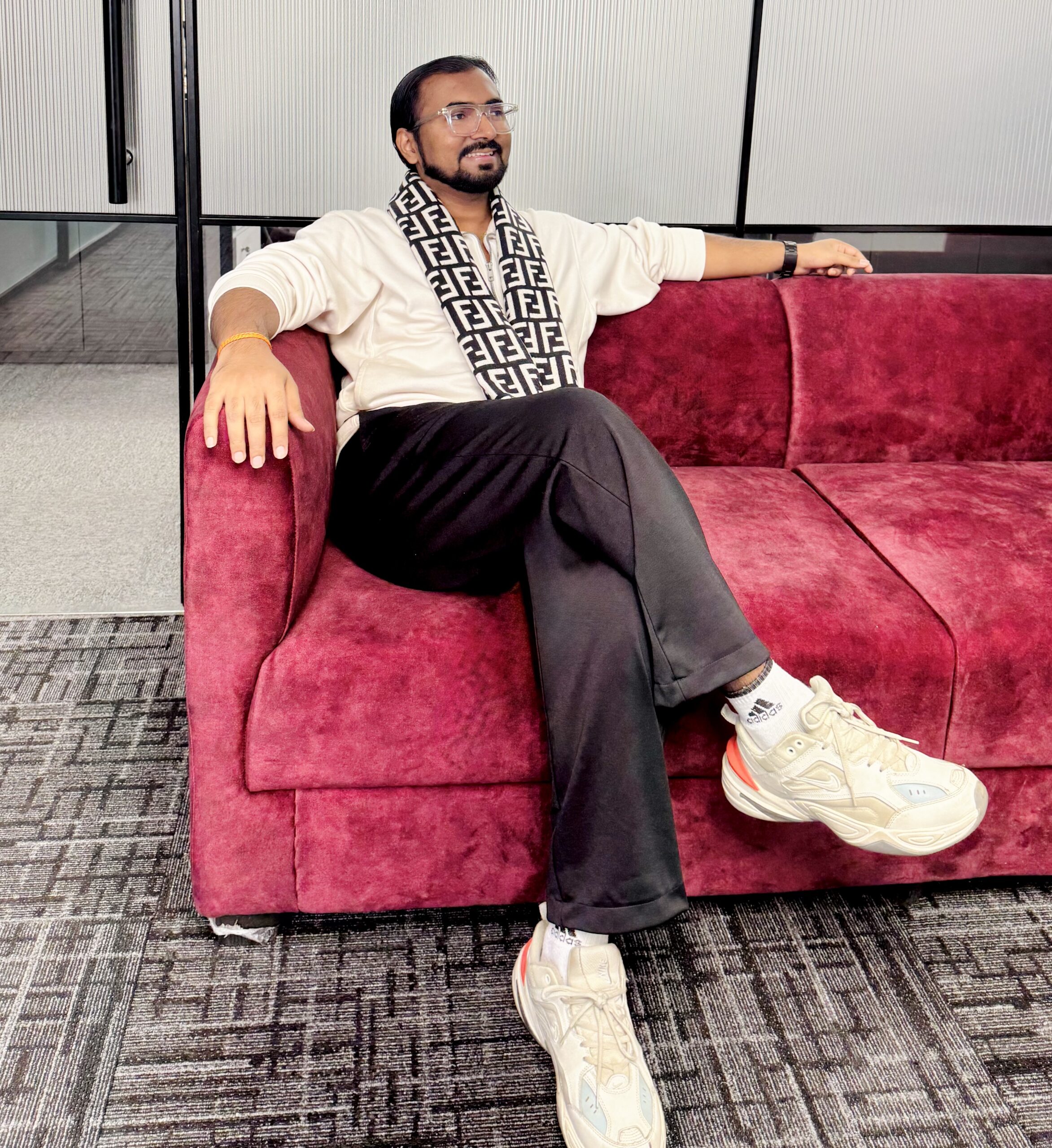
Business Remedies | Shruti Kothari | Sr. News Editor | July 02,2025 | Some stories don’t just inspire. They remind us why dreams, when backed by action, are worth chasing. Speaking to Swapnil Srivastav was more than just another interview. It was a reminder of what determination, clarity, and belief can truly build. I feel genuinely proud to share his journey, one shaped by resilience, real-world challenges, and a friendship that turned ambition into purpose. This is a journey that began with college experiments and early setbacks. It grew stronger with each failure and clearer with every small win. Together with his friends Mohammad Hussain and Aman Kumar Mahto, Swapnil set out not just to start a company but to build something the world would one day recognise. From working on wearable tech for women’s safety during college to creating Kidbea, today recognised by Tracxn as India’s number one sustainable kidswear brand, their story is a powerful example of what is possible when passion meets perseverance. And as I listened to Swapnil speak with honesty, warmth, and clarity, I was reminded that success is not only about numbers or milestones. It is also about intent, impact, and the courage to keep going.
In conversation with Swapnil Srivastav, Founder & Owner, Kidbea, Noida
Q. Before the boardrooms and big milestones, what does the world behind Swapnil Srivastav’s success look like? Where does his story truly begin?
A. I’m from Gorakhpur, a small town in Uttar Pradesh. My father is a government doctor, my mother is a homemaker, and we come from an upper-middle-class joint family. At one point, there were 16 to 17 of us living together. It was a lively, love-filled household. I studied in UP till class 10 and then moved to Nainital for my 10+2. I stayed with my Maasi there, and that’s where I first got a taste of business. She was running two schools, and the entire environment had a very entrepreneurial vibe. Moving out at such a young age wasn’t easy. For small-town kids, leaving your home, your parents, your comfort zone just to chase opportunities is a big deal. And what do I miss the most? (Smiles) The whole gang, of course. But if I had to pick one thing, it’s definitely Maa ke haathon ka khana. Nothing beats that.
Q. Your school years were full of change and early exposure. What was college like? Did things start getting more serious there?
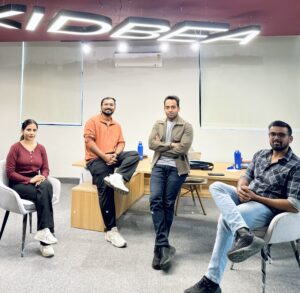
A. Absolutely. College was where ideas started turning into action. I pursued B.Tech in Computer Science from Sharda University, knowing the world was moving towards tech and I wanted to be part of it. In my second year, around 2016, the rising cases of farmer suicides really impacted us. That led me, along with my friends Mohammad Hussain and Aman Kumar Mahto, to explore how technology could support agriculture. We designed a solution using drones and hyperspectral sensors to monitor crop health and send updates to farmers via an app. The idea was strong, but the tech was too expensive for our target users. We had to let it go. Still, the experience taught us how to solve real problems and gave us the confidence to think like creators, not just students.
Q. Your first idea didn’t take off, but the fire was still alive. Where did that drive lead you next?
A. When the Agritech project didn’t work out, we didn’t feel disheartened for long. In fact, it only made our vision clearer. We knew we wanted to build something of our own, and we were ready to start again from the ground up. That’s when we noticed an opportunity right around us. Colleges in and around our campus were constantly hosting events, fests, and competitions. There was always a need for customised merchandise. We launched a small merchandise venture focused on college events. From customised t-shirts and mugs to momento for guest speakers and celebrities, we handled everything. We became part of internal college committees and took full control of vendor coordination, something usually done by the administration. The idea worked well. By the time we graduated, we had saved around 10 to 15 lakh rupees. But for us, this was just step one. Every move we made was with one goal in mind — hume duniya ki sabse badi company banani hai. That line wasn’t just motivation. It was our plan.
Q. So Swapnil, you once mentioned a smart shirt you built during college. What was it all about?
 A. Yes Shruti, we started working on it during our final semester. Around that time, the Nirbhaya case had once again sparked national outrage, and women’s safety became a major concern. Aman, Hussain, and I wanted to create something that could help. That’s when the idea of a smart shirt came up. We embedded a nano chip into the shirt cuff that could share a woman’s live location with just a tap, even without internet. It used NFC technology and didn’t require a battery. We developed an app to support it and called the product Smart shirt. After graduation in May 2019, we launched our company, Smartzwear, and released the product in September. We made sales of about six to seven lakh rupees, but most people were hesitant about wearable tech. Nearly 50 investors gave us the same feedback. The idea was strong, but the market wasn’t ready. So we had to move on.
Q. What came next after the smart shirt project?
 A. Shortly after that, the COVID-19 lockdown began, and all our savings were already invested in Smartzwear. On January 1st, 2021, our 50th investor rejected us within five minutes. We decided to continue the conversation and shared our vision, asking for direction. He appreciated our honesty and, although he did not invest, he offered several suggestions. One of them stayed with us. He was a new father struggling to find safe baby products during the pandemic. His child had developed rashes from harsh, chemical-based fabrics. That conversation sparked an idea to create safe and high-quality products for children made in India. He gave us two months to research and return with a plan.
Q. So you began researching the idea?
A. Not just research. We built. We came up with our new brand Kidbea. In those two months, we developed around 200 samples, launched a website, made our first few sales, and then got back to him.
 Q. All of that in just two months?
A. Yes. We took the leap. We also decided to shut down Smartwears entirely and put our focus into this new venture.
Q. Were all three of you still working together?
A. Yes. It was still me, Hussain, and Aman. We were long-time friends, and by now, we had also become long-time partners.
Q. That is truly inspiring. What did you discover during your research?
A. We realised that kidswear was not just a growing space, but also a deeply underserved one. The Indian kidswear market was valued at nearly 33.5 billion dollars. Out of this, apparel made up around 68 percent. When we broke it down further, we found that the largest demand came from the zero to four years age group. More importantly, we saw a clear gap. There was no trusted kidswear brand in India that focused on both safety and sustainability. After the pandemic, parents had become more aware of what touches their child’s skin. That shift in mindset gave us confidence that we were heading in the right direction. As soon as the lockdown was lifted in 2021, the three of us travelled to Tiruppur in Tamil Nadu. It is known as the textile hub of India. There, we met several manufacturers and explored fabric options. That is when we discovered bamboo fabric. Touching bamboo fabric for the first time changed everything. It was incredibly soft. Beyond that, it was chemical-free, antibacterial, and naturally anti-odour. We learned that bamboo-based products were already popular in Southeast Asia and the Middle East, especially in the form of socks. It felt like we had found exactly what we needed to build our next venture.


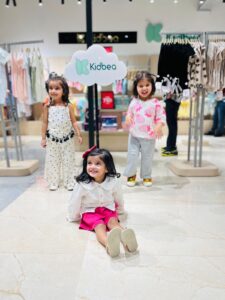
Q. Kidbea is catchy and curious. What made you settle on that name?
A. We had a few name options in mind, so we conducted a small poll with some of our early customers and supporters. The name Kidbea received the most love and instantly clicked with our vision. It reflects a deeper philosophy. Kidbea sounds like “let the kids be,” and that is exactly what we believe in. In our society, children are often burdened with expectations from a very young age. Through our brand, we wanted to promote the idea of letting kids grow freely, comfortably, and naturally. The name captured that spirit perfectly.
Q. What sparked Kidbea’s turning point?
A. The big shift happened in October 2021. That’s when we officially launched Kidbea on a larger scale. We started with around 15 to 17 designs and began listing on platforms like FirstCry, Myntra, and Amazon. At the same time, we reached out to distributors and retail stores across Delhi-NCR and opened our first office in Noida. Sales started modestly. In the first month, we made around thirty to thirty-five thousand rupees. By the next month, we were doing four to five lakh. And then the graph just kept rising.
Q. That’s a powerful growth curve. How has the brand performed year by year since launch?
A. If you look at our numbers, you can see the kind of traction we’ve been able to build, purely through ground-level effort and product consistency. Here’s how the journey unfolded:
Kidbea’s Revenue Growth Timeline
| Financial Period | Key Highlights | Revenue Generated |
|---|---|---|
| Oct 2021 – Mar 2022 | Initial product launch, online listings, Noida office setup | ₹1.2 crore |
| FY 2022–23 | Expansion into organic cotton and muslin categories | ₹8.7 crore |
| FY 2023–24 | Strong growth phase, increased market presence | ₹21 crore |
| FY 2024–25 (most recent) | Wider retail and digital scale, team expansion | ₹50 crore gross₹42 crore net |
| Current Monthly Revenue | Sustained performance across platforms and markets | ₹6 crore per month |
Awards and Achievements:
– Times Best Sustainable Brand of the year
– Times 40 Under 40 Award
– Hindustan Times 30 Under 30 Award
– Best Spotlight D2C brand by INC42
Q. Shopping for kids is emotional. How does Kidbea bring that experience to physical stores?
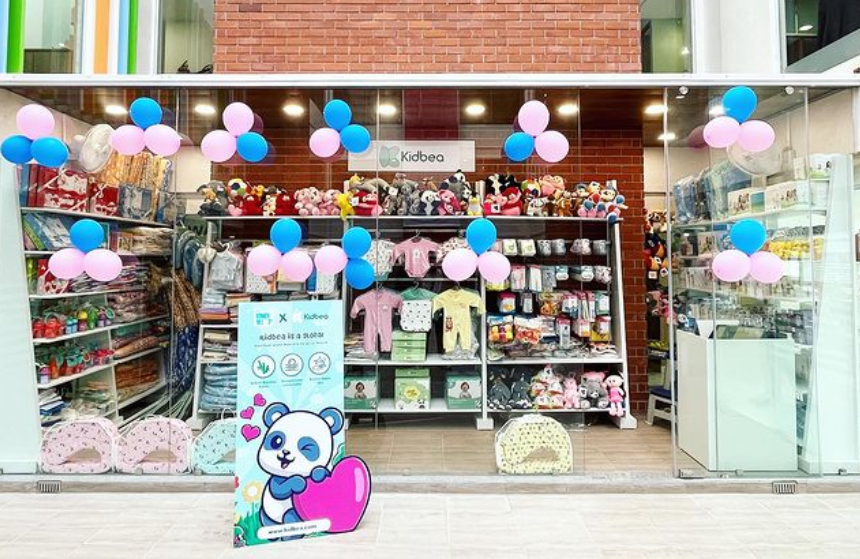
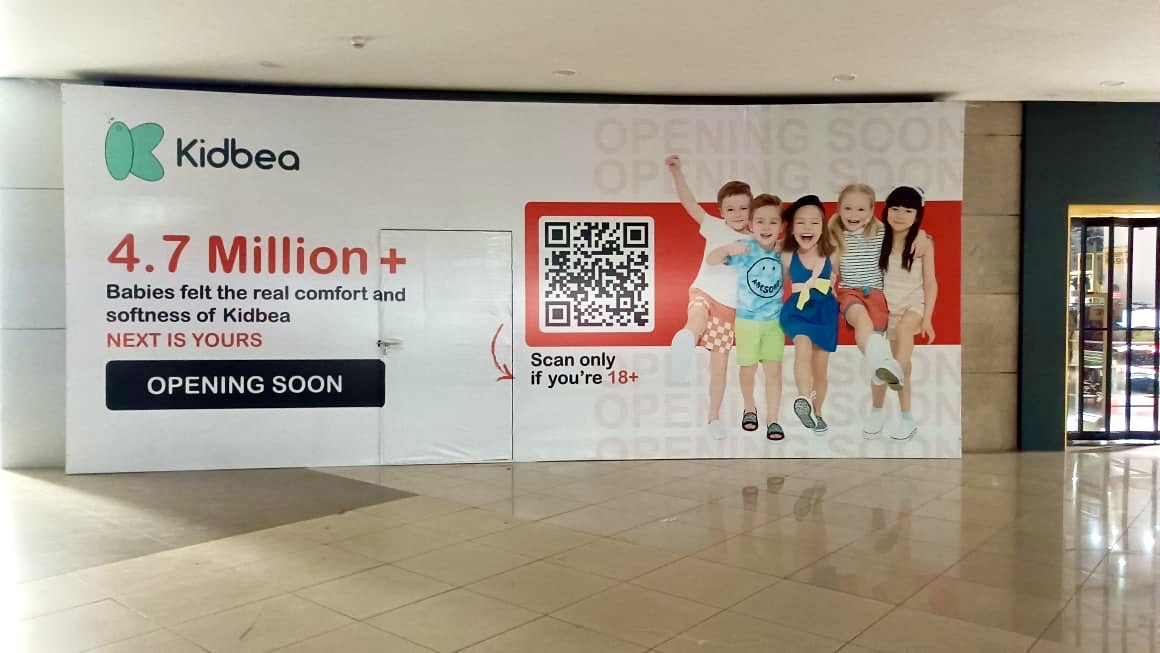
A. At Kidbea, shopping is not just about clothes; it is about trust, comfort, and joyful memories. We are present in over 30 multi-brand outlets across India and expanding to 40 more. In August, we will launch our first Exclusive Brand Outlet at Raipur City Mall, designed as a fairy-tale space for both kids and parents. Internationally, we have already entered markets like Dubai, Saudi Arabia, Bahrain, Australia, and the United States, with London and Ireland coming soon.
Q. Amazing. To wrap up, what does it truly take to build a successful brand, and who have been your role models in this journey?
A. There are three key things that go into building a successful brand. First, your product quality should be exceptional. That is non-negotiable. Second, your pricing strategy must be well thought out. And third, your brand communication needs to be strong and consistent. We are proud to have sold 4.7 million units so far, but we never stop listening. We actively seek feedback and suggestions from our customers. This makes our brand more reliable, helps us improve, and most importantly, builds long-term loyalty. As for role models, we found a lot of inspiration online. We learned through books, YouTube, interviews, and startup podcasts. Founders like Ritesh Agarwal and Vijay Shekhar Sharma really inspired us. Their stories taught us that even with humble beginnings, you can create something powerful and impactful if your intent is strong and your purpose is clear.
This journey has just begun, and we are here for the long run.
Swapnil ka startup sandesh
“If you’re a budding entrepreneur, especially from a small town like I was, don’t get blinded by the glamor of the startup world you see online. Building a company is not an escape from a nine-to-five. In fact, it is like signing up for a 24×7 commitment. You will carry the weight of your team, your customers, your investors, and their dreams will ride on your shoulders. If you aren’t deeply passionate about creating something valuable, this journey will break you. So think hard, are you ready to hustle every single day, to be accountable, to solve problems no one else wants to solve? If yes, then go ahead and start. If not, there is no shame in choosing a different path. Entrepreneurship is not about being your own boss. It is about taking responsibility at a scale you have never imagined.”
 Interviewed By:
Shruti Kothari