
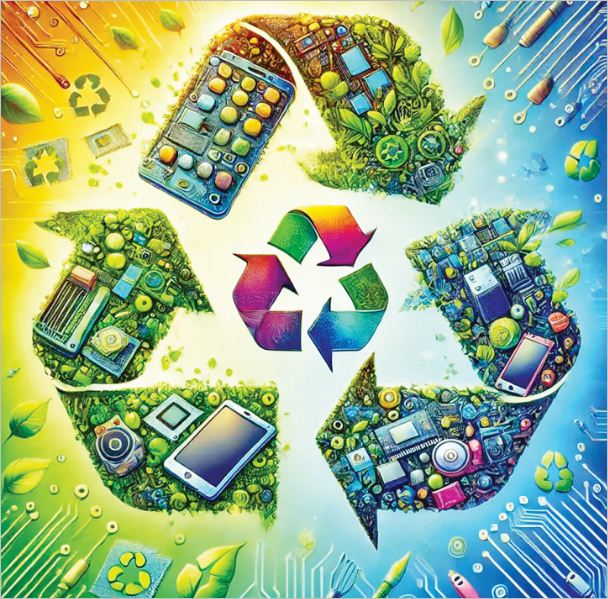
Charu Bhatia | Business Remedies | The electronics industry, long criticised for its environmental footprint, is witnessing a shift as companies increasingly embrace recycled materials in gadgets. From smartphones to laptops, brands are integrating recycled metals, plastics, and glass into their devices, but the question remains: is this truly a game changer or merely a marketing move?
Recycling in electronics addresses one of the fastest-growing waste streams globally: e-waste. According to the Global E-Waste Monitor 2023, India alone generates over 3 million tonnes of e-waste annually, with only a fraction properly recycled. By using recycled components, manufacturers can reduce dependence on virgin raw materials, lower carbon emissions, and mitigate the environmental impact of mining and production.
Tech giants are leading the way. Apple claims its iPhones now contain 100% recycled rare earth elements in some components. Dell and HP have incorporated recycled plastics in their laptop chassis, while Samsung and Xiaomi are exploring circular economy models to reuse materials across product lines. These initiatives reflect both environmental responsibility and growing consumer demand for sustainable products.
From a business perspective, adopting recycled materials offers strategic advantages. Firstly, it can reduce production costs by leveraging reclaimed metals and plastics instead of mining new resources. Secondly, it positions companies favourably with investors and regulators increasingly focused on ESG (Environmental, Social, Governance) performance. Finally, sustainability resonates with environmentally conscious consumers, particularly in urban and high-income segments, who may pay a premium for “green” devices.
However, challenges persist. Supply of high-quality recycled materials remains limited, and integrating them without compromising durability or performance is technically demanding. Some industry insiders argue that greenwashing, marketing products as eco-friendly without substantial impact, can undermine credibility if not backed by transparent sourcing and measurable results.
Despite hurdles, recycled materials are gradually becoming more than a novelty. In India, government initiatives like the E-Waste Management Rules, coupled with global pressure on manufacturers to adopt circular economy practices, are creating the right environment for sustainable electronics to scale. Startups and local recyclers are also innovating, offering solutions to reclaim and process materials efficiently.
Ultimately, the use of recycled materials in gadgets represents a significant step towards a more sustainable electronics ecosystem. While it may not yet revolutionise the market entirely, it signals a shift in both production practices and consumer expectations, one that could redefine how the industry balances innovation, cost, and environmental responsibility in the years to come.