

Jaipur | Charu Bhatia | India’s silk industry, one of the oldest and most culturally significant sectors in the country, is at a crucial juncture. As global demand for premium, sustainable and handcrafted textiles grows, Indian silk producers have a unique opportunity to strengthen their position in international markets. However, rising competition, changing consumer preferences and supply chain challenges continue to test the industry’s resilience.
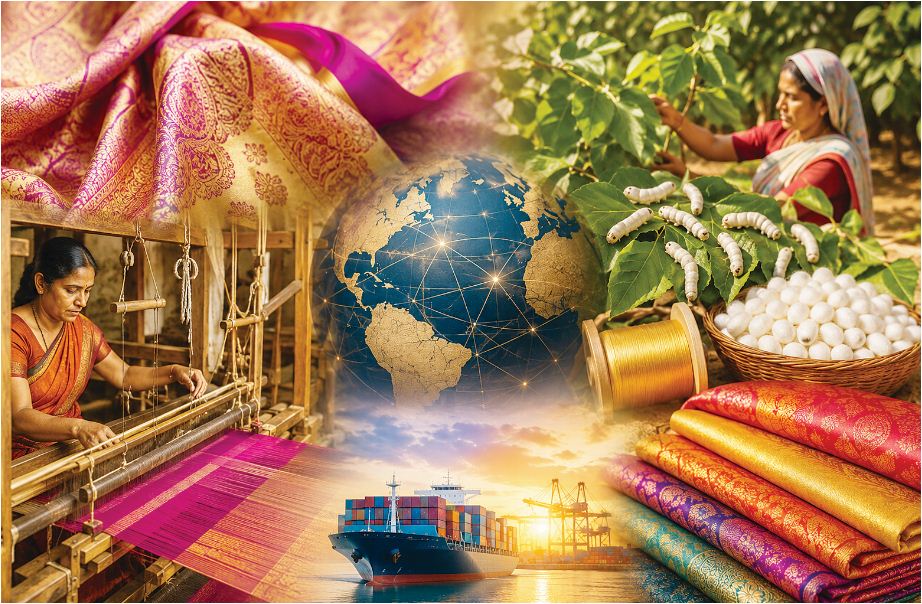
India is the world’s second-largest producer of silk after China and the only country that produces all four major varieties of silk, mulberry, tasar, eri and muga. The sector supports millions of farmers, reelers, weavers and artisans, making it a vital source of rural employment and livelihood generation. A major opportunity for India’s silk trade lies in the growing global appetite for sustainable fashion. Consumers in Europe, North America and parts of Asia are increasingly seeking natural fibres and ethically sourced products. Handwoven silk sarees, scarves, fabrics and luxury garments from India fit well into this trend, offering authenticity and craftsmanship that machine-made alternatives often cannot match.
Geographical Indication (GI)-tagged products such as Banarasi silk, Kanchipuram silk and Assam’s Muga silk are also helping Indian exporters carve out niche premium markets. These products carry a heritage value that appeals to consumers looking for unique and culturally rich fashion choices. The rise of e-commerce and direct-to-consumer platforms is another growth driver. Smaller weaving clusters and silk enterprises can now access global buyers without depending entirely on traditional export channels. Digital marketplaces are enabling artisans and brands to showcase their products to international audiences more effectively than ever before. Despite these advantages, challenges remain significant. China continues to dominate global silk production and exports, benefiting from economies of scale, advanced technology and strong supply chains. Indian producers often struggle with higher production costs, fragmented operations and inconsistent quality standards.
Climate variability is also affecting sericulture. Changes in temperature and rainfall patterns can impact mulberry cultivation and silkworm productivity, creating uncertainty for farmers. Additionally, competition from synthetic fabrics and cheaper blended textiles poses a challenge in price-sensitive markets. To remain competitive, industry experts stress the need for greater investment in technology, quality control, branding and export promotion. Strengthening silk clusters, improving traceability and expanding sustainable production practices could further enhance India’s global appeal.
As luxury consumers increasingly value heritage, sustainability and craftsmanship, India’s silk industry possesses several natural advantages. The challenge now is to modernise production and marketing systems while preserving the traditional skills that make Indian silk unique. If successfully navigated, the sector could emerge as one of India’s most promising textile export stories in the years ahead.