
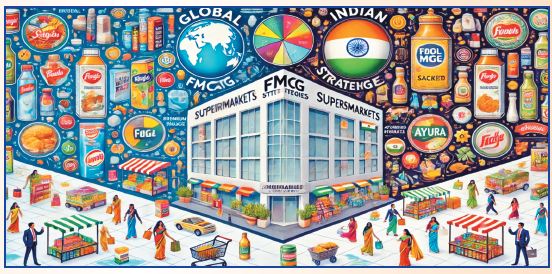
Jaipur | Business Remedies | April 25,2025 | In 2025, companies will face new challenges due to people’s increasing demands for a quality shopping experience, and their interest in digital innovation. So, businesses will have to accommodate change. According to statistics, experts estimated the global FMCG market at $11.3 million in 2022. By 2028, it is expected to grow to $15.2. This demonstrates a CAGR of almost 5% between 2022 and 2028. FMCG market is developing rapidly, and therefore especially requires consideration of the trends that will shape the industry in the near future. Let us look into the key trends that define the development of the FMCG industry in 2025.
New Trends for 2025
1. Immediate analysis at the store
One of the key changes is the implementation of online analysis immediately at the points of sale. This technology is called Edge Computing when all data are processed on the spot, not on the cloud. This helps the outlets to work faster and more efficiently even if there are Internet connection problems.
Example: L’Oreal has implemented AR technology to help customers choose cosmetics. Using the mobile app, customers can try on different shades of makeup or hair colours in real time using their device’s camera. This helps consumers see how the product will look on them before purchasing.
2. Products to support emotional and mental health
Conventional goods are replaced with goods for emotional well-being. Stress, anxiety, trouble sleeping, many people are facing these problems. The response of manufacturers to this demand is making products that not only meet direct needs, such as the need for food, but also help to manage stress or to raise the spirits.
Example: Unilever’s Lipton has created a series of tea “Mood Therapy” containing calming herbs, PepsiCo has developed Driftwell drinks that help to relax and sleep better, and Nestle has launched production of chocolate with adaptogens to relieve stress.
3. Direct Distribution to Consumers: Brands Independently Interact through Online Channels
Direct distribution is becoming a strategic move for FMCG companies. Communication with consumers through own online and offline sales channels helps companies directly influence customer loyalty, get to know them better, understand their needs, and, therefore, ensure stable business growth. This approach reduces the distance between producers and consumers and provides unique opportunities to personalize services and offers.
Example. Procter & Gamble (P&G), one of the largest FMCG companies, has introduced a direct distribution strategy through its online store. Customers can purchase P&G products directly from the company’s official website.
4. Personalization: Special Offers for Specific Needs
In a world where individuality is valued more than ever, personalization is becoming a key element of FMCG marketing strategies. Companies use consumer data to create offers that meet specific needs. This allows creating strong connections with customers, deepening engagement and improving customer satisfaction.
Example. Amazon makes active use of machine learning algorithms to provide personalized recommendations. They analyze purchase history, product views and other data to offer users items that will be of interest to them.
5. Sustainable Development: Integrating Environmental Practices into Business Strategies
Sustainability is becoming not just the norm, but also a key growth driver for companies. Consumers are becoming more environmentally conscious and FMCG companies are actively implementing environmentally friendly practices. Avoiding single-use packaging, using recycled materials and energy-saving technologies are considered best industry practices.
Example. Nestlé is committed to reducing its greenhouse gas emissions to zero by 2050. Moreover, the company has committed to making all its product packaging recyclable or reusable by 2025.
 Written & Edited by :
Charu Bhatia