

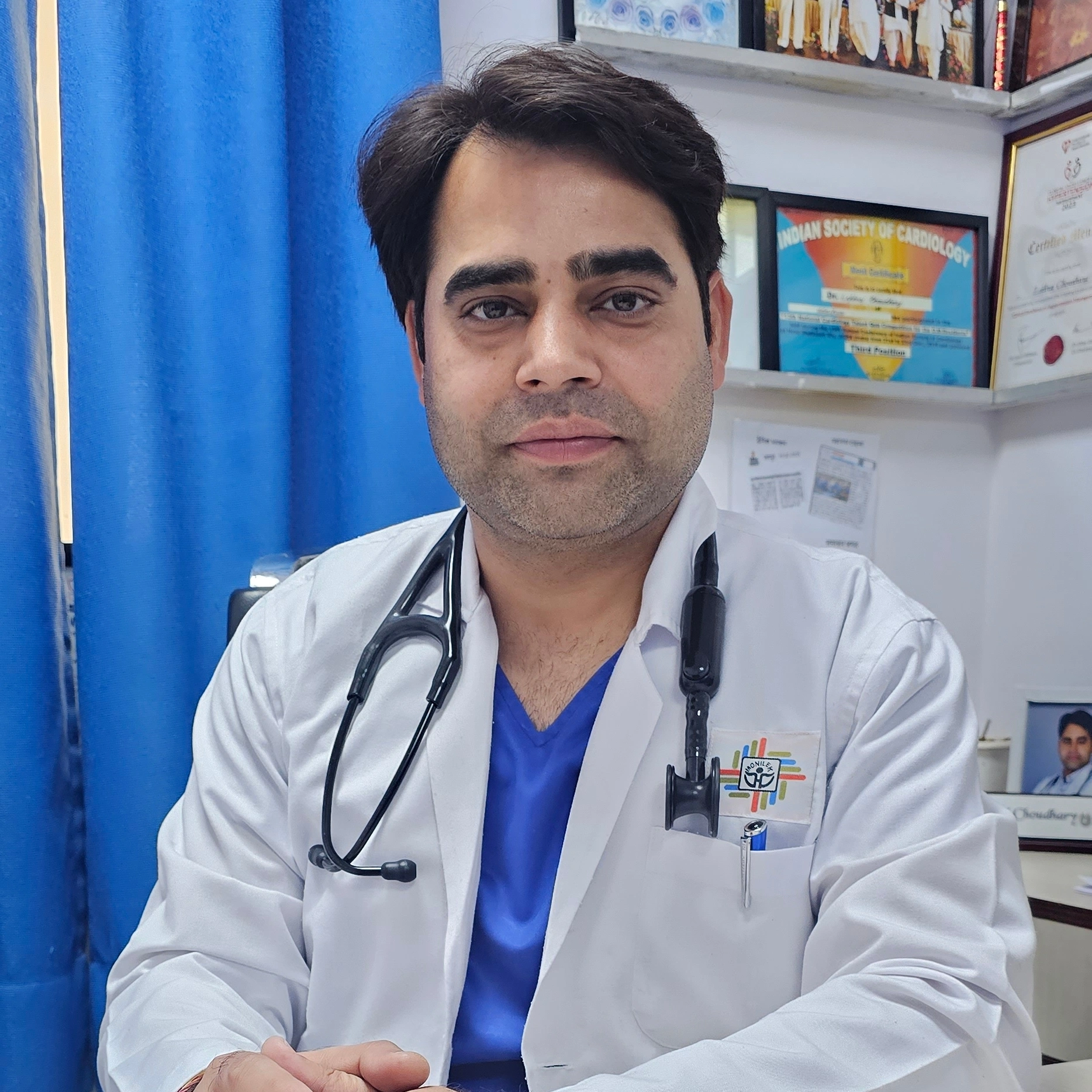
Charu Bhatia | Senior News Editor | Business Remedies, in conversation with Dr. Lekhraj Choudhary, Interventional Cardiologist at Monilek Hospital, Jaipur
In an era where heart diseases are rising across age groups and geographies, the role of cardiologists has become more critical than ever. With rapid technological advancements, evolving lifestyles, and growing awareness around preventive healthcare, cardiology today stands at the forefront of modern medicine. In this insightful conversation, Dr. Lekhraj Choudhary, Interventional Cardiologist at Monilek Hospital, Jaipur, shares his inspiring journey, the challenges of medical training, the impact of technology on cardiac care, and valuable advice for patients as well as aspiring doctors. His perspective sheds light on how dedication, innovation, and patient trust continue to shape the future of heart health.
Question: You are a renowned cardiologist at Monilek Hospital in Jaipur. How has the journey been so far?
Answer: My journey in cardiology has been long, challenging, and deeply fulfilling. I currently work as an interventional cardiologist at Monilek Hospital, Jaipur. My academic path began with an MBBS degree, followed by an MD in Medicine from Prayagraj. Later, I pursued a DM in Cardiology from RNT Medical College, Udaipur, which marked a turning point in my professional life.
Those years of medical training were defined by intense dedication and relentless hard work. Residency, in particular, was a phase that tested our endurance and passion. There were times when we remained awake for almost two days continuously, and at other times we had barely two hours of sleep before returning to duty. This demanding routine continued during exam preparations as well. Despite the hardships, the experience shaped my resilience and strengthened my commitment to medicine. In 2021, I joined Monilek Hospital and have been serving patients here since then.
My inspiration to enter the medical field came early. Medical science fascinated me, and learning about the human body always sparked curiosity. My elder brother, Dr. Manoj Choudhary, helped me a lot during my education time. He ignited the fire in me to become a doctor. And I am also grateful to my wife Dr. Yashaswi, who has stood by my side as my strength through all these years.
Interestingly, I was also passionate about cricket, like many young students, but eventually my interest in medicine became my lifelong calling. Like most medical aspirants, I also spent time in Kota preparing for competitive exams, which further reinforced my determination to become a doctor.
Question: What were some of the biggest challenges you faced during your medical career journey?
Answer: One of the most significant challenges during our training years was financial. During residency, doctors receive a relatively low stipend despite working extremely long hours, often extending to 36-hour continuous shifts. This mismatch between workload and compensation has always been a major concern for young doctors.
Another challenge was the living conditions during undergraduate and postgraduate hostel life. Hygiene and infrastructure in many medical colleges need improvement. Poor living conditions can affect both the physical and mental well-being of aspiring doctors. Resident doctors form the backbone of medical colleges and hospitals, yet they often work under stressful circumstances. If such conditions exist in teaching institutions, one can imagine how challenging it might become in busy hospital environments. Improving infrastructure and working conditions can significantly enhance the growth and morale of future medical professionals.
Question: What are your views on the role of technology and AI in medicine, particularly cardiology?
Answer: Technology has transformed cardiology in remarkable ways. Procedures such as angioplasty and stent placement have become far more precise and effective due to advancements like intravascular ultrasound and high-resolution imaging. These technologies allow us to visualize coronary arteries with exceptional clarity and accuracy.
Artificial intelligence is gradually becoming an important tool in diagnosis and risk prediction. It helps us analyse patient symptoms, imaging, and data more comprehensively. With modern tools, we can study the morphology and anatomy of the affected area in greater detail, which ultimately improves treatment outcomes.
Question: How does lifestyle affect the cardiac health of people today?
Answer: Lifestyle has become one of the biggest contributors to heart disease. Earlier, cardiac issues were mostly associated with urban populations, but now they are increasingly seen in rural areas as well. Mechanisation in agriculture and reduced physical labour have made rural lifestyles more sedentary. At the same time, tobacco and alcohol consumption have increased across all age groups.
It is alarming that even teenagers are experiencing heart-related problems today. Smoking habits, such as consuming multiple beedis daily, significantly damage heart health. Stress is another major factor. Modern life is fast-paced and demanding, and many people ignore their health while focusing on work and responsibilities.
After the age of 20, annual health check-ups are becoming essential. Regular monitoring of blood pressure, cholesterol, and blood sugar levels is crucial, especially for those with family history of cardiac issues. Preventive care and awareness can make a significant difference in reducing risk.
Question: How do you view the doctor–patient relationship in today’s times?
Answer: The doctor–patient relationship depends greatly on mutual understanding and communication. Doctors have a responsibility to clearly explain the risks and benefits of treatments and surgeries. Counselling before any major procedure is extremely important.
Most cardiac surgeries today have a success rate of around 96 percent, with only a small percentage of risk involved. With advanced technology, risks continue to decrease further. However, patients often become anxious due to financial investment and expectations. It is important to remember that doctors are guided by ethics and aim to provide the best possible care.
Question: What are some common myths about cardiac health among patients?
Answer: One widespread myth is that every chest pain indicates a heart attack. In reality, chest pain can have multiple causes, including musculoskeletal or neurological issues. However, severe chest pain radiating to the left arm or jaw, accompanied by sweating and breathlessness, should be treated as a medical emergency.
Another misconception is that a normal ECG guarantees a healthy heart. While ECG is an important test, it cannot detect every cardiac condition. Other diagnostic tools such as echocardiography, angiography, treadmill tests, and blood tests are often required. Patients should trust their cardiologist’s recommendation even if initial tests appear normal.
Question: What advice would you like to give to the readers for keeping their hearts healthy?
Answer: Keeping your heart healthy requires consistent lifestyle choices. Regular exercise such as jogging, cycling, swimming, or any aerobic activity for at least 30 minutes a day, five days a week, helps strengthen the heart and improve circulation. Avoiding alcohol and tobacco is equally important, as both can damage blood vessels and increase the risk of heart disease. A balanced diet with reduced oil and ghee, along with limiting packaged foods and sugary cold drinks, supports better cholesterol and weight control. Regular medical check-ups and monitoring of blood pressure, blood sugar, and cholesterol levels help detect risks early. Managing stress through pranayama, yoga, or meditation, staying well-hydrated, and getting at least 6–7 hours of quality sleep each night also play a key role. Maintaining a healthy body weight and controlling sugar intake further protects long-term heart health.
Question: How has cardiology evolved over the years and benefited patients?
Answer: Cardiology has witnessed extraordinary progress over the past few decades. Earlier, open-heart surgery was the primary solution for most cardiac conditions. These surgeries were complex, required large incisions, and involved long recovery periods.
Today, interventional cardiology has revolutionised treatment. Blocked arteries can now be opened within minutes through minimally invasive procedures. Recovery times have drastically reduced, and patients often return home within one or two days. Even complex valve surgeries are now performed with remarkable precision. These advancements have improved survival rates, reduced hospital stays, and enhanced overall patient comfort.
Question: What is your perspective on government healthcare schemes?
Answer: Government schemes such as Chiranjeevi and RGHS have made healthcare more accessible to many patients, particularly those from economically weaker sections. However, there are certain gaps that need attention. Many patients misunderstand insurance coverage and assume they can use the entire amount for a single treatment, while in reality, fixed packages are assigned for specific diseases.
Patients with multiple health issues often face challenges because the packages may not cover complex cases adequately. Additionally, delays in payments to hospitals and pharmacies can affect the effectiveness of these schemes. Better awareness and timely reimbursements can make these initiatives more efficient.
Question: How do you evaluate healthcare services in Rajasthan compared to other states?
Answer: Rajasthan has taken several positive steps in healthcare through schemes like Chiranjeevi and RGHS. These initiatives have helped make surgeries and treatments more affordable. I strongly encourage people to opt for health insurance to secure their medical expenses.
However, affordability should always go hand in hand with quality. While services have become more accessible, maintaining high-quality standards remains essential for long-term improvement.
Question: What message would you like to give to young medical aspirants, especially those interested in cardiology?
Answer: Cardiology is a demanding yet highly rewarding field. With the rising incidence of heart disease, the need for skilled cardiologists will always remain strong. However, aspiring doctors should choose this profession not just for its appeal, but with a genuine desire to serve humanity. Dedication, compassion, and integrity are the qualities that truly define success in medicine. If you pursue cardiology with honest intentions and commitment, the journey will be both meaningful and fulfilling.