


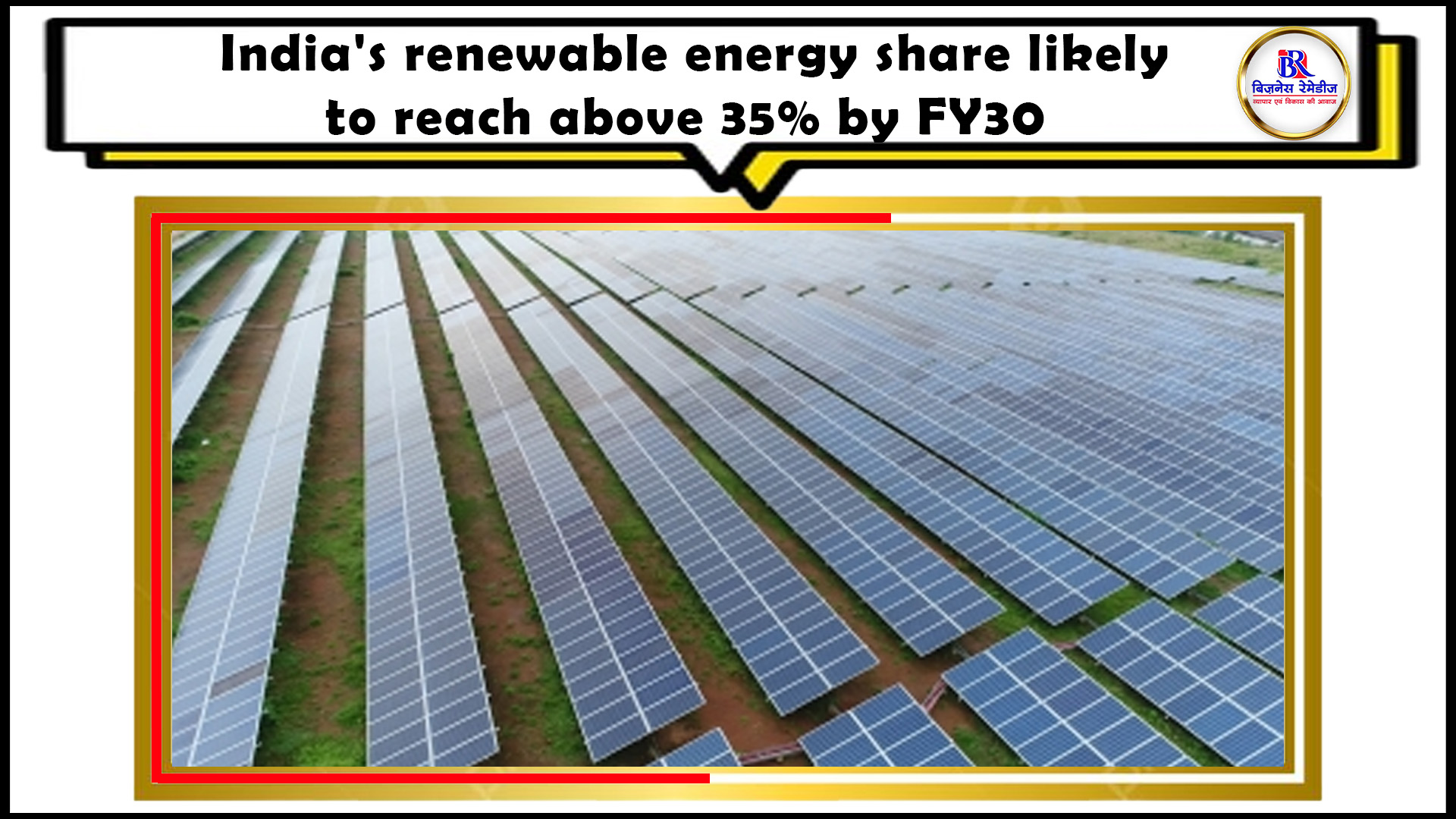
एक नई रिपोर्ट के अनुसार, FY25 में 22.1% रहने वाला भारत का नवीकरणीय ऊर्जा (RE), जिसमें बड़े हाइड्रो प्लांट भी शामिल हैं, से बिजली उत्पादन का हिस्सा FY30 तक 35% से अधिक पहुंच सकता है।
According to the report, this rise will be driven by nearly 200 GW of additional RE capacity expected to be added between FY25 and FY30.
⚡ Dependent on Transmission, PPA Pipeline
यह वृद्धि मौजूदा परियोजना पाइपलाइन की प्रगति, समय पर नई बोलियों, और पावर परचेज एग्रीमेंट्स (PPAs) के हस्ताक्षर पर निर्भर करेगी।
The report by ICRA highlights that adequate transmission infrastructure and timely PPA signing by central agencies will be crucial.
🌿 Sector Outlook Remains Strong
नवीकरणीय ऊर्जा क्षेत्र की दृष्टि “स्थिर” बनी हुई है, जिसे मजबूत नीति समर्थन, कम टैरिफ और बड़े उद्योगों की सतत विकास पहलें आगे बढ़ा रही हैं।
However, the report warns of challenges such as land acquisition, transmission delays, equipment price volatility and discom financial stress.
📉 Bidding Activity Slows Down
FY24 में 47.3 GW और FY25 में 40.6 GW RE क्षमता दिए जाने के बाद FY26 की शुरुआती 8 महीनों में यह घटकर सिर्फ 5.8 GW रह गई।
ICRA notes that 40–45 GW of awarded capacity still lacks signed PPAs, raising execution concerns.
🔌 Transmission Bottlenecks a Key Risk
ICRA के वरिष्ठ उपाध्यक्ष गिरीश्कुमार कदम के अनुसार, PPA साइनिंग में देरी और बोलियों में गिरावट यह दर्शाती है कि ट्रांसमिशन कनेक्टिविटी RE विस्तार के लिए बड़ी चुनौती बन रही है।
He emphasised that rapid strengthening of storage infrastructure and inter-state grids is essential as RE penetration rises.
🔋 BESS Emerges as Grid Stabiliser
भारत में नवीकरणीय ऊर्जा की अनियमितता को देखते हुए बैटरी एनर्जी स्टोरेज सिस्टम (BESS) को स्थिरता का महत्वपूर्ण साधन माना जा रहा है।
The government has introduced viability gap funding and extended transmission charge waivers for storage projects until 2028.
🗄️ 20 GWh Storage Awarded Since 2024
अप्रैल 2024 से अक्टूबर 2025 के बीच केंद्रीय एजेंसियों और राज्य डिस्कॉम्स ने 20 GWh से अधिक की स्टोरेज परियोजनाएं आवंटित की हैं।
Nearly 90% of RE capacity awarded in FY26 (8 months) comprises RTC, FDRE or solar-plus-storage projects.
💰 Battery Costs Continue to Decline
पिछले दशक में बैटरी लागत में भारी गिरावट आई है, जिससे BESS की प्रति यूनिट स्टोरेज लागत ₹4–7 रह गई है, जो 2022 में ₹8–9 थी।
ICRA notes that while pumped storage hydropower costs around ₹5 per unit, BESS offers lower execution risk and faster deployment.
🔮 Greater Adoption Expected
कदम के अनुसार, “हालांकि BESS की उम्र कम होती है और रिप्लेसमेंट लागत होती है, लेकिन बैटरी दामों में निरंतर गिरावट इसके बढ़ते उपयोग को बढ़ावा देगी।”
He added that declining capex will enhance the economic viability of standalone BESS projects over time.