
Charu Bhatia | Business Remedies | The global fashion industry is undergoing a major transformation as fast fashion and sustainable manufacturing compete to define the future of clothing production. For decades, fast fashion dominated the market with its ability to deliver trendy, low-cost clothing at remarkable speed. Today, however, growing environmental awareness and shifting consumer preferences are forcing the industry to rethink how clothes are made.
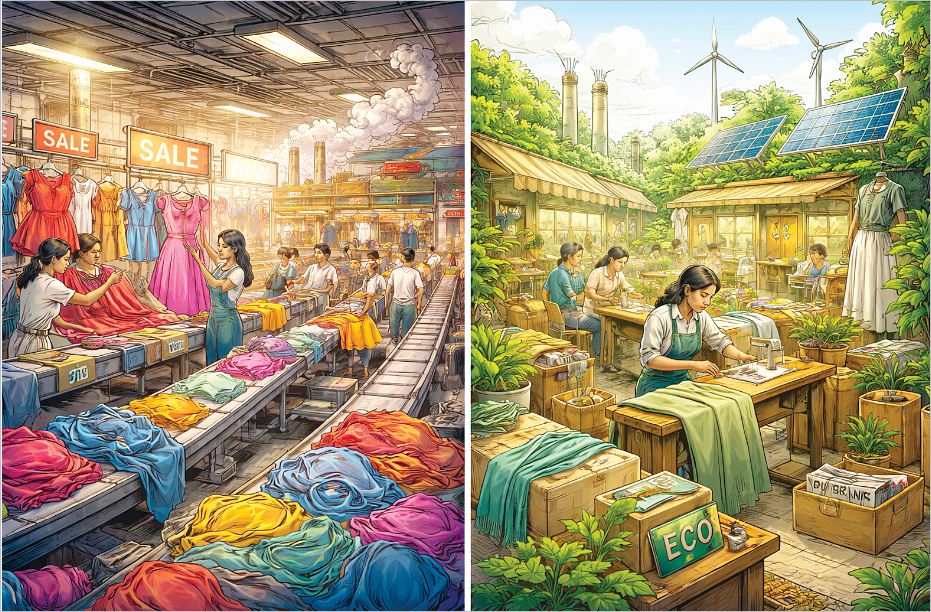
Fast fashion’s business model is built on speed, scale and affordability. Brands quickly replicate runway trends and bring them to stores within weeks, encouraging frequent purchases through low prices and constantly changing collections. This model thrives on mass production, global supply chains and high-volume sales. While profitable, it has come under intense scrutiny for its environmental impact, including excessive water use, textile waste and carbon emissions.
Sustainable fashion manufacturing has emerged as a response to these concerns. Instead of prioritising speed, sustainable brands focus on longevity, ethical sourcing and responsible production. Materials such as organic cotton, recycled fibres and plant-based fabrics are increasingly being used to reduce environmental harm. Many brands are also investing in cleaner dyeing processes and energy-efficient factories.
From a business perspective, the two models represent very different strategies. Fast fashion relies on high inventory turnover and impulse buying, while sustainable fashion focuses on brand loyalty, transparency and long-term value. Although sustainable clothing often carries a higher price tag, consumers are gradually showing willingness to pay more for products that align with their values.
Technology is playing a key role in bridging the gap between these approaches. Digital sampling, AI-driven demand forecasting and on-demand production are helping brands reduce waste and avoid overproduction. Some companies are adopting “slow fashion” elements while still maintaining efficient supply chains, creating hybrid models that balance profitability with responsibility.
Investors are also paying attention. Sustainability metrics, ESG compliance and supply chain transparency are becoming critical factors in funding decisions. Brands that fail to adapt risk losing both consumer trust and investor interest. The shift is especially visible among younger consumers, who are driving demand for ethical fashion. Social media has amplified awareness about labour practices and environmental impact, pushing brands to become more transparent.
The future of fashion manufacturing is unlikely to be defined by one model alone. Instead, the industry is moving towards a middle ground where speed and sustainability coexist. Companies that successfully integrate efficiency with responsible production will be best positioned to thrive in a rapidly evolving market. As consumer expectations evolve, the question is no longer whether fashion should become sustainable, but how quickly the industry can transform.