
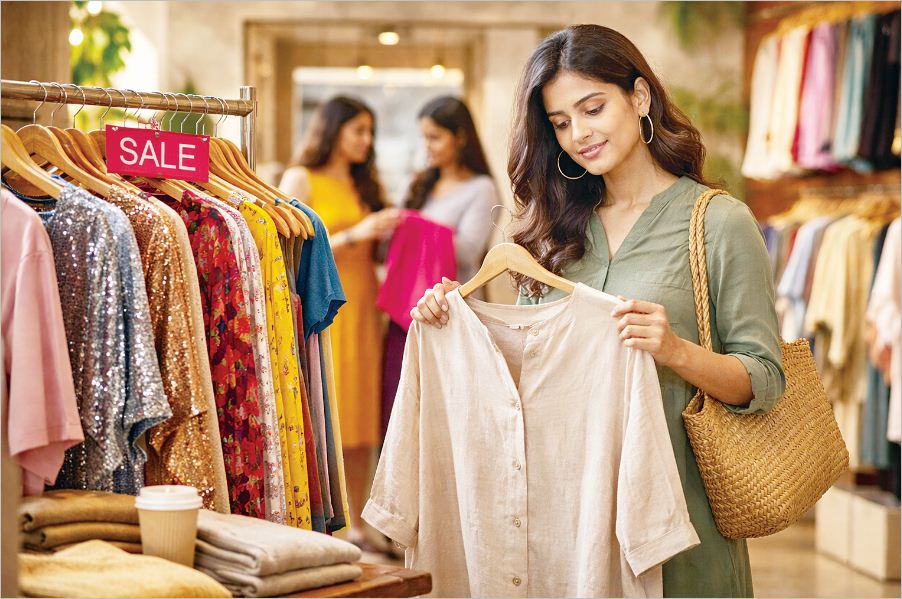
Charu Bhatia | Business Remedies | For over a decade, fast fashion thrived on speed, affordability and trend-driven consumption. New collections dropped every few weeks, encouraging Indian shoppers to buy more, wear less and repeat the cycle. However, a noticeable shift is now emerging. Across urban centres and increasingly in tier 2 cities, Indian consumers are beginning to rethink impulse clothing purchases, signalling the onset of what industry experts are calling “fast fashion fatigue.”
One of the biggest drivers behind this change is rising price sensitivity. Inflationary pressures, higher discretionary spending on travel, wellness and experiences, and increasing household costs have forced consumers to become more selective. What once felt like a low-risk Rs. 999 impulse buy now faces scrutiny, with shoppers questioning durability, fit and long-term value. Apparel brands, meanwhile, are grappling with higher input costs, from cotton prices to logistics, which have reduced the pricing gap between fast fashion and mid-range labels.
Quality concerns are also playing a role. Frequent buyers are becoming increasingly aware that ultra-trendy garments often compromise on fabric strength and finishing. Clothes that lose shape or colour after a few washes are no longer acceptable to consumers who are seeking better “cost-per-wear” value. This has led to a growing preference for fewer, better-made pieces over overflowing wardrobes.
Sustainability awareness, once limited to niche audiences, is entering the mainstream. Younger Indian shoppers, particularly Gen Z, are questioning the environmental and social impact of overconsumption. Conversations around textile waste, water usage, garment worker conditions and carbon footprints are influencing purchase decisions, even if price remains a key factor. Thrifting, clothing swaps and re-wearing outfits are becoming socially acceptable, and even aspirational, choices.
Digital fatigue is another subtle but powerful factor. Constant exposure to micro-trends through social media has accelerated trend burnout. Consumers report feeling overwhelmed by rapidly changing styles that lose relevance almost as quickly as they appear. Instead, there is a renewed interest in timeless silhouettes, neutral palettes and versatile clothing that works across occasions.
Retail data reflects this behavioural shift. While overall apparel demand remains steady, brands are seeing slower turnover of trend-heavy inventory and higher engagement with wardrobe essentials, premium basics and capsule collections. Many fast fashion players are responding by extending design cycles, improving fabric quality and introducing sustainability-led sub-brands.
For India’s clothing industry, this transition presents both challenges and opportunities. While impulse-driven volume growth may slow, brands that adapt to value-driven consumption, transparent sourcing and longer-lasting design are better positioned to retain consumer trust. Fast fashion may not disappear, but its dominance is clearly evolving, making way for a more conscious, considered and mature Indian shopper.