
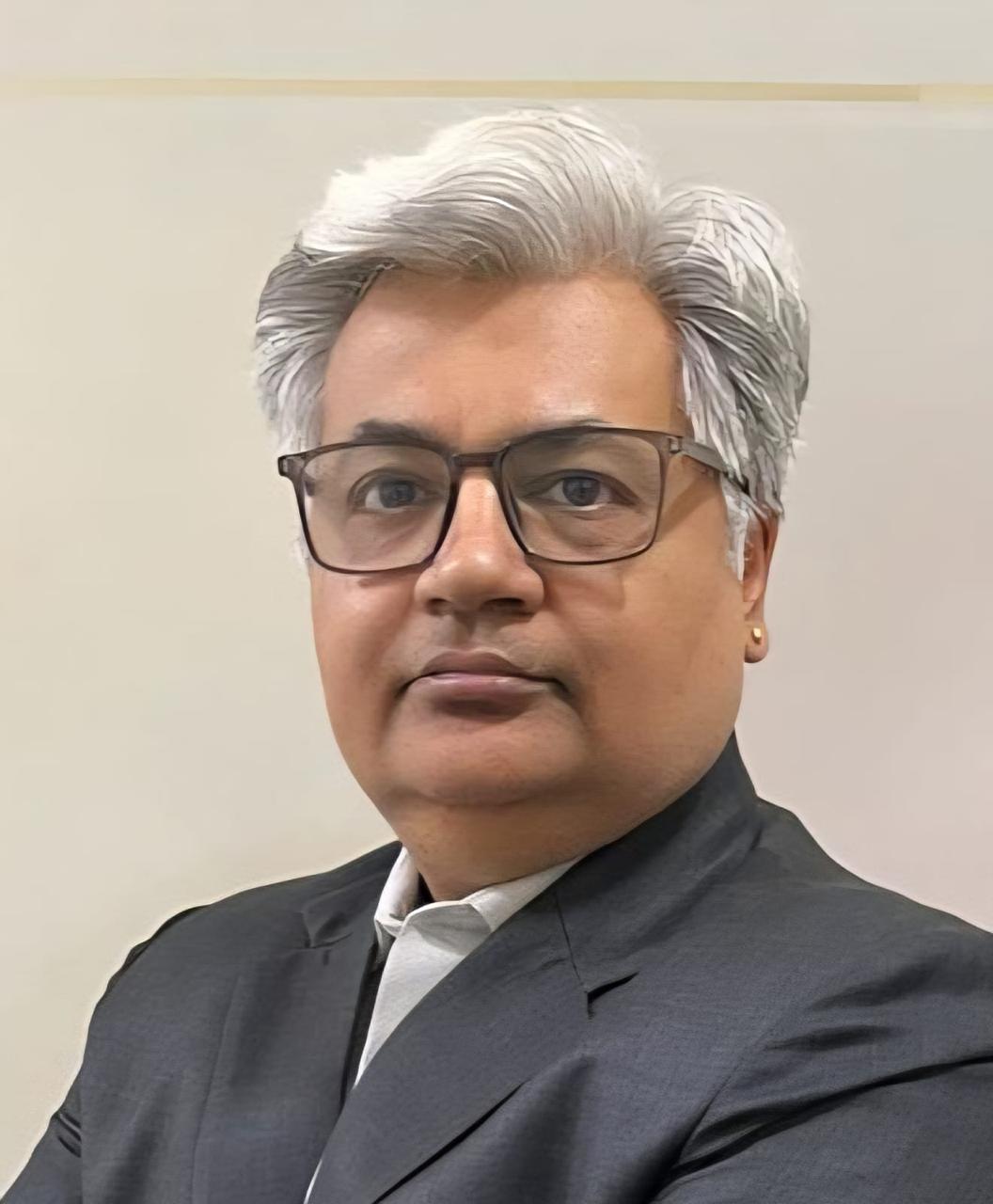
Charu Bhatia, Senior News Editor, Business Remedies, in conversation with Dr. Aadarsh Kabra, a renowned Vascular Surgeon in Jaipur, serving at Apex Hospital
Vascular surgery remains one of the lesser-known yet critically important specialties in modern medicine. In this in-depth interview, Dr. Aadarsh Kabra, a senior vascular surgeon from Jaipur, currently serving at Apex Hospital, speaks about his professional journey, the evolving scope of vascular surgery in India, ethical challenges in doctor–patient relationships, the role of technology, government initiatives in healthcare, and his message to the next generation of doctors.
Q: You are a highly respected doctor in Jaipur with vast experience in your field. Could you tell us about your professional journey?
 A: I am a Vascular surgeon, and that itself makes the journey quite distinct. Vascular surgery has traditionally not been part of the medical mainstream, and even today, awareness among clinicians as well as the general public remains limited. This lack of understanding is one of the reasons the specialty is often neglected, despite its growing relevance in today’s healthcare landscape.
What I have always strongly believed in is personalised patient care. No two patients are the same, and therefore, their treatment cannot follow a standardised template. This approach becomes even more important at a time when patients are increasingly dealing with multiple comorbidities such as Diabetes, Hypertension, Coronary Artery Disease, and Chronic Kidney Disease. Each of these factors influences outcomes and needs to be carefully considered while planning treatment.
I joined Apex Hospitals around 13 years ago as a vascular surgeon and have since been serving as the Head of the Department. Academically, I completed my MBBS from Belgaum, while my early schooling took place in Rajasthan. During my professional journey, I worked at Apollo Hospital in Chennai, and at Jain Institute of Vascular Scienes, Bangalore, where I noticed a significant number of patients travelling from Rajasthan and other northern states to seek advanced treatment. That experience was quite eye-opening.
I also spent considerable time working at Medanta Medicity in Gurgaon, which further shaped my clinical exposure. My formal training in vascular surgery began in 2001. Over the years, I have completed several international fellowships, which gave me valuable global exposure. In total, I spent nearly nine years in dedicated training for vascular surgery, including my senior residency, before I became a consultant at Medanta Medicity, Gurgaon. It has been a long and demanding journey, but one that has been deeply fulfilling.
Q: Vascular surgery is still a lesser-known specialty. What makes it different, and could you explain its scope?
A: Vascular surgery essentially involves the diagnosis and treatment of diseases affecting blood vessels throughout the body, excluding those of the brain and the heart. It is a highly specialised field that requires close coordination with other medical disciplines such as nephrology, critical care etc.
To give you a sense of how niche the field is, there are only four practising vascular surgeons in the entire state of Rajasthan. Recognising the need to build awareness and strengthen academic collaboration, we organised a major conference in October 2024 under the banner of the Vascular Society of india. The conference saw participation from nearly 400 delegates, including experts and students from across India and abroad. Specialists from Europe, the Middle East and other regions attended, making it a truly global exchange of ideas.
Beyond academics, we also focus on community engagement. At Apex Hospitals, we regularly organise social and awareness-driven activities. In 2023, we conducted a walkathon on the occasion of National Vascular Day to spread awareness about vascular health. In 2024, we also organised a half marathon on the theme of Amputation Free World, which saw participation from around 2,700 runners. Such initiatives are important to bring vascular health into public discourse.
If we look at the broader picture, India has approximately 600 vascular surgeons, including trainees. Southern states such as Kerala, Tamil Nadu, Karnataka and Andhra Pradesh have a much higher concentration compared to North India. Pune has one of the highest numbers of vascular surgeons, followed by Delhi.
Q: Doctor–patient relationships are often said to be deteriorating. What ethical responsibilities do you see on both sides?
A: I would like to add that I also serve as the Member Secretary of the Ethics Committee at Apex Hospitals. When we talk about strained doctor–patient relationships, it is important to acknowledge that the issue exists on both sides.
From the patient’s perspective, there is often a lack of understanding about the seriousness of comorbid conditions. Many patients do not take prescribed medications regularly or as advised. Some turn to alternative systems of medicine, believing them to be more effective. I am not against alternative medicine per se, but it may not always be the right choice, especially in complex or advanced medical conditions. Mob mentality and unrealistic expectations further complicate matters.
On the doctors’ side, there are also shortcomings. At times, instead of listening patiently to the patient’s concerns, doctors may recommend a battery of investigations without adequate explanation. This creates a communication gap and erodes trust.
In Rajasthan, several government schemes provide free treatment and medicines, which is a commendable initiative. However, as a result, many patients opt for these schemes and may not visit centres that can offer personalised care and attention. Patients also need to understand that a doctor’s role is to offer an opinion based on experience and available evidence. If a patient is not satisfied, seeking a second opinion is always an option. The right to decide ultimately lies with the patient.
Unfortunately, what often happens is that patients initially follow medical advice, and if outcomes are not favourable, the blame is placed entirely on doctors.
The media also has a significant role to play here. Healthcare is a sensitive institution. Sensational reporting aimed at boosting TRPs can create distrust in the medical system and negatively influence public perception.
With the increasing use of the Consumer Protection Act in healthcare, false and frivolous claims have also risen. It is important to understand that medicine does not work on absolutes. Outcomes are based on probabilities and percentages, not guarantees.
Q: How do you view the growing role of AI and robotics in medicine?
A: The inclusion of robotics in vascular surgery is still at a very early and nascent stage. In certain specialties such as General Surgery and Urology, robotics has already proven to be extremely useful. There are also a few centres globally where AI is being used extensively across various medical domains.
In the future, AI will certainly have a role to play in vascular surgery, particularly in reading scans, analysing imaging data and assessing patient conditions. However, it is important to emphasise that AI cannot replace the clinical judgement of a trained specialist. Nor can it replicate the human touch that is so central to patient care.
Q: What is your assessment of government initiatives and support for healthcare in India?
 A: The government is making genuine efforts to move towards a universal healthcare system for all citizens. However, many healthcare schemes and policies are designed by administrators who may not fully understand ground-level realities. I strongly believe that doctors should be recognised as key stakeholders and actively consulted while framing medical and healthcare policies.
There are schemes where not all diseases are covered, and in complex cases requiring multiple treatments, there is often no provision. Access to appropriate specialists also remains limited in many regions. To improve the quality of healthcare services, primary healthcare providers and physicians need to be better equipped so that patients receive accurate guidance and timely referrals.
The media also has a role to play in this ecosystem. It should strive to disseminate unbiased, scientific and evidence-based information on healthcare and medical issues.
Q: Antibiotic resistance is emerging as a serious global challenge. What are your views on this issue?
A: Antibiotic resistance is increasing at an alarming rate. One of the biggest contributors is self-medication. People often prescribe antibiotics to themselves without understanding that misuse can lead to resistance over time. In some cases, patients become multi-drug resistant, making treatment extremely complicated and difficult.
Although regulations exist and are enforced by the government, the problem persists with no clear end in sight. Another related issue is the overuse and misuse of antibiotics in animals. When we consume dairy products or meat from such animals, antibiotic resistance can accumulate in our bodies as well. This is a serious public health concern that needs urgent attention.
Q: What is your future vision for yourself and for the hospital?
A: My vision is to take this centre to greater heights by building a highly dedicated and ethical team of consultants, residents and paramedical staff. The focus will always remain on providing individualised, patient-centric treatment while upholding the highest standards of medical ethics.
Q: Finally, what message would you like to give young medical aspirants, especially those interested in vascular surgery?
A: I would say that the sky is limitless and wide open. The scope of vascular surgery is far beyond what most people imagine. There is immense potential and a genuine need for more surgeons in this field. I strongly encourage young doctors to explore this specialty and contribute to its growth.