


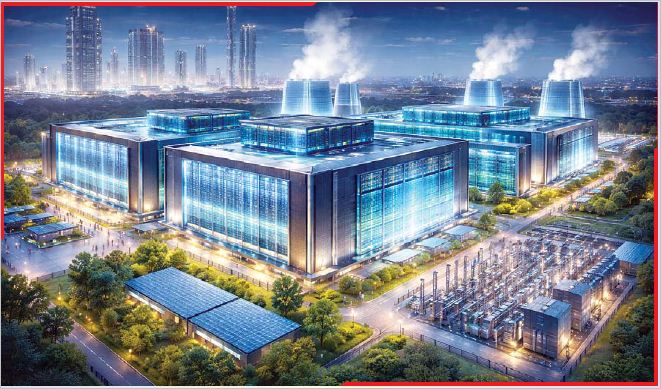
Charu Bhatia | Business Remedies | The rapid expansion of artificial intelligence is transforming not only the technology sector but also the global real estate market. AI data centres, specialised facilities designed to support high-performance computing and large-scale AI workloads, are emerging as one of the most sought-after new asset classes for investors, developers and governments.
Unlike traditional data centres that primarily support cloud storage and enterprise applications, AI data centres are built to handle intensive computing tasks such as machine learning training, generative AI processing and advanced analytics. These workloads require powerful graphics processing units (GPUs), advanced cooling systems and enormous energy capacity, making AI-ready facilities significantly more complex and expensive to build. As demand for AI services surges, so does the need for infrastructure capable of supporting it.
The scale of investment is unprecedented. Tech giants, cloud providers and AI startups are racing to secure land, power and infrastructure to expand their computing capacity. Industry analysts predict that global spending on AI data centre infrastructure will grow at a double-digit pace over the next decade, turning these facilities into long-term, high-value real estate investments.
One of the biggest drivers of this trend is power. AI data centres consume far more electricity than traditional facilities, often requiring dedicated substations or access to renewable energy sources. As a result, location selection has become strategic. Regions with reliable power grids, cooler climates and supportive regulatory environments are attracting significant interest from investors. This has sparked a new wave of development in emerging data centre hubs across Asia, the Middle East and parts of Europe.
For real estate investors, AI data centres offer attractive long-term returns. These facilities typically operate under long leases with major technology companies, ensuring stable and predictable income streams. In addition, the high cost and technical expertise required to build AI-ready infrastructure creates strong barriers to entry, limiting competition and increasing asset value.
Governments are also recognising the economic potential. Many countries are offering incentives to attract data centre projects, viewing them as catalysts for job creation, digital innovation and foreign investment. However, the growth of AI data centres also raises sustainability concerns. The energy and water demands of large facilities have sparked debates about environmental impact, pushing developers to prioritise renewable energy and efficient cooling technologies.
As artificial intelligence becomes embedded across industries, the infrastructure powering it is evolving into a cornerstone of modern real estate. AI data centres are no longer just technology assets, they are becoming strategic, long-term investments shaping the future of global property markets.