

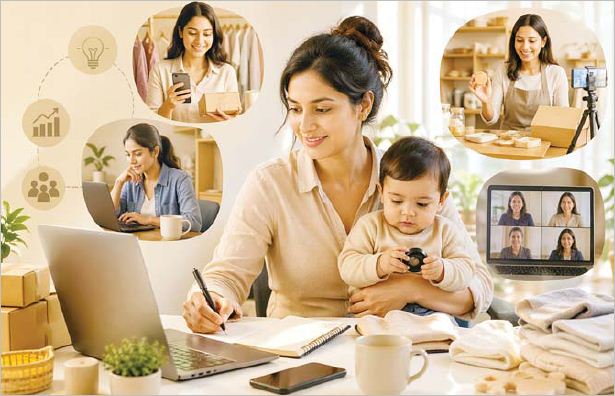
Jaipur | BR Team | A quiet but powerful shift is underway in the startup ecosystem. Across industries, more women are launching businesses after becoming mothers, building ventures that prioritise flexibility, purpose and financial independence. These “motherpreneurs” are reshaping entrepreneurship by creating companies designed around real-life needs, not traditional corporate structures.
Entrepreneurship After Motherhood
For many women, motherhood becomes a turning point in their careers. Returning to rigid work schedules after childcare breaks often feels challenging, prompting many to explore entrepreneurship as an alternative path. Starting a business offers the flexibility to manage both family responsibilities and professional ambitions. Digital tools, remote work culture and social commerce have made this transition easier than ever. Today, a laptop, smartphone and internet connection can be enough to launch and scale a business from home. As a result, a growing number of mothers are turning personal experiences into viable business ideas.
Building Businesses Around Real Problems
Motherpreneurs often create products and services rooted in their daily challenges. This has led to rapid growth in sectors such as parenting products, education technology, wellness, home-based food brands, digital services and e-commerce. Because these founders are also their target customers, they bring strong authenticity and insight to their ventures. Their businesses frequently focus on convenience, safety, affordability and community, values that resonate strongly with modern consumers. From homegrown food brands and kidswear labels to consulting services and digital agencies, flexible businesses are emerging as a major entrepreneurial trend.
Flexibility as a Competitive Advantage
Unlike traditional startups built for rapid scaling and long work hours, many mother-led ventures prioritise sustainable growth. Flexible working hours, remote teams and lean business models are common features. These businesses often rely on freelancers, digital platforms and small distributed teams instead of large offices.
This approach not only supports work-life balance but also reduces operating costs, making it easier to achieve profitability early. In an era where investors are increasingly focusing on sustainable growth, these lean models are gaining attention.
The Role of Communities and Social Media
Online communities have played a major role in the rise of motherpreneurs. Social media platforms allow founders to build loyal customer bases, share their journeys and market products without large advertising budgets. Support networks and women-focused startup communities are also helping founders access mentorship and funding opportunities.
A Growing Economic Force
As more women enter entrepreneurship through flexible business models, motherpreneurs are becoming an important force in the startup ecosystem. Their ventures are creating jobs, driving innovation and expanding the definition of what a successful business can look like.
The rise of motherpreneurs signals a broader shift in entrepreneurship, one where flexibility, purpose and sustainability are as important as growth and scale.