

Business Remedies | Charu Bhatia | May 13,2025 | The manufacturing industry has witnessed significant transformations over the past few decades, and as technology continues to evolve, the future of traditional manufacturing is poised for an even more dramatic shift. Among the most influential forces driving this change are 3D printing and automation. These technologies not only enhance efficiency and precision but also open the door to innovative manufacturing processes that were once considered unimaginable.
3D Printing: Revolutionizing Design and Production
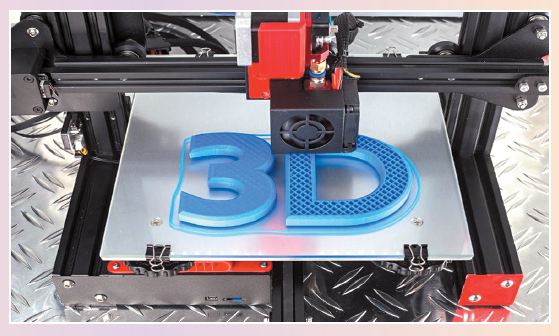
3D printing, also known as additive manufacturing, is one of the most groundbreaking technologies reshaping traditional manufacturing. Unlike traditional methods, which involve subtracting material from a larger block (such as milling or turning), 3D printing builds objects layer by layer, using digital designs to create complex shapes with minimal waste. This method allows for rapid prototyping, reduced production times, and the ability to produce highly customized products.
One of the most significant impacts of 3D printing on traditional manufacturing is its ability to streamline product design. Engineers and designers can quickly create prototypes, make adjustments in real-time, and test products with greater flexibility. This iterative process not only speeds up product development but also leads to more innovative designs that were previously difficult or impossible to achieve using traditional manufacturing methods.
In industries such as aerospace, automotive, and healthcare, 3D printing has become indispensable. For example, companies like Boeing and General Electric use 3D printing to manufacture lightweight, complex parts for aircraft, leading to reduced fuel consumption and lower operational costs. In healthcare, 3D printing enables the production of custom prosthetics and implants, improving patient outcomes and reducing the time needed for surgeries.
Automation: Streamlining Production and Enhancing Efficiency
Automation has long been a key element of modern manufacturing, but its role is becoming even more prominent as the demand for faster, more efficient production processes grows. Through the use of robotics, machine learning, and artificial intelligence, automation is transforming how products are made.
Robots and automated systems can now perform repetitive, precise tasks at speeds far beyond human capabilities. This not only reduces the risk of human error but also increases production efficiency, leading to faster turnaround times and reduced labor costs. Automation is also making manufacturing more flexible. For instance, automated systems can quickly switch between different tasks or products, making it easier for manufacturers to adapt to changing demands or produce smaller quantities of customized items.
In addition to efficiency, automation contributes to improving safety in the workplace. Dangerous tasks, such as handling hazardous materials or performing heavy lifting, can be managed by robots, reducing the risk of workplace injuries. Automation also enables manufacturers to maintain consistent quality standards by performing quality checks and inspections with precision.
The Future: Integration of 3D Printing and Automation
The real potential lies in the integration of 3D printing and automation. As these technologies continue to evolve, manufacturers are finding new ways to combine them to create smart, efficient production lines. The synergy between these technologies will enable highly flexible, on-demand manufacturing capabilities, where products can be produced locally, tailored to specific needs, and with minimal waste.
 Written & Edited By:
Charu Bhatia