
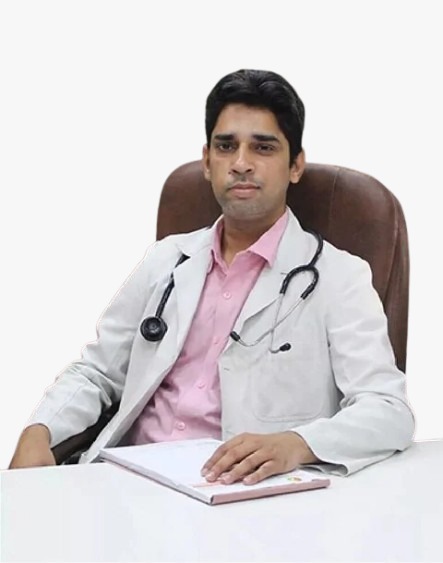
Charu Bhatia, Senior News Editor, Business Remedies, in conversation with Dr. Mohit Meena of ML Spine and Orthopaedic Multispeciality Hospital
India’s healthcare sector is undergoing a significant transformation, driven by advancements in medical technology, specialised treatment centres and the growing participation of private healthcare institutions. Among the professionals contributing to this evolving landscape is Dr. Mohit Meena, founder of ML Spine and Orthopaedic Multispeciality Hospital, Jaipur.
In this conversation, he shares insights about his medical journey, spine surgery advancements and the future of healthcare.
Q1. What inspired you to pursue a career in medicine?
Dr. Mohit Meena: I was born in the Bikaner district and grew up in a family closely connected with medicine. My father, Dr. ML Meena, served as a pediatrician in a government hospital for nearly three decades, primarily in Rajgarh.
Watching his dedication to community healthcare had a deep impact on me. It inspired me to pursue medicine as a profession where I could directly help people and contribute to society.
Q2. Could you tell us about your medical education and early career?
Dr. Mohit Meena: After completing my senior secondary education in Rajgarh, I moved to Kota to prepare for the pre-medical entrance examination. I later secured admission at SMS Medical College, where I completed my MBBS in 2007. After graduation, I briefly explored the civil services path. I moved to Delhi to prepare for the Civil Services Examination while working as a medical officer and also cleared the UPSC Combined Medical Services Examination. However, I eventually realised that my true passion was clinical medicine rather than administrative service.
Q3. Why did you choose orthopedics as your specialization?
Dr. Mohit Meena: Orthopedics is a field where doctors can directly restore mobility and independence in patients’ lives. Seeing patients regain movement and return to their normal lifestyle is incredibly rewarding.
This direct impact on a patient’s quality of life is what attracted me to orthopedics.
Q4. Where did you pursue your postgraduate training?
Dr. Mohit Meena: I pursued my postgraduate training in orthopedics at RNT Medical College, where I gained extensive exposure to trauma care, bone and joint disorders, and advanced surgical techniques. My wife served as Associate Professor in Microbiology in SMS Medical College, then and she cleared RPSC exam to become a senior demonstrator. During this time, I also faced personal challenges when my mother was diagnosed with cancer and later experienced complications following a hip replacement surgery. I paused my academic progression for nearly a year to support my family. That phase strengthened my resilience and reinforced the importance of balancing professional and personal responsibilities.
Q5. How did you specialise in spine surgery?
Dr. Mohit Meena: After completing my postgraduate studies, I joined Mahatma Gandhi Hospital as a Senior Resident during 2018–19. At the same time, I completed a Fellowship in Spine Surgery at Bombay Hospital. During this fellowship, I participated in more than 500 spine surgeries, gaining experience in managing:
- Degenerative spine disorders
- Spinal trauma injuries
- Spinal deformities
- Minimally invasive spine procedures
This training strengthened my focus on spine surgery as a specialised branch of orthopedics.
Q6. What led to the establishment of ML Spine and Orthopaedic Multispeciality Hospital?
Dr. Mohit Meena: In 2020, I returned to Jaipur with the vision of creating a specialised centre for advanced orthopedic and spine care. This vision led to the establishment of ML Spine and Orthopaedic Multispeciality Hospital. Alongside clinical practice, I was also involved in academics as Assistant Professor and later Associate Professor at Mahatma Gandhi Medical College and Hospital.
Building a healthcare institution requires not only medical expertise but also infrastructure planning, regulatory compliance and operational management. Despite the challenges, our goal has always been to provide quality treatment and patient safety.
Q7. How is technology transforming spine surgery today?
Dr. Mohit Meena: Technology has significantly improved spine surgery over the years. Earlier, surgeries relied entirely on manual precision. Today, navigation-assisted surgery allows surgeons to place implants with greater accuracy. More recently, robotic-assisted surgical systems have further improved surgical precision in complex spinal procedures. Artificial intelligence is also beginning to assist surgeons in analysing patient data and planning surgeries. However, technology is meant to assist surgeons — not replace them.
Q8. What are the most common myths about spine surgery?
Dr. Mohit Meena: One of the most common myths is that spine surgery leads to paralysis. In reality, with modern techniques and proper patient selection, spine surgery is extremely safe when performed by experienced surgeons. The risk of serious complications is very low — around 0.1 percent.
Another misconception is that patients need long bed rest after surgery. In many cases, patients can stand and walk shortly after the procedure depending on their condition.
Also, surgery is required only in a small percentage of cases. Most spine conditions can be managed with medication, physiotherapy and lifestyle modifications.
Q9. What is the treatment philosophy at your hospital?
Dr. Mohit Meena: At ML Spine and Orthopaedic Multispeciality Hospital, we focus on accurate diagnosis and personalised patient care. Each patient undergoes a comprehensive evaluation including medical history, lifestyle factors and detailed clinical examination. We follow internationally recognised AO principles in orthopedic surgery, which emphasise:
- Early and accurate diagnosis
- Scientific fracture management
- Faster recovery protocols
- Effective rehabilitation strategies
We also promote a holistic approach because bones, joints, muscles and nerves function as interconnected systems.
Q10. How do modern lifestyles affect spine health?
Dr. Mohit Meena: Modern lifestyle habits have significantly affected bone and spine health. Long hours on computers and smartphones often lead to poor posture, neck strain and muscular fatigue, commonly referred to as computer syndrome. Bones are living tissues and require proper activity and nutrition to remain strong. Lack of exercise, poor posture and nutritional deficiencies can contribute to conditions such as osteoporosis.
To maintain a healthy spine, I recommend focusing on four essential factors:
- Correct posture
- Regular physical activity
- Balanced nutrition
- Adequate sunlight exposure
Q11. What role do government healthcare schemes play?
Dr. Mohit Meena: Government healthcare initiatives play an important role in expanding access to medical treatment.
Programmes like Ayushman Bharat provide financial coverage for economically weaker sections, while the Rajasthan Government Health Scheme supports healthcare access for government employees. Although hospitals sometimes face operational challenges such as reimbursement delays, these schemes are essential for improving healthcare accessibility.
Q12. How do you see healthcare development in Rajasthan?
Dr. Mohit Meena: Rajasthan has made significant progress in healthcare infrastructure in recent years. However, there is still scope for improvement when compared with neighbouring states like Haryana, Punjab, Gujarat and Delhi. Increasing the number of trained healthcare professionals and raising awareness about preventive healthcare will be crucial for future progress.
Q13. What is your vision for the future of the hospital?
Dr. Mohit Meena: What began as a 100-bed facility has now expanded into a 200-bed multispeciality hospital offering services in:
- Pediatrics
- Gynecology
- General Medicine
- General Surgery
- Interventional Radiology
- Orthopedics and Sports Injury
- Gastroenterology
- Neurology and Neuroscience
- Urology and Nephrology
- ENT
- Cardioscience
Our long-term vision includes establishing a dedicated trauma centre on the outskirts of Jaipur equipped with departments such as cardiology and oncology to provide rapid emergency care.
Q14. What advice would you give to young medical aspirants?
Dr. Mohit Meena: Medicine is a challenging yet deeply rewarding profession. Orthopedics and spine surgery are evolving rapidly with new technologies and treatment methods. At the same time, increasing urbanisation and lifestyle changes are leading to a growing number of spine disorders and trauma cases. This means the demand for skilled orthopedic specialists will continue to grow. However, success in medicine requires dedication, continuous learning and compassion for patients. Above all, accurate diagnosis remains the foundation of effective treatment and quality healthcare.


