
Physiotherapy has evolved significantly over the years, moving from a largely equipment-light practice to a technology-driven field that increasingly uses artificial intelligence, robotics and advanced rehabilitation tools. At the same time, changing lifestyles, prolonged sitting, sedentary work and growing incidences of lifestyle-related musculoskeletal problems have made physiotherapy relevant for people across age groups.
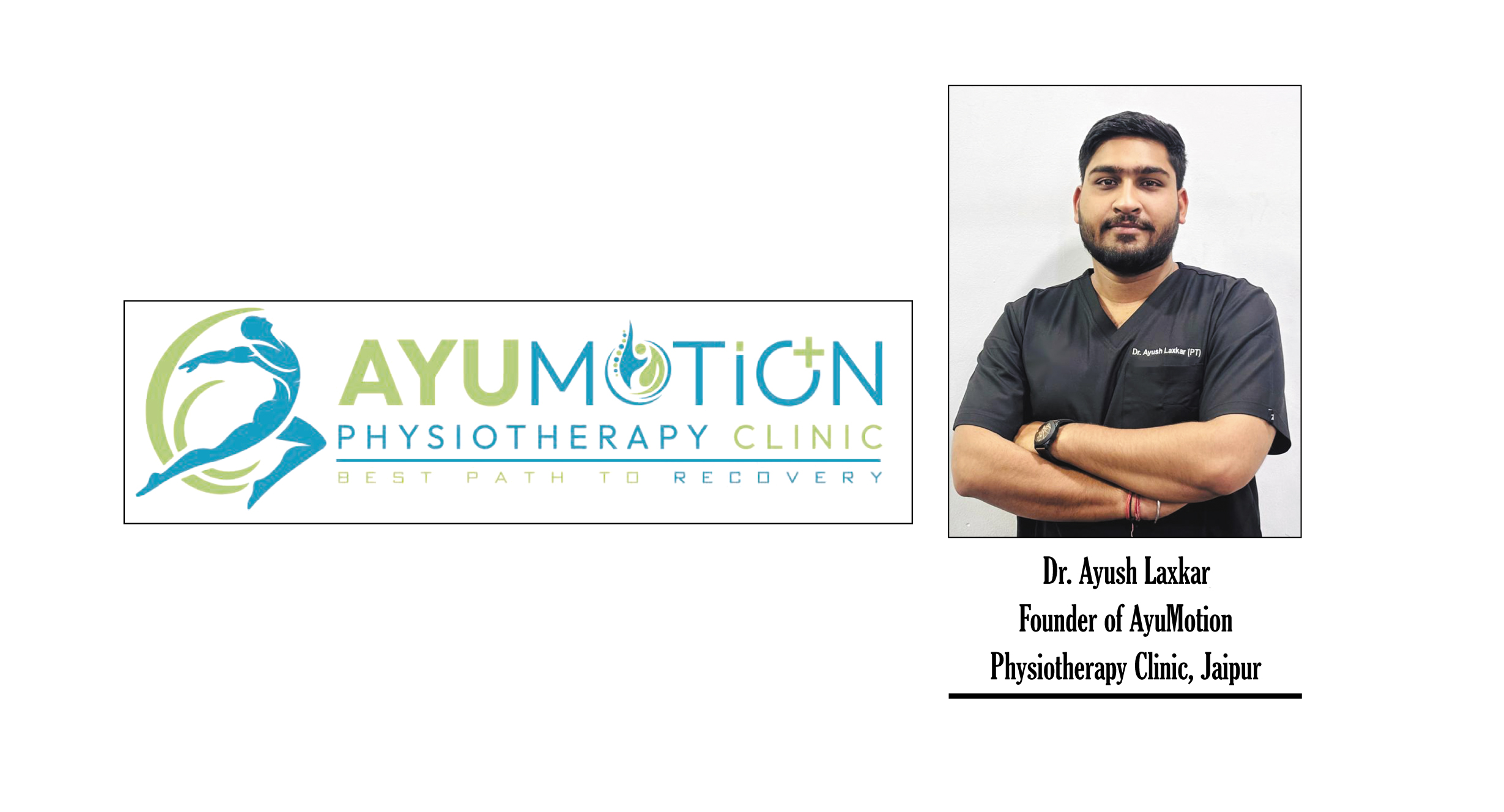
As the founder of AyuMotion Physiotherapy Clinic and a neuro physiotherapist, Dr. Ayush Laxkar has worked with patients dealing with neurological conditions, movement disorders, paralysis, balance problems and spinal cord injuries. In an interaction, the founder spoke about the journey into physiotherapy, the role of technology and AI in rehabilitation, the importance of preventive exercises, sports injuries, pregnancy-related physiotherapy and the need to expand awareness in smaller cities.
You are the founder of AyuMotion Physiotherapy Clinic. What has your journey been like, and what inspired you to enter this field?
My journey into physiotherapy was somewhat unexpected. I had appeared for NEET and got selected but was getting a far-off college. Finally, I decided to pursue physiotherapy. Initially, I was not particularly interested in the field and believed that its scope was limited. However, as I started studying and interacting with patients, my perspective gradually changed.
I completed my physiotherapy course from Jaipur National University. During the course of my journey, I realised that physiotherapy has a very wide scope and can make a meaningful difference in people’s lives. Today, one of the most satisfying aspects of my profession is listening to patients talk about their pain and difficulties and then helping them achieve better outcomes. Seeing a patient improve and become more independent gives me immense professional and personal satisfaction.
How has the field of physiotherapy evolved over the years?
Physiotherapy has undergone considerable transformation. Earlier, the field had limited equipment and rehabilitation largely depended on conventional techniques and exercises. With continuous research and technological advancement, the approach has become much more sophisticated.
Today, technologies such as artificial intelligence, robotics and advanced rehabilitation equipment are increasingly being used. These developments have helped physiotherapists assess movement more accurately and design better rehabilitation programmes. The field is becoming more organised, evidence-based and technology-driven.
Today’s generation is often called the ‘sitting generation’. What are the long-term health implications of sitting for prolonged periods?
Prolonged sitting can contribute to several posture-related problems. We increasingly see issues such as rounded shoulders, back pain, cervical problems and persistent muscle discomfort among people who spend long hours sitting.
The impact is not restricted to physical health. A sedentary lifestyle can also affect mental well-being. When people remain physically inactive for long periods, they may experience reduced energy and motivation and may become less physically active overall. Maintaining movement throughout the day is therefore important.
How can artificial intelligence and technology aid physiotherapy and rehabilitation?
Technology can be particularly useful in conditions such as paralysis and spinal cord injuries. Modern rehabilitation equipment can provide biofeedback, allowing patients and therapists to understand how muscles are responding during movement.
Some equipment can observe and measure muscle movements that may not be visible to the naked eye. This gives physiotherapists additional information while assessing a patient’s condition and tracking rehabilitation. AI and technology should be viewed as tools that support the therapist and help make rehabilitation more precise and effective.
What services do you specialise in at AyuMotion, and how does neuro physiotherapy differ from orthopaedic physiotherapy?
I specialise in neuro physiotherapy, where we deal with various neurological conditions. These include paralysis, movement disorders, balance-related problems, Parkinson’s disease and spinal cord injuries, among others.
Orthopaedic physiotherapy primarily focuses on musculoskeletal and bone- and joint-related problems. Neuro rehabilitation can be very different because neurological conditions may require prolonged rehabilitation. In some cases, patients may need physiotherapy for a very long period or even throughout their lives to maintain mobility, function and independence.
What routine exercises would you recommend for maintaining overall physical health?
People should incorporate regular physical activity into their daily routine. Stretching exercises, breathing exercises, yoga and meditation can be useful. Depending on an individual’s fitness level and health condition, activities such as going to the gym, running or brisk walking can also be included.
The important thing is consistency. People should choose activities that suit their body and fitness levels rather than exercising excessively without proper guidance.
How do you personalise rehabilitation plans for individual patients?
Rehabilitation cannot follow a one-size-fits-all approach. We plan sessions according to the patient’s symptoms, condition and functional requirements. For example, if a person has rounded shoulders, the treatment programme is designed after assessing the specific postural problem and its underlying causes.
The objective is to understand the patient’s individual requirement and then structure exercises and rehabilitation accordingly.
Are sports injuries becoming common even among people who are not professional athletes?
Yes, sports injuries are becoming increasingly common. One important reason is that people sometimes start playing a sport without adequate training, conditioning or warm-up.
ACL injuries are among the commonly seen sports injuries, and falls can be one of the causes. Different sports can result in different types of injuries. Cricket and football, for instance, involve their own set of risks, while repetitive activities in sports such as tennis can lead to overuse injuries, including problems related to the wrist.
Injuries are not limited to sportspeople either. Repetitive household activities and continuous physical exertion can also cause overuse-related problems, including among women who undertake prolonged household work.
Many young people are now joining gyms and focusing on muscle-strengthening exercises. What is your view?
Muscle-strengthening exercises are beneficial when performed correctly and according to an individual’s capacity. They can contribute to better strength and posture adaptation. However, people should learn the correct technique and avoid lifting excessive weights or exercising without considering their body’s requirements.
Is physiotherapy recommended during pregnancy?
Physiotherapy can play an important role during both the pre-natal and post-natal periods. Exercises can be planned according to the trimester to support the health and physical well-being of both the mother and baby.
During pregnancy, appropriate exercises can help with muscle strengthening and preparation for childbirth. Physiotherapy can also support muscle contraction and relaxation. After delivery, post-natal physiotherapy can help reduce certain complications, improve strength and assist women in maintaining appropriate posture.
What are the biggest awareness gaps when it comes to physiotherapy?
Awareness is increasing in urban areas, where people are becoming more conscious of the importance of physiotherapy. However, there is still a significant awareness gap in rural and smaller communities.
We try to address this through physiotherapy camps in different parts of the city. Such initiatives allow people to understand when physiotherapy may be beneficial and encourage them to seek professional advice. Physiotherapy Day on September 8 is also an opportunity to spread awareness, with various programmes and activities being organised around it.
How can awareness about physiotherapy be taken to Tier-3 cities and smaller towns?
Physiotherapy camps can be one of the most effective ways to reach people in smaller cities and towns. It is important to educate people about the role physiotherapy can play in rehabilitation and recovery.
Doctors also have an important role. If doctors recommend physiotherapy wherever clinically appropriate, patients are more likely to understand its importance and seek professional help. People should also know that in certain conditions, physiotherapy may help improve function and recovery and, where appropriate, potentially reduce the need for invasive interventions. However, treatment decisions should always be based on individual medical assessment.
Should regular physiotherapy become part of corporate wellness programmes?
Yes, definitely. The biggest challenge for corporate employees is often time. People working long hours may find it difficult to dedicate separate time to physical fitness.
Companies can encourage employees to perform simple stretches and mobility exercises during breaks. Online physiotherapy consultations can also help employees learn appropriate exercises without requiring significant additional time. Even people with packed schedules can incorporate short exercise sessions into their routine.
What message would you like to give aspiring physiotherapists?
I would tell aspiring physiotherapists that the scope of the profession is very wide. The field was less organised and developed earlier, but today, it has become much more structured and advanced. Admission processes have also evolved, including the introduction of NEET-based admissions in relevant programmes, and the number of seats has increased.
For young aspirants, hard work and dedication are extremely important. Physiotherapy requires patience because rehabilitation can sometimes take time. But when you see a person recover, become more independent or experience relief from pain, the satisfaction is immense. That sense of helping people is what makes this profession truly rewarding.