


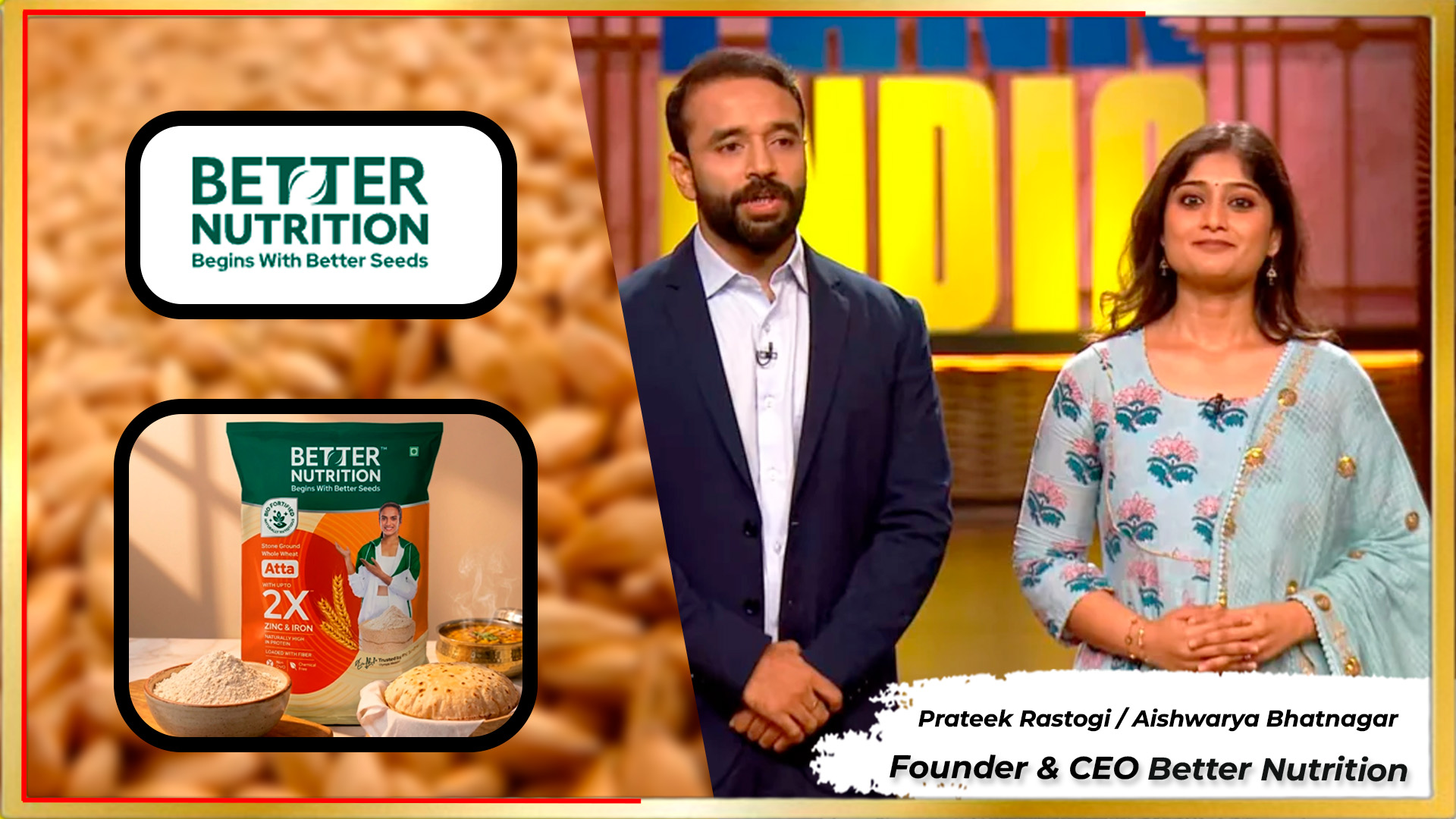
Rajshree Upadhyaya | Business Remedies | Better Nutrition was established in 2023 in Lucknow by Prateek Rastogi and Aishwarya Bhatnagar with a simple yet powerful belief that everyday Indian food should naturally deliver better nutrition without forcing consumers to change their eating habits. Both founders had already spent years working closely with farmers through agri-focused initiatives, where they witnessed firsthand how widespread micronutrient deficiencies affect both rural producers and urban consumers. This ground level exposure shaped Better Nutrition as a brand rooted in agricultural science rather than packaged health claims, with the founders committing to improving nutrition at the seed and soil level.
The company was built around the concept of biofortification. This process enhances the natural nutrient content of crops through scientific seed selection and controlled farming practices instead of chemical fortification. Better Nutrition began working with thousands of farmers, supplying them with biofortified seeds and agronomic guidance so that crops such as wheat, rice, and millets could deliver higher levels of iron, zinc, protein, and calcium. This approach allowed the brand to maintain control over quality from cultivation to consumption while simultaneously improving farmer incomes and strengthening crop resilience.
As the farm-level ecosystem matured, Better Nutrition expanded into consumer-facing offerings with a portfolio that included biofortified atta, biofortified rice, and other daily staples designed specifically for Indian kitchens. The brand positioned these products not as premium health foods but as practical upgrades to everyday groceries, ensuring that pricing and availability remained accessible. The emphasis remained on invisible nutrition, where families receive improved nourishment without altering taste, cooking methods, or cultural food habits.
The brand entered the national spotlight when Better Nutrition appeared on Shark Tank India Season 4 in early 2025. Prateek Rastogi and Aishwarya Bhatnagar pitched the company seeking ₹60 lakh for 1 percent equity, valuing the business at ₹60 crore. Their presentation highlighted the scale of India’s hidden hunger challenge and demonstrated how biofortified staples could address the issue at a population level rather than through individual supplementation. The clarity of their integrated supply chain and farmer-backed model resonated with the sharks, resulting in a deal with Namita Thapar, who invested the full amount with a royalty component until recovery.
The Shark Tank exposure proved transformative. Consumer awareness increased rapidly, and Better Nutrition witnessed a sharp rise in online orders across quick commerce and e-commerce platforms. The brand reportedly recorded multifold growth in revenue and order volumes within months of the episode airing, validating both market demand and product relevance. The visibility also strengthened the company’s credibility among retail partners and institutional buyers exploring nutrition-led food solutions.
Following Shark Tank, Better Nutrition raised a larger seed funding round of approximately ₹10 crore with participation from prominent investors, including PV Sindhu. The capital was directed toward expanding product categories, strengthening quality verification systems, and scaling distribution across Tier 2 and Tier 3 cities where nutritional deficiencies are often more prevalent. The company also invested in nutrient testing and traceability systems to scientifically validate micronutrient content at the batch level, reinforcing transparency and consumer trust.
As of now, Better Nutrition is fully operational and actively scaling. The company continues to collaborate with over fifteen thousand farmers while gradually expanding its consumer portfolio beyond grains into additional staple categories. From its origins in Lucknow to its growing national presence, Better Nutrition stands as a rare example of a food brand that treats nutrition not as a marketing promise but as an agricultural outcome, quietly reshaping how everyday Indian food can nourish millions without changing what ends up on the plate.