
Jaipur | Business Remedies | April 26,2025 | Gold has captivated humankind for millennia, serving not only as a symbol of wealth but as a cornerstone of the global financial system. Understanding what drives gold prices is crucial for investors, economists, and anyone interested in the value of this precious metal.
Understanding Gold as an Asset
Gold’s distinctive characteristics set it apart from other investments. Beyond its luster, the metal’s limited supply and indestructible nature have contributed to its stability as a long-term store of value. Gold cannot be printed like currency or created out of thin air. Its scarcity and permanence have made it a hedge against currency devaluation or inflation and economic instability.
Unlike stocks or bonds, gold is tangible. It maintains high liquidity across global markets and is universally recognized as valuable, regardless of political or economic conditions. These properties make it an attractive part of diversified investment portfolios.
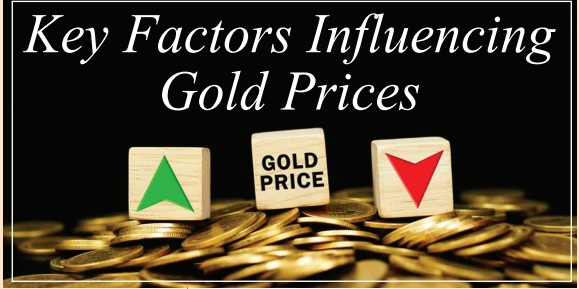
Key Factors Influencing Gold Prices
Gold Supply and Mining Production
As with any produced commodity, the law of supply and demand fundamentally drives the price of gold. Yet, gold is fairly unique because new supply each year is small compared with the total existing stock, making prices particularly sensitive to fluctuations in demand or sentiment rather than production levels.
Central Bank Reserves
Central banks influence gold prices through their reserve management policies. They hold about one-fifth of all gold ever mined. Central banks buy gold to maintain stability and credibility in their monetary systems and preserve national wealth against various economic risks, and when they do make large purchases, their actions can drive up global gold prices by both reducing available supply and signaling confidence in gold as a strategic asset.
Inflation and the Value of the U.S. Dollar
Since gold is often dollar-denominated on world markets, its price tends to exhibit an inverse relationship with the U.S. dollar. Gold is comparatively less expensive for foreign buyers when the dollar weakens against other major currencies, potentially increasing demand and driving up prices. Conversely, a stronger dollar often corresponds with lower gold prices.
Economic Uncertainty and Safe Haven Demand
Market volatility, geopolitical tensions, and economic crises often drive investors toward gold as a safe haven asset. During periods of uncertainty, gold’s historical stability and lack of correlation with other financial assets make it particularly attractive.
Investor Demand Through ETFs and Mutual Funds
Investment demand for gold through specialized mutual funds, exchange-traded funds (ETFs), and other investment vehicles has emerged as a major force in the gold market since the early 2000s, fundamentally changing how both institutional and retail investors access gold. These financial products allow investors to gain exposure to gold prices without the logistical challenges of storing and securing actual bullion, effectively democratizing gold investment.
 Written & Edited By:
Charu Bhatia