

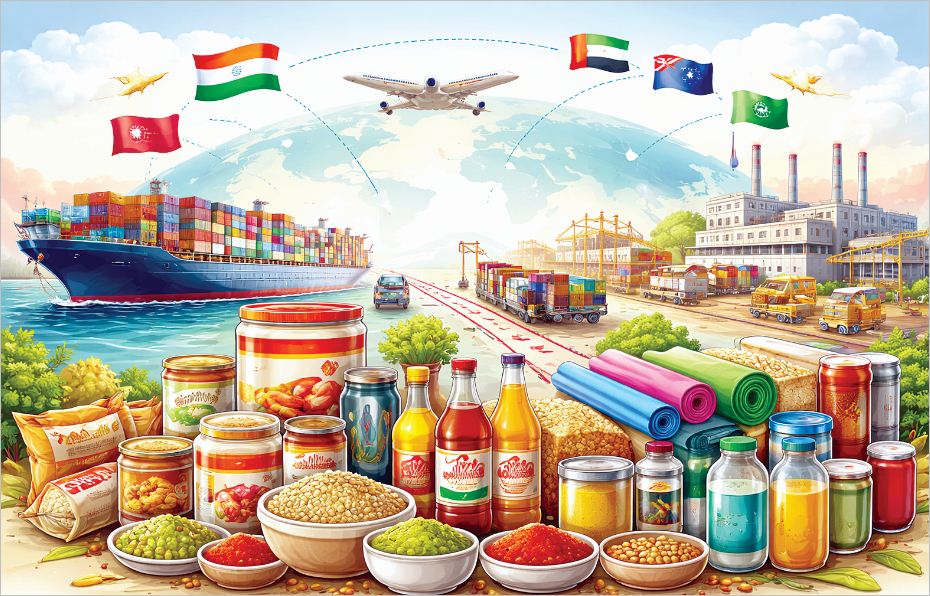
Jaipur | Charu Bhatia | Global trade agreements are quietly redrawing the map for processed goods, from packaged foods and chemicals to textiles and specialty materials. As countries sign more free trade agreements (FTAs) and reduce tariffs, the focus is shifting from exporting raw materials to shipping value-added products. For India and other emerging manufacturing hubs, this shift could redefine competitiveness in the coming decade.
Traditionally, many developing economies exported raw commodities while importing finished products. Trade agreements are now encouraging the opposite. Lower tariffs on processed foods, packaged goods, chemicals and manufactured inputs are helping companies move up the value chain, increasing margins and strengthening export resilience.
For India, recent trade deals with markets such as the UAE and Australia have already begun to open new doors for processed food, beverages, textiles and specialty chemicals. Reduced duties and simplified customs procedures make Indian processed goods more price-competitive abroad. In sectors like ready-to-eat foods, spices, marine products and dairy derivatives, exporters are gaining faster access to high-value markets.
A major benefit of trade agreements is the creation of predictable supply chains. When tariffs fall and rules become clearer, companies are more willing to invest in processing capacity. This includes setting up factories, building cold chains and expanding packaging infrastructure. As a result, processing industries are increasingly becoming investment magnets.
Another key shift is the rise of “rules of origin” requirements. These rules determine how much of a product must be made locally to qualify for tariff benefits. To meet these conditions, companies are strengthening domestic sourcing and local manufacturing. This trend is encouraging deeper integration of farmers, MSMEs and suppliers into global value chains.
Trade agreements are also pushing higher quality and safety standards. Export markets often require strict certification, traceability and packaging norms. While this raises compliance costs initially, it ultimately improves product quality and builds long-term credibility for exporters. Over time, this can help domestic brands compete globally.
However, the changing trade landscape also brings challenges. Increased imports of processed goods can intensify competition for local manufacturers. To stay competitive, companies must invest in technology, automation and branding rather than relying only on cost advantages.
Looking ahead, the processed goods sector is likely to benefit from the “China+1” strategy, as global buyers diversify supply chains. Countries that combine trade access, manufacturing capability and policy support will gain the most.
In this evolving environment, trade agreements are no longer just diplomatic tools, they are powerful economic levers shaping the future of processing industries and global commerce.