


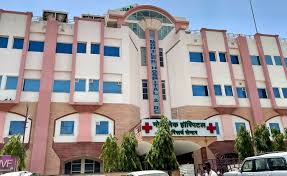
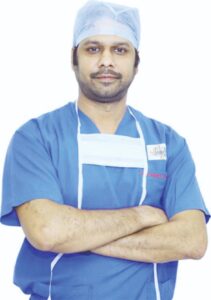
Charu Bhatia, Senior News Editor, Business Remedies, in conversation with Dr. Abhishek Chachan, Orthopedic Surgeon at Monilek Hospital
From growing up in a small town in Rajasthan with limited educational resources to becoming one of Jaipur’s most respected orthopedic surgeons, Dr. Abhishek Chachan’s journey is a testament to perseverance, discipline, and an unwavering commitment to healing. Today, he serves as a Senior Orthopedic Consultant at Monilek Hospital and Research Institute in Jaipur, where he performs orthopedic procedures such as complex fracture fixations, spine surgeries, sports injuries surgeries and joint replacement surgeries, with a patient-first philosophy.
In this exclusive conversation, Dr. Chachan opens up about his early struggles, the evolution of orthopedic science, myths surrounding surgeries, the impact of AI, and what the next generation of doctors needs to understand about the profession.

Q: You are a well-known orthopedic in Jaipur. How has your journey been from childhood to where you are today?
A: I come from a small town in the Hanumangarh district called Bhadra. Growing up, access to good educational facilities was limited. After my secondary school examination, I chose the science stream, but since my hometown lacked proper coaching and infrastructure, I had to travel to a nearby town for classes. Being in a government school meant fewer resources, sometimes even exams were cancelled due to administrative issues. But despite the challenges, our dedication kept us moving forward.
After completing senior secondary school, I went to Kota to pursue my ambition of becoming a doctor. I cleared the CPMT examination and opted for a government medical college in Salem, Tamil Nadu, for my MBBS. One of the reasons I chose Tamil Nadu was the strong culture of sincerity, discipline, and punctuality I saw in the medical community there. The initial days were tough, adjusting to a completely different culture, learning a new language, and adapting to a diet centered on rice instead of roti. But I embraced every bit of it. Within a year, I could speak basic Tamil, which significantly improved my interaction with patients.
After completing my internship, I took the Pre-PG examination, secured the 65th rank, and chose MS Orthopedics at Mahatma Gandhi Medical College through the government quota. My career thereafter took me to Delhi, Pune, and eventually SMS Medical College, where I worked as a senior resident doctor. I also completed a fellowship in Joint Replacement Surgery, Sports Injury Surgery and Spine Surgery before joining Monilek Hospital in 2016. Today, after years of experience, multiple roles, and countless surgeries, I feel grateful for the journey, from a small-town boy with limited opportunities to an orthopedic surgeon serving thousands in Jaipur.
Q: Why did you choose orthopedics as your specialty?
 A: Orthopedics fascinated me from the beginning because of its diversity. Unlike many other specialties that focus on a single organ or system, orthopedics covers a broad range, complex trauma, spine surgeries, sports injuries, ankle and knee conditions, and joint replacements. Every case is different, and every surgery presents a new challenge. The variety keeps the profession interesting and pushes you to refine your skills constantly.
Q: What differences did you notice between working in a private hospital and a government hospital like SMS? How was your experience at SMS?
A: Working at SMS was one of the toughest yet most rewarding phases of my life. As a senior resident doctor, the exposure was enormous. I performed nearly ten surgeries a day, all under tight schedules. Sometimes I had to skip meals, and duty shifts stretched up to 36 continuous hours. It was physically and mentally exhausting, but it shaped me as a surgeon.
Government hospitals offer massive patient inflow, which accelerates learning. In contrast, private hospitals focus more on personalised care, better infrastructure, and streamlined workflows. Both experiences are valuable, but SMS taught me resilience and refined my surgical instincts.
Q: How do you view the intersection of law and medicine? Why are doctors often blamed for mishaps?
A: One of the biggest challenges today is the gap in public awareness. Many orthopedic patients initially visit quacks, people with no formal medical training. The techniques they use often worsen the condition by blocking blood vessels or causing additional complications. By the time such patients reach us, the situation is already serious. If outcomes are not ideal due to late presentation, the blame still falls on doctors.
Every surgical procedure involves signing a consent form explaining risks and outcomes, yet many patients do not fully understand or acknowledge these details. Another issue is confusion between orthopedic surgeons and neurosurgeons regarding spine surgeries. Here, let me clear the confusion. If the problem lies within the spinal cord like tumour, a neurosurgeon is needed; if spinal cord or its branches/roots are compressed externally by a protruded disc, lumbar canal stenosis, there orthopedic surgeon is best for it. Lack of understanding fuels misconceptions, which sometimes escalate into legal disputes.
The Indian judiciary is largely patient-sympathetic, which is good, but it often leaves doctors feeling vulnerable. Better public awareness is essential.

Q: How do government healthcare schemes impact doctors and patients?
A: Government schemes make healthcare far more affordable for patients, which is commendable. But for doctors, the challenge lies in performing surgeries at significantly reduced costs. High-quality implants and equipment have fixed prices. Earlier, a surgery costing around ₹1.5-2 lakh is now sometimes performed for as little as ₹50,000-75,000. This impacts the consistency of healthcare quality. The intention behind these schemes is noble, but sustainable pricing is necessary for maintaining high standards.
Q: How do you see the inclusion of AI in healthcare, especially in orthopedics? What are your views on robotic surgeries?
A: AI has brought remarkable precision into orthopedics. From accurate measurements to surgical planning, AI tools reduce human error significantly.
When it comes to robotic surgeries, people often assume robots perform the surgery alone, that’s not true. Robots assist by providing high-accuracy dimensions, sensor inputs, and detailed computer-guided visuals. The surgeon still makes the final decision. In my practice, 95% of surgeries are done without robotic assistance, and the outcomes remain excellent. Robots enhance precision, but they don’t replace human expertise.
Q: Many patients delay Total Knee Replacement (TKR) due to fears about recovery time, driving restrictions, or the lifespan of implants. What concerns do they express, and how do you reassure them?
A: A lot of patients come in with deep-seated fears shaped by myths. Many believe that TKR has a low success rate, but in reality, it’s one of the most successful orthopedic surgeries, with around 90% success.
Another myth is that they should wait until the pain becomes unbearable. Early intervention actually improves outcomes significantly.
Patients worry about driving as well. With proper rehabilitation and medical clearance, most can resume driving within 6–8 weeks.
Recovery time varies, but with modern surgical techniques, many patients regain mobility much sooner than they expect.
There’s also confusion about whether both knees can be operated on together. For suitable patients, simultaneous bilateral TKR is safe and beneficial, it means one hospital stay, one recovery period, and a quicker return to daily life.
Age is not a barrier; clinical fitness matters more. Obesity also does not disqualify candidates. We successfully operated on a 115-kg patient at Monilek Hospital, and her recovery was excellent.
Finally, many believe TKR implants last only five to ten years. With advanced technology, modern implants can easily last for twenty to twenty-five years. Once patients understand these facts, their anxiety reduces dramatically.
Q: Spine surgeries are often viewed as risky. What concerns do patients express, and how do you address these myths?
A: Spine surgery has evolved drastically, but public perception hasn’t. Many still think it’s dangerous or that it often fails. Today’s advanced technology allows us to detect spinal cord or nerve-root irritation during surgery in real time. Our implants, like high-strength rods and screws, are so robust that patients can often stand and walk the next day.
The fear of paralysis is widespread, but paralysis occurs only when the spinal cord or nerves are severely damaged, which is extremely rare. Most spine surgeries today, slip disc, nerve decompression, lumbar canal stenosis, are performed at lower levels of the spine, where paralysis risk is less than 1%.
Patients no longer require prolonged bed rest. Early mobility is the standard protocol, and minimally invasive slip-disc surgeries allow patients to walk the very next day. Even severe spinal fractures can often be rehabilitated to allow sitting and daily activity.
Persistent pain after surgery usually happens due to delay. Only 5–6% of slip-disc cases need surgery, but those who need it often avoid it until irreversible nerve changes occur. When surgery is timely, results are excellent.
Q: What message would you like to give young medical aspirants?
A: Being a doctor is not about praise, status, or money. It’s about service. If you enter the field thinking you will be worshipped or become wealthy overnight, you’re mistaken. True satisfaction comes from improving someone’s life.
And most importantly, learning never stops. Even after years of practice, I continue to attend conferences, workshops, and seminars to stay updated on new advancements. Medicine evolves every day, and as doctors, we must evolve with it. Dedication, humility, and continuous learning are the pillars of this profession.


