


205

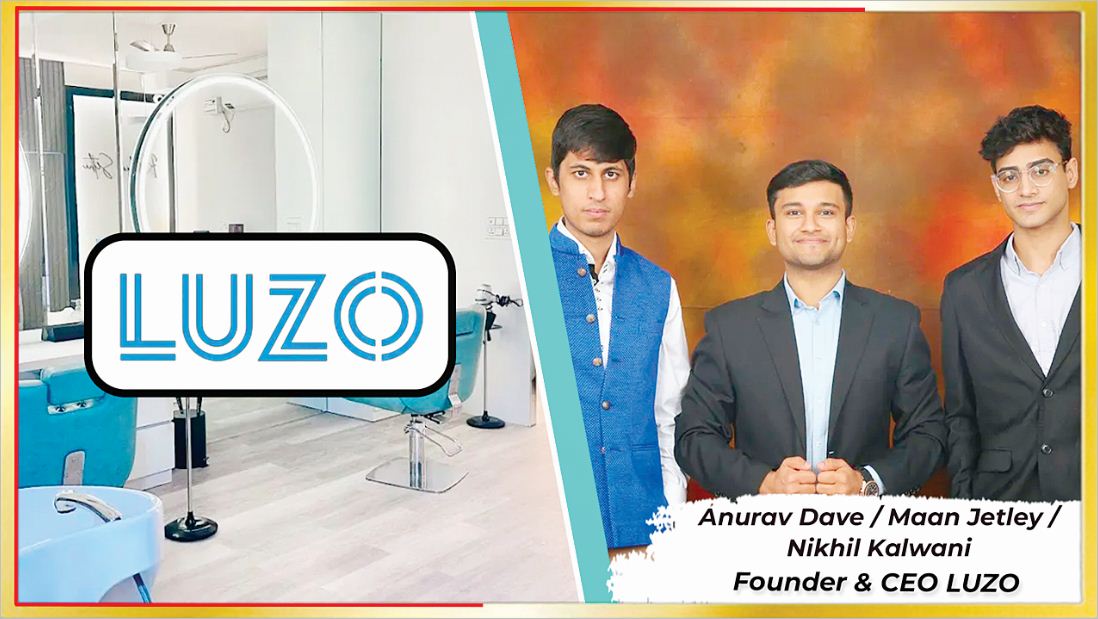
Jaipur | Rajshree Upadhyaya | When Anurav Dave, Maan Jetley, and Nikhil Kalwani founded Luzo in 2021, they were attempting to solve a problem hidden in plain sight within India’s fast-growing beauty and wellness industry. Despite its scale, the sector remained highly unorganized, with salons and spas struggling to maintain consistent footfall while customers faced difficulty in discovering reliable services and booking them conveniently. This inefficiency between supply and demand became the starting point for Luzo, a Mumbai-based startup built to streamline how people access grooming and wellness services.
The idea gained clarity during the post-pandemic phase, when the founders noticed that many salons were operating far below capacity, often leaving multiple appointment slots unfilled each day. At the same time, urban consumers were shifting towards digital convenience, expecting seamless booking experiences similar to food delivery or travel platforms. Luzo stepped in to bridge this gap by creating a tech-enabled ecosystem that could connect users with verified service providers while optimizing business for salon owners.
At its core, Luzo offers a mobile based beauty and wellness discovery and booking platform that allows users to browse nearby salons, spas, and clinics, compare services, and book appointments instantly. The platform is designed to integrate real time scheduling, secure payment solutions and curated service discovery, ensuring a smooth end-to-end experience for users. On the business side, Luzo provides partners with customer acquisition, support demand aggregation and tools to monetize idle inventory, helping salons convert unused capacity into consistent revenue.
What strengthens Luzo’s model is its focus on driving repeat behavior. By offering curated deals and value-driven pricing, the platform encourages users to book services more frequently, while simultaneously ensuring that partner salons maintain steady occupancy. The company operates on a commission-based revenue model, earning a share from each booking, which aligns its growth directly with the performance of its partner network.
Luzo gained wider recognition when it appeared on Shark Tank India Season 3, where the founders presented their vision of digitizing the beauty services market. They entered the tank seeking Rs. 1 crore for 1 percent equity, valuing the company at Rs. 100 crore. While the Sharks appreciated the clarity of the problem being solved and the scalability of the platform, they also raised concerns around margins and long-term differentiation. After negotiations, the deal was finalized at Rs. 1 crore for 3 percent equity, giving Luzo not just funding but also strategic mentorship to scale further.
At the time of its pitch, the company had already built a growing presence across metro cities such as Mumbai, Delhi, and Bengaluru, onboarding a significant number of salon partners and steadily increasing its user base. Its early traction indicated a strong demand for organized digital solutions in the beauty and wellness space, validating the founders’ original insight.
Financially, Luzo has shown steady growth since its inception, focusing on expanding its network, improving user retention, and strengthening unit economics. The company continues to invest in technology to enhance user experience while maintaining a balance between discounts and sustainable revenue generation.
As of now, Luzo is operational and actively expanding, continuing to onboard new partners and scale its presence across urban markets in India. Its journey reflects how a simple observation about inefficiency can evolve into a scalable digital platform, reshaping how consumers access everyday services while enabling small businesses to thrive in an increasingly tech-driven economy.
 Written & Edited By:
Rajshree Upadhyaya