

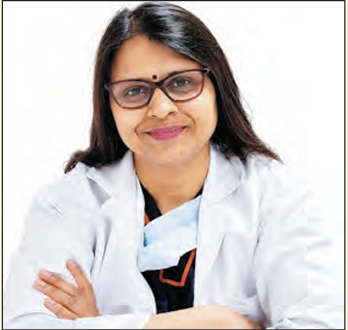
Charu Bhatia, Senior News Editor, Business Remedies in conversation with Dr. Neetu Rajvanshi, Sr Consultant, Obstetrics & Gynaecology, Metro MAS Hospital, Jaipur
Pregnancy and childbirth are among the most transformative phases in a woman’s life, demanding not only advanced medical expertise but also empathy, trust and continuous support. Over the last two decades, the field of Obstetrics and Gynaecology has witnessed remarkable progress with the introduction of minimally invasive procedures, better maternal care, improved diagnostic techniques and growing awareness about women’s health. Yet, several myths surrounding pregnancy, childbirth and reproductive health continue to persist.
In this exclusive interview, Dr. Neetu Rajvanshi, Sr Consultant, Obstetrics & Gynaecology, Metro MAS Hospital, Jaipur, reflects on her inspiring journey into medicine, discusses how women’s healthcare has evolved over the years, explains the role of technology in gynaecology, busts common misconceptions related to pregnancy and highlights the importance of lifestyle, preventive healthcare and the doctor-patient relationship in ensuring better health outcomes for women.
Question: You are a renowned gynaecologist at Metro MAS Hospital in Jaipur. Please tell us about your journey and inspiration so far.
Answer: If I look back at my journey, I realise that medicine was always a part of my life. My elder brother and elder sister are both doctors, so I grew up in an environment where serving people through healthcare was something I witnessed closely. I always dreamt of becoming a doctor and eventually a surgeon. During my medical education, I found myself naturally drawn towards Obstetrics and Gynaecology. The experience of bringing a new life into this world fascinated me. Witnessing childbirth is unlike any other moment in medicine, it is emotional, life-changing and immensely fulfilling. Every successful delivery gives you the satisfaction of becoming a part of a family’s happiest memory. That feeling inspired me to choose this specialty, and since then I have devoted myself to serving women at different stages of their lives with dedication and compassion.
Question: How do you think gynaecology as a field has evolved over the years?
Answer: The transformation has been extraordinary. Earlier, childbirth was viewed merely as a medical event. Today, it is celebrated as a cherished family milestone where every member eagerly participates in welcoming the newborn.
From a medical perspective, the biggest advancement has been the transition from conventional open surgeries to minimally invasive procedures. Laparoscopic surgery has significantly improved patient outcomes by reducing pain, blood loss and recovery time. Robotic-assisted surgery is gradually finding its place in gynaecology as well, allowing surgeons to perform complex procedures with greater precision. Alongside surgical innovations, improved diagnostic techniques and evidence-based treatment protocols have made women’s healthcare much safer and more effective than before.
Question: How do you view the inclusion of technology and Artificial Intelligence in gynaecology?
 Answer: Technology has undoubtedly contributed to improving healthcare, but Obstetrics remains a field where the human touch cannot be replaced. Delivering a baby is not just a medical procedure; it involves emotions, judgement, communication and compassionate care. These qualities cannot be replicated by Artificial Intelligence.
Having said that, AI and technological advancements can certainly enhance surgical planning, improve precision during procedures and assist in maintaining consistency in complex operations. They also contribute to better imaging, diagnostics and patient monitoring. However, when it comes to pregnancy and childbirth, the expertise, intuition and empathy of an experienced doctor continue to remain the most valuable aspects of patient care.
Question: What are some of the common myths about pregnancy that you would like to dispel?
Answer: Unfortunately, many misconceptions surrounding pregnancy and the post-delivery period continue to exist, especially in our society.
One common myth is that pregnant women should avoid dairy products. In reality, milk, curd and buttermilk are excellent sources of calcium, protein and beneficial probiotics. These nutrients are extremely important for the baby’s bone development as well as the mother’s overall health. There are also widespread beliefs regarding foods such as papaya and pineapple, particularly because of concerns related to their seeds, but restricting nutritious dairy products has no medical basis.
There are equally concerning myths after childbirth. Some families discourage new mothers from drinking adequate water, eating regular meals such as roti or even watching television. These restrictions have no scientific evidence. A woman who has just delivered a baby requires proper hydration, nutritious food, sufficient rest and emotional support to recover well.
Another important but often neglected aspect is mental health. Postpartum depression is a genuine medical condition that affects many mothers. Family members should recognise emotional changes early and provide understanding, support and timely medical attention whenever required.
Question: How has lifestyle affected women’s health today?
Answer: Lifestyle changes have had a significant impact, especially after the COVID-19 pandemic. Many people have irregular sleep schedules, consume excessive junk food and spend long hours with minimal physical activity.
Among adolescents and young women, hormonal disorders are becoming increasingly common. Rising obesity has contributed to a greater incidence of PCOS, which is now increasingly being referred to as PMOS because metabolic disturbances play a central role in the condition. Lack of exercise further worsens these problems.
Delayed marriages and postponing pregnancy have also contributed to increasing infertility. Age has a direct influence on reproductive potential, and this trend is becoming more visible in clinical practice. Stress is another major factor affecting hormonal balance, menstrual health and fertility.
Question: As a gynaecologist, what qualities are most important while treating patients?
Answer: I have been practising Obstetrics and Gynaecology for over 26 years, and even today every patient teaches me something new. Medicine is a lifelong learning process.
One of the most important qualities for any gynaecologist is the ability to listen. Women often come to us not only with physical concerns but also with emotional struggles and deeply personal experiences. They need someone they can trust and confide in without hesitation.
A doctor should remain humble and open to continuous learning because medicine evolves every day. No doctor can claim to know everything. Building trust, communicating honestly and treating every patient with empathy are just as important as clinical expertise.
Question: Where do you see Obstetrics and Gynaecology heading over the next decade?
Answer: I believe the coming years will bring even greater technological advancements. Robotic surgery is likely to become more accessible and widely adopted in gynaecology, while laparoscopic techniques will continue to evolve.
Another important development will be wider acceptance and availability of painless labour options, enabling women to experience childbirth with significantly better pain management while maintaining safety for both mother and baby. Overall, the future of women’s healthcare looks promising with better technology, improved patient comfort and more personalised treatment approaches.
Question: What recent research developments in gynaecology excite you the most?
Answer: Women’s healthcare is a rapidly evolving field, with numerous clinical studies taking place across the world. One important development is the growing shift from the term PCOS to PMOS, highlighting the metabolic component of the disorder rather than viewing it only as an ovarian condition.
Researchers are also continuously working on improving treatment protocols, fertility care, minimally invasive surgical techniques and preventive healthcare strategies. These advancements are helping doctors provide more personalised and effective treatment for women across different age groups.
Question: What preventive measures would you recommend for maintaining good women’s health?
Answer: Prevention always remains better than cure. A balanced diet rich in fruits, vegetables, whole grains and adequate protein should form the foundation of good health. Regular physical activity is equally important and should become part of everyday life rather than an occasional activity.
Quality sleep plays a vital role in hormonal balance, immunity and overall well-being. Managing stress is another essential aspect. Women should never hesitate to share their emotions with trusted family members, friends or healthcare professionals. Emotional well-being directly influences physical health, and both deserve equal attention.
Question: How do you view the doctor-patient relationship in today’s healthcare environment?
Answer: Doctors are often regarded as gods, but the reality is that we are human beings who strive to provide the best possible care based on our knowledge and experience.
The rise in medico-legal awareness has certainly encouraged accountability, which is a positive development. However, it has also affected trust between doctors and patients. Every surgery carries inherent risks and complications, despite following established medical guidelines. These outcomes should not automatically be interpreted as negligence.
Another challenge is the widespread availability of information on the internet. While patients today are more informed, online information cannot replace professional medical evaluation because every individual is different. Each patient requires personalised diagnosis and treatment rather than generalised advice found online.
Question: What are your views on the various contraceptive methods available today?
Answer: Modern medicine offers several safe and effective contraceptive options. There is no single method that is suitable for everyone. The choice depends on several factors, including a woman’s age, medical history, reproductive plans, lifestyle and personal preferences.
Question: How do you view the government’s support for women’s healthcare?
Answer: Government initiatives have significantly improved access to maternal and gynaecological healthcare. Schemes such as RGHS and CGHS have made many treatments financially accessible. Several programmes promoting institutional deliveries have also played a major role in improving maternal and neonatal health, particularly among economically weaker sections.
Question: Lastly, what message would you like to give to young doctors aspiring to become gynaecologists?
Answer: Obstetrics and Gynaecology is one of the most rewarding specialties in medicine, but it is equally demanding. It requires immense dedication, hard work and the willingness to respond to emergencies at any hour of the day or night. Every newborn you help bring safely into the world serves as a reminder of why this profession remains one of the most fulfilling careers in medicine.
Beyond medical knowledge, this profession demands patience, empathy and emotional resilience. Women place tremendous trust in their gynaecologists and often share some of the most intimate moments of their lives, from pregnancy and childbirth to complex health concerns. Being able to guide them through these journeys is a privilege.