
Jaipur | Charu Bhatia | A growing number of companies are rethinking the traditional approach of owning factories, warehouses, vehicles, and other physical assets. Instead, businesses across sectors are increasingly embracing asset-light models, focusing on technology, branding, customer relationships, and operational efficiency while outsourcing or leasing physical infrastructure. The trend is reshaping industries and attracting significant investor interest.
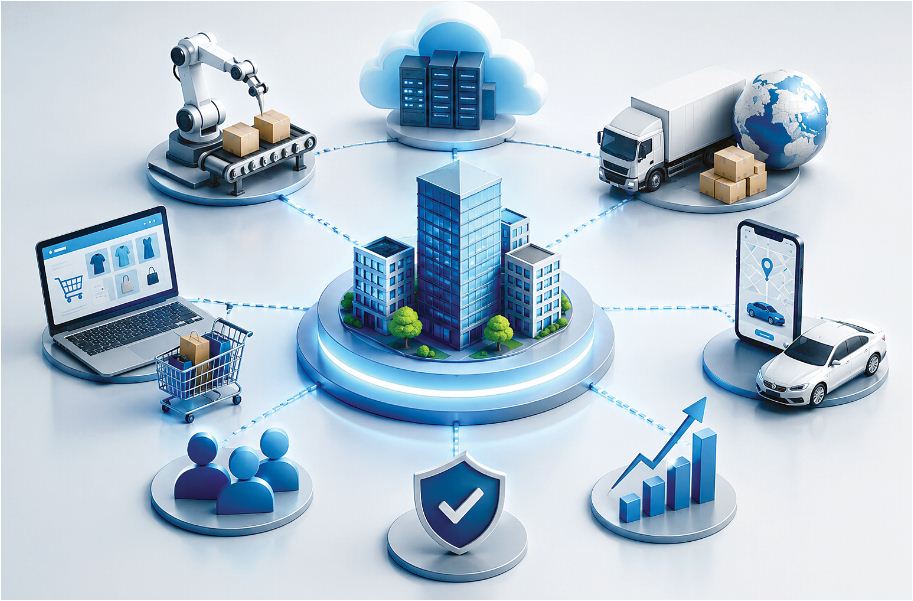
An asset-light business model allows companies to generate revenue without making large capital investments in physical assets. Rather than owning production facilities or logistics networks, businesses often partner with third-party manufacturers, cloud service providers, or logistics firms. This reduces upfront costs and enables companies to scale operations more quickly.
The rise of digital technology has accelerated this shift. Technology-driven businesses can reach customers globally without establishing a large physical footprint. E-commerce platforms, software companies, online marketplaces, and fintech firms are among the most prominent examples. Their primary assets are intellectual property, data, and digital platforms rather than buildings and machinery.
The hospitality sector offers another illustration of the trend. Several hotel brands operate under management or franchise models, allowing them to expand rapidly without owning properties. Similarly, ride-hailing companies connect drivers and passengers through digital platforms without maintaining vehicle fleets. These models have demonstrated how businesses can achieve scale while keeping capital expenditure relatively low.
Investors often favour asset-light businesses because they typically generate higher returns on capital and enjoy greater operational flexibility. With lower fixed costs, companies can adapt more quickly to changing market conditions and consumer preferences. The model also frees up capital that can be directed towards innovation, marketing, product development, and customer acquisition.
The trend is increasingly visible in India, where startups and established companies alike are prioritising efficiency and scalability. Direct-to-consumer brands frequently rely on contract manufacturing, while technology firms leverage cloud infrastructure instead of investing in expensive data centres. Even traditional sectors such as healthcare and education are experimenting with partnership-driven expansion strategies.
However, asset-light models are not without challenges. Dependence on external partners can create supply chain risks and reduce operational control. Maintaining quality standards and ensuring consistent customer experiences require robust oversight mechanisms. Companies must also carefully manage vendor relationships to avoid disruptions. Despite these challenges, the asset-light approach is expected to gain further momentum as businesses seek agility in an increasingly competitive environment. As technology continues to lower barriers to entry and enable new forms of collaboration, ownership of physical assets may become less important than the ability to build strong brands, innovative platforms, and scalable ecosystems. For many companies, the future of growth may lie not in owning more, but in doing more with less.