

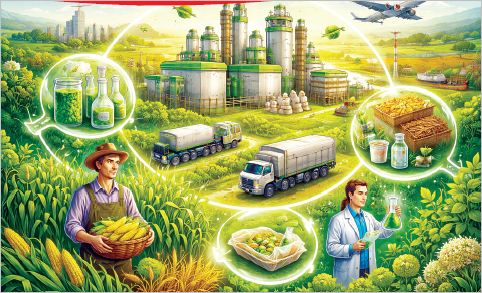
Charu Bhatia | Business Remedies | As industries worldwide seek sustainable alternatives to fossil-based resources, the bioeconomy is emerging as a transformative economic model. The concept revolves around using renewable biological resources, such as crops, algae, forestry products, microorganisms and agricultural waste, to develop industrial goods, chemicals, fuels and materials. With advancements in biotechnology and bioengineering, the bioeconomy is rapidly moving beyond agriculture and food production into manufacturing, energy and advanced materials.
At its core, the bioeconomy integrates biotechnology, circular economy principles and sustainable resource management to create high-value products from biomass. Governments and corporations increasingly view this model as a pathway to reduce carbon emissions, strengthen supply chains and support long-term economic resilience.
One of the most significant developments in the bioeconomy is the rise of bio-based chemicals and materials. Traditionally, many industrial chemicals were derived from petroleum-based feedstocks. Today, biotechnology companies are developing alternatives using plant sugars, agricultural residues and microbial fermentation processes. These innovations are enabling the production of bio-based solvents, polymers and specialty chemicals that can replace conventional petrochemicals in several applications.
The bioplastics sector is another major driver of the bioeconomy. With growing global concern over plastic pollution, industries are investing in biodegradable and compostable materials derived from renewable sources such as corn starch, sugarcane and algae. Companies are also exploring advanced biomaterials, including mycelium-based packaging and bio-fabricated textiles, which could significantly reduce the environmental footprint of consumer goods.
Energy production also plays a central role in the bioeconomy. Biofuels such as bioethanol, biodiesel and sustainable aviation fuel (SAF) are being developed using crop residues, algae and waste biomass. These fuels are increasingly viewed as critical solutions for decarbonising sectors like aviation, shipping and heavy transportation where electrification remains challenging.
Another emerging segment is the bio-refinery model, which operates similarly to traditional oil refineries but processes biomass instead of crude oil. Bio-refineries can convert agricultural waste and organic materials into multiple products, including biofuels, chemicals, fertilisers and energy. This integrated approach maximises resource efficiency and supports circular economic systems.
In addition to environmental benefits, the bioeconomy is creating new opportunities for rural economies and agricultural communities. Farmers can generate additional income by supplying biomass feedstock for industrial processing, while bio-based industries stimulate local job creation and technological development.
Despite its potential, the bioeconomy faces several challenges. Scaling up production technologies, ensuring sustainable biomass supply and building robust supply chains remain key hurdles. Furthermore, the sector requires significant investment in research, infrastructure and policy support to reach commercial maturity.
Nevertheless, the global momentum behind sustainable development and climate action is accelerating interest in bio-based solutions. As innovation continues to expand the possibilities of biotechnology, the bioeconomy is poised to play a critical role in shaping the next generation of sustainable industrial systems.