


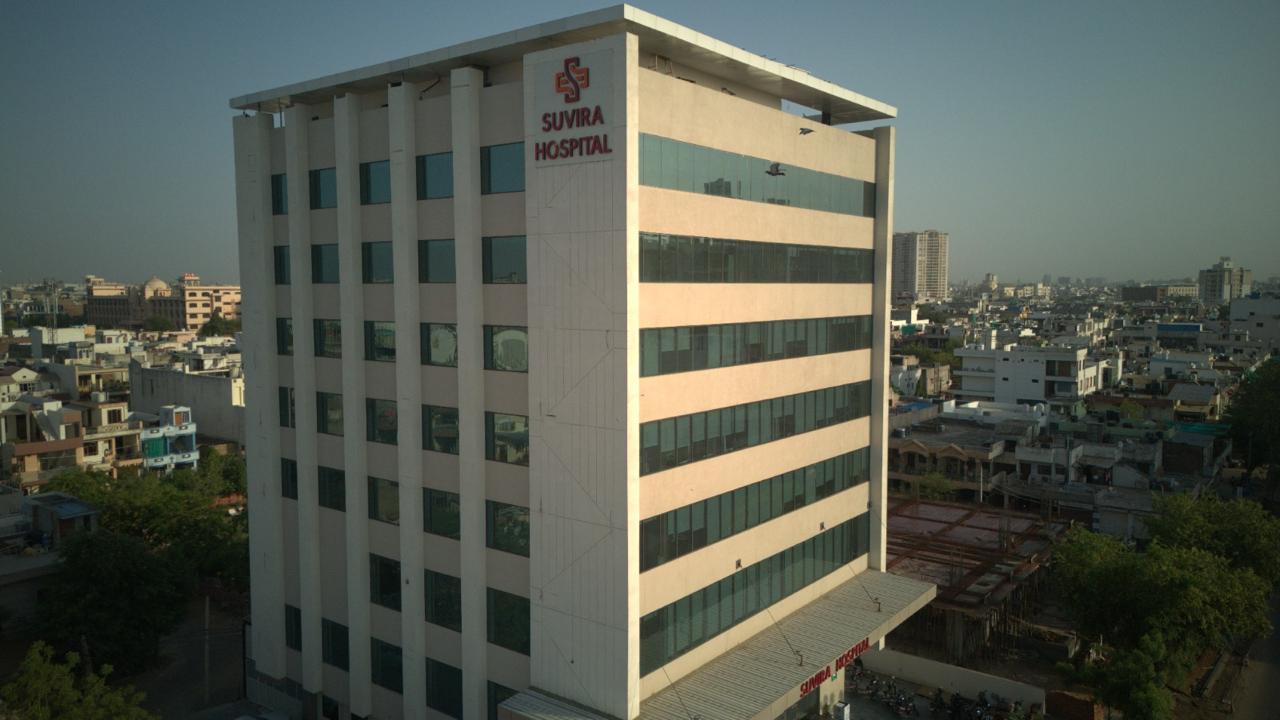
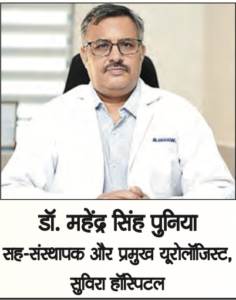
Charu Bhatia, Senior News Editor, Business Remedies, in conversation with Dr. Mahendra Singh Punia, renowned Urologist at Suvira Hospital
Suvira Hospital has established itself as a trusted healthcare provider in Jaipur, combining advanced medical technology with a strong commitment to affordability and patient-centric care. Founded by a group of experienced specialists, the hospital was envisioned as a space where corporate-level healthcare could be delivered at accessible costs. In this conversation, Dr. Mahendra Singh Punia, co-founder and leading urologist, shares insights into the hospital’s journey, technological advancements, challenges in setting up a multi-speciality facility, and the future of healthcare in Rajasthan.
 Q: Suvira Hospital is known for delivering quality healthcare services in Jaipur. Could you share your journey so far?
A: My journey, as well as that of my colleagues, has been both challenging and fulfilling. I completed my medical education at KEM Hospital, Mumbai, in 2009. Later, I established Capital Urology and Gastro Hospital near Raj Mandir in Jaipur. In 2016, I joined CK Birla Hospital as a urologist and worked there until 2023. Eventually, along with six other doctors from CK Birla, we founded Suvira Hospital in Mansarovar.
Our goal was simple—to create a hospital owned and run by doctors that offers high-quality, corporate-level healthcare at affordable rates. The co-founders include specialists from cardiology, general surgery, orthopaedics, and internal medicine, all united by a shared vision of patient-first care.
Q: What are the most common urological conditions you treat?
A: The two most common conditions are kidney stones and prostate enlargement. We treat stones located in the ureter or kidney, as well as conditions like kidney cancer. Prostate-related issues, including enlargement and cancer, are also common.
Modern laser-based techniques have replaced traditional open surgeries, allowing patients to recover quickly—often within one to two days—with minimal pain and bleeding.
Q: What other specialties are available at Suvira Hospital?
A: Suvira is a multi-speciality hospital offering advanced care across various departments. In orthopaedics, robotic-assisted knee replacement surgeries are becoming increasingly common, along with treatment for ligament and sports injuries.
Our cardiology department is equipped with an advanced cath lab and performs procedures such as pacemaker implantation and stent placement. General surgery includes laparoscopic diagnosis and treatment of conditions like hernia, fistula, and piles. Internal medicine manages infectious diseases, supported by an advanced ICU and critical care. We are also have started neurology department and pulmonology department.
Q: What challenges did you face while establishing the hospital?
A: One of the biggest challenges was obtaining land approvals, as there is no single-window system for such processes. Additionally, managing our professional responsibilities while simultaneously building the hospital was quite demanding.
Q: How has treatment for urological conditions evolved, and what causes these issues?
A: In Rajasthan, kidney stones are common due to dehydration caused by extreme heat, along with dietary habits like high caffeine and dairy consumption.
Earlier, procedures like PCNL were more invasive and painful. Today, minimally invasive techniques like RIRS (Retrograde Intrarenal Surgery) using laser technology have made treatment safer and more efficient, especially for recurring cases.
Prostate enlargement, common in men over 45, can initially be managed with medication. If needed, surgeries such as TURP or HOLEP are performed. HOLEP offers better outcomes with minimal bleeding and lower chances of recurrence.
Q: What role do technology, robotics, and AI play in healthcare today?
 A: Technology is transforming healthcare. Robotics, particularly in orthopaedics, allows for highly precise knee replacement surgeries. AI is valuable for managing patient records and data analysis.
In urology, advanced procedures like RARP (Robot-Assisted Radical Prostatectomy) are minimally invasive and offer improved outcomes compared to traditional surgeries.
Q: How do you assess Rajasthan’s healthcare landscape?
A: Rajasthan provides advanced healthcare at significantly lower costs compared to cities like Delhi or Mumbai, often at less than half the price. Government schemes like Chiranjeevi have further improved accessibility for patients.
Q: How has urology evolved in the region?
A: When I began in 2009, Rajasthan had only about 15–20 urologists. Today, that number has grown to over 125, with specialists practicing even in smaller cities. This has greatly improved accessibility and affordability of care.
Q: What are your views on government healthcare schemes?
A: These schemes are beneficial for affordability and they can helpful for the quality of care. Patient get the treatment at low cost and advance care of management helpful for poor people.
Q: How important is the doctor-patient relationship?
A: Transparency is essential. Doctors must clearly explain procedures, risks, and required investigations—even those not covered under schemes. Patients should trust medical advice and not neglect necessary tests, as this can affect outcomes.
Q: What preventive measures can people take for better urological health?
A: Staying hydrated is key—drinking 2–3 litres of water daily helps maintain kidney health. A balanced diet with reduced salt, processed foods, and limited intake of calcium- and oxalate-rich foods can help prevent stone formation.
Q: What is your vision for the future of Suvira Hospital?
A: We plan to expand into specialties like Nephrology, gastroenterology, ENT, and cosmetology, offering services such as Dialysis, endoscopy, and colonoscopy. We also aim to establish more branches across Jaipur to reach a wider population.
Q: What message would you like to give to young medical aspirants?
A: Be honest, work hard, and stay passionate about your profession. Always communicate transparently with patients—this is the foundation of a successful medical career.


