

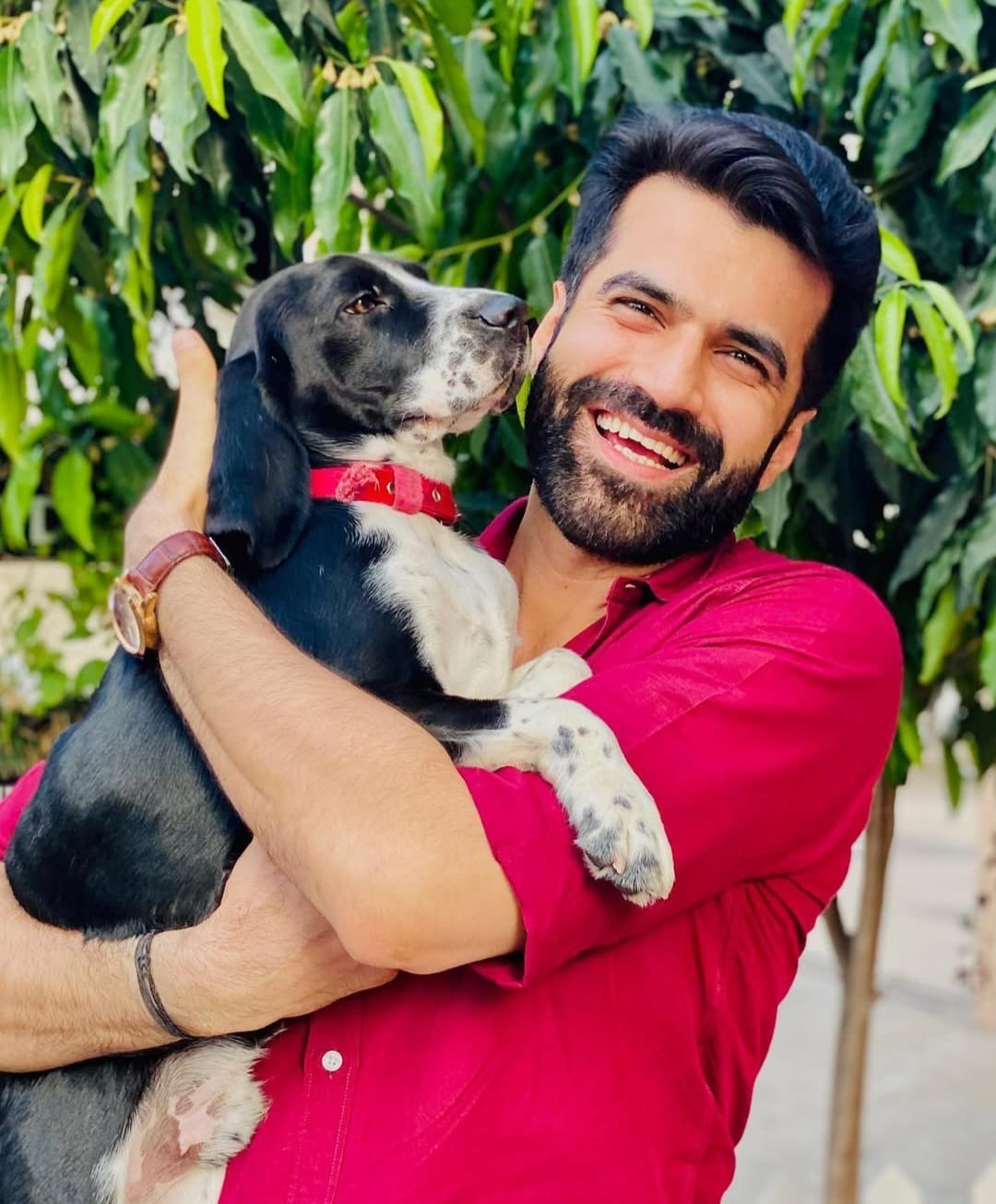
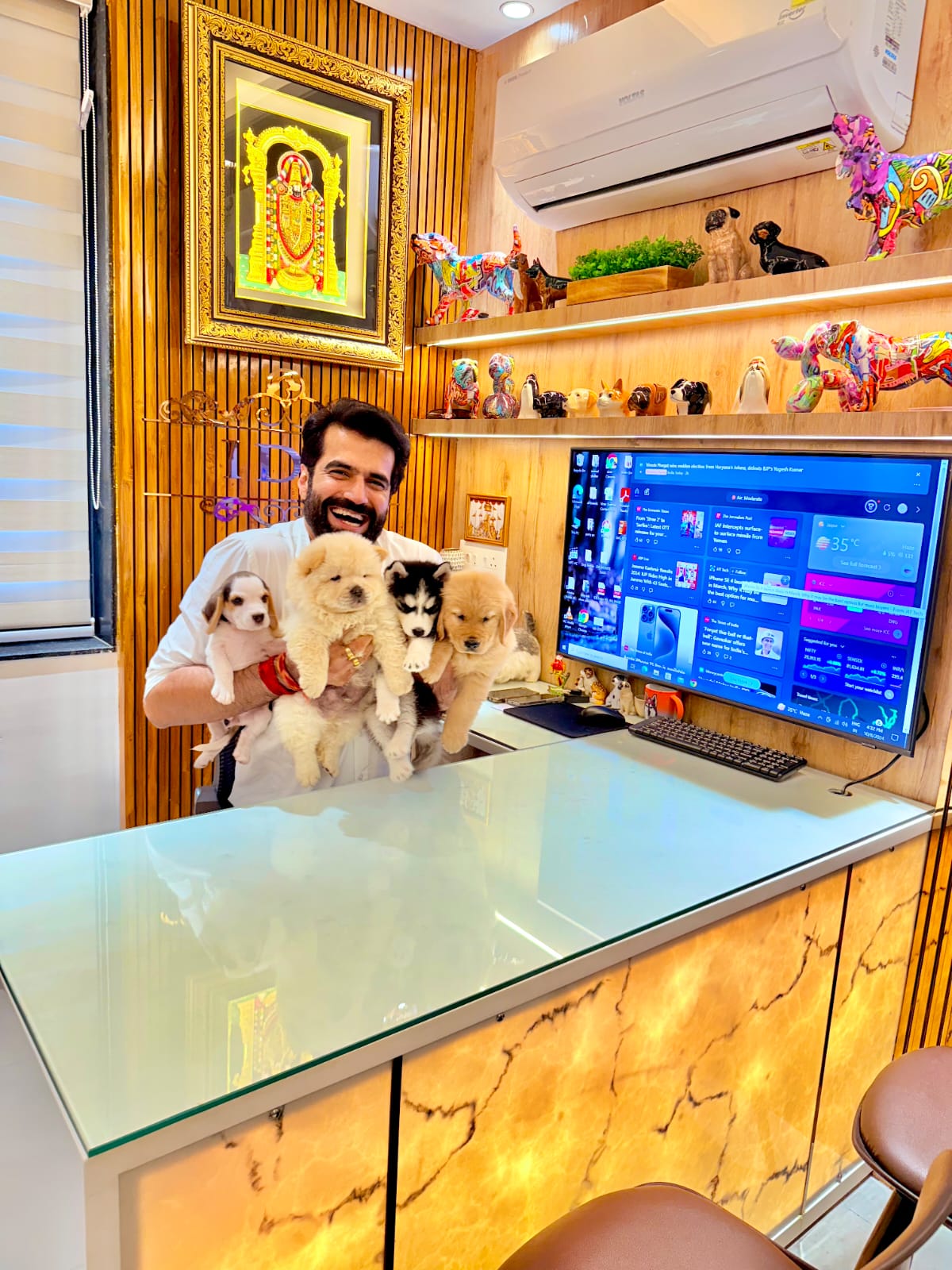
Business Remedies | Shruti Kothari | Sr. News Editor | June 19, 2025 | Kalu, Candy, Sherry, Lucy, Rody, and Golu are the six soulful names that echo through Viren Sharma’s childhood, each a beloved companion whose paws left lasting imprints on his heart. While fondly remembering these childhood pets, Viren Sharma tells us about his remarkable journey as the founder of the International Dog Bazaar (IDB). Viren didn’t just build a business; he created a universe where dogs rule and humans happily follow. IDB itself is a dream. Imagine sipping coffee in a café where dogs lounge beside you, or a hostel where four-legged guests get treated like royalty. The team here runs this place with heart, humour, and spotless care.
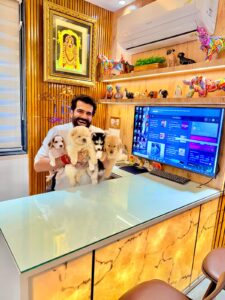
When I visited his vibrant store in Durgapura, I expected a straightforward interview, but what I got was a delightful scene. Viren was juggling dad duties like a champ, feeding his one-year-old daughter while the dogs stole the spotlight. Then there was Alisha, a super-enthusiastic volunteer whose love for these pawed creatures was downright contagious.
Viren is no ordinary guy. He’s a spellbinding speaker, deeply spiritual, and lives his values with fierce respect for every creature. Our talk unfolded with stories inspired by Sanatan Dharma and Kabir’s timeless poetry, turning the interview into a journey of soul and paws.
So now, let’s hear from the man whose heart beats in sync with every wagging tail.
In conversation with Viren Sharma, Founder & Owner, International Dog Bazar & Mad About Dogs
 Q: You’ve recently stepped into a beautiful new role as a father. As someone who has dedicated his life to caring for animals and spreading compassion, what values do you hope to pass on to your daughter? How do you raise a child to grow up kind, empathetic, and in love with all living beings?
A: Thank you, Shruti. Becoming a father has opened up a whole new corner of my heart. It’s a mix of joy, chaos, and wonder, and I’m soaking up every second. I’ve always believed that we don’t have to teach children a lot of things through words. What matters more is what we live and how we are. I don’t have a long checklist of things I want to pass on, just this one hope, that she grows up to be a kind human being.
Q: How does one raise kind humans?
A: Honestly, you don’t have to do much. I believe I am simply a reflection of the energy I received from my parents. When that energy is pure, it protects you from the noise and negativity of the outside world. If your roots are strong, you carry that goodness within you. Most people are good by nature, but many get lost in their own thoughts. I’ve been fortunate to have parents who lived by simple yet powerful values.
“साईं इतना दीजिए, जा मे कुटुम्ब समाय।
मैं भी भूखा न रहूँ, साधु न भूखा जाए।“
This is the kind of upbringing I come from.
Q: And while we’re speaking about life principles, I’ve often heard you say that we need to ‘go back to our roots’. What does that truly mean to you?
A: We live in a world that often feels too polished, too perfect on the outside, but empty within. Going back to our roots, for me, means returning to what is real. I grew up making toys from scraps, chasing kites, and getting scolded with my friends after every fight. Life was simple, unfiltered, and full of heart. To return to the roots is to stay true to yourself. It means holding on to values like simplicity, faith, and connection. Being grounded in your family, your culture, and your purpose. Just like Dadi Maa ke Nuskhe, basic yet timeless, they work because they come from a place of truth. Human life is a blessing. Why harm anyone? As our shastra say, ‘अहं ब्रह्मास्मि’—we carry the divine within. When you live with that awareness and add value to the world around you, your children learn it naturally. Some lessons are not taught. They are simply lived.
Q: Many people are still afraid of dogs, and this fear often leads to harsh reactions or even bans on certain breeds. How do you think we can change this mindset, especially the tendency to harm animals out of fear?
A: First of all, let me clarify that no dog breed is officially banned in India. The problem doesn’t lie with the dogs, it lies in our mindset. We often react out of fear without understanding. Children are not born afraid, we pass those fears on to them. If we, as parents, tell our kids to be scared of dogs, to hit them or run from them, then the fault lies in our parenting.
 Just like a child’s behaviour depends largely on how they are raised, a dog’s nature also reflects how it has been brought up. No dog is inherently bad; it all comes down to its upbringing. Instead of fearing or hating animals, we need to focus on understanding and respecting them. The real change begins at home, with us.
Q: You’ve often spoken about Sanatan values and their connection to nature. In today’s world, where many children grow up detached from animals, what does Sanatan truly teach us about living in harmony with all beings?
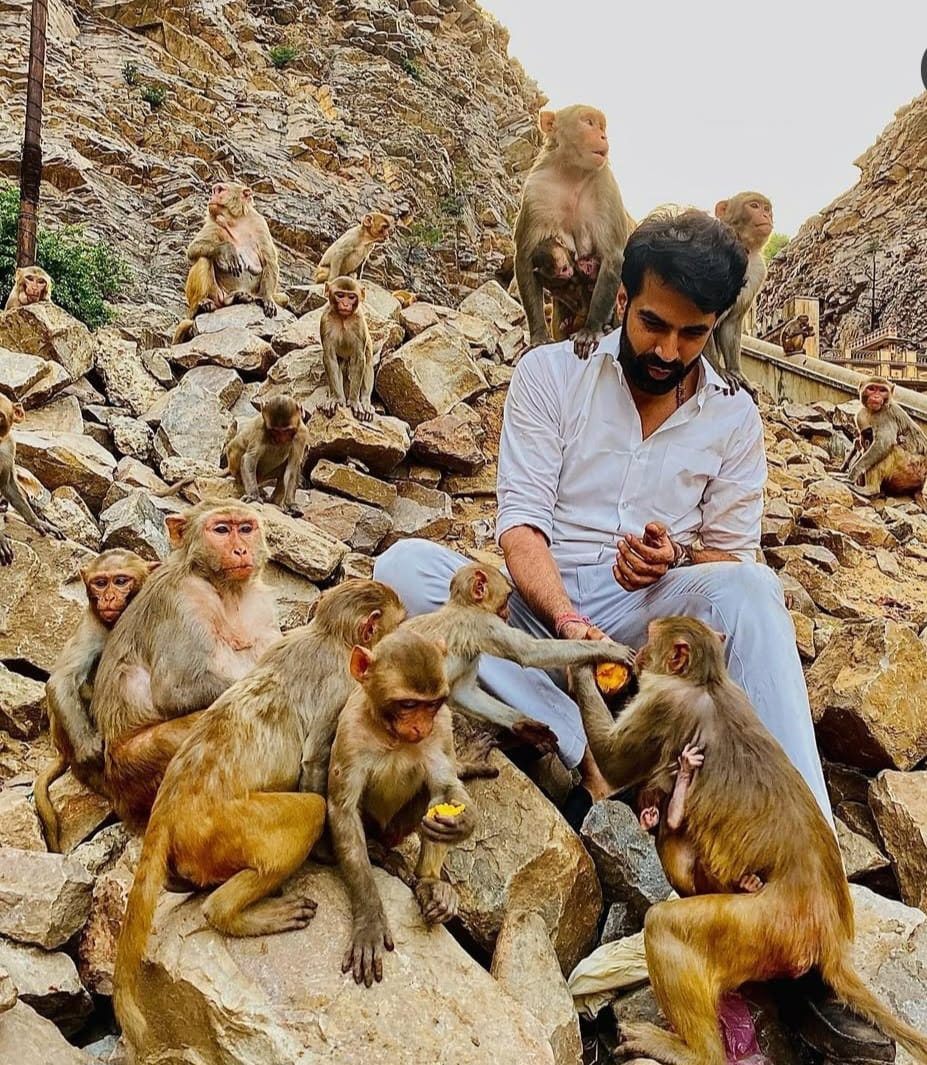
A: Without a doubt, Bharat is the epicentre of Sanatan. This philosophy, which originated here, is not just a religion but a way of life. And in this way of life, every deity is symbolically connected to some living being. Even today, those who follow Sanatan traditions know that the first roti that is made in our houses is offered to a cow and the last to a dog. This is not just ritual, it is a lesson in gratitude, coexistence, and respect for all life forms. But somewhere, especially in urban households, we have started to move away from these values. Parents are now teaching children to stay away from animals or to scare them off, and that fear soon turns into disregard or even cruelty. If we, as a society and as parents, continue down this path, we are not just failing our traditions. We are failing our children too.
Q: How did your journey as a businessperson and animal rescuer begin?
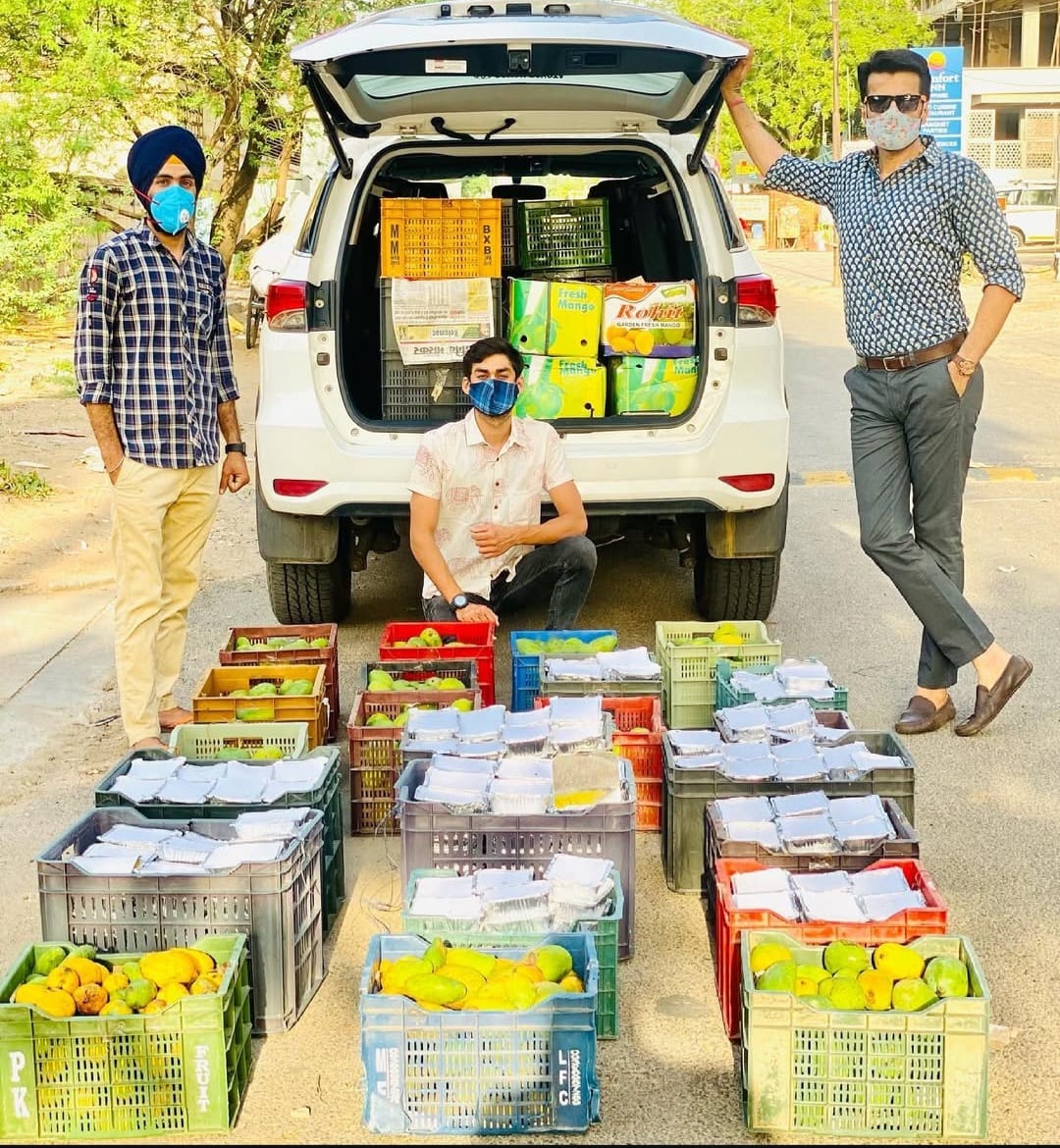
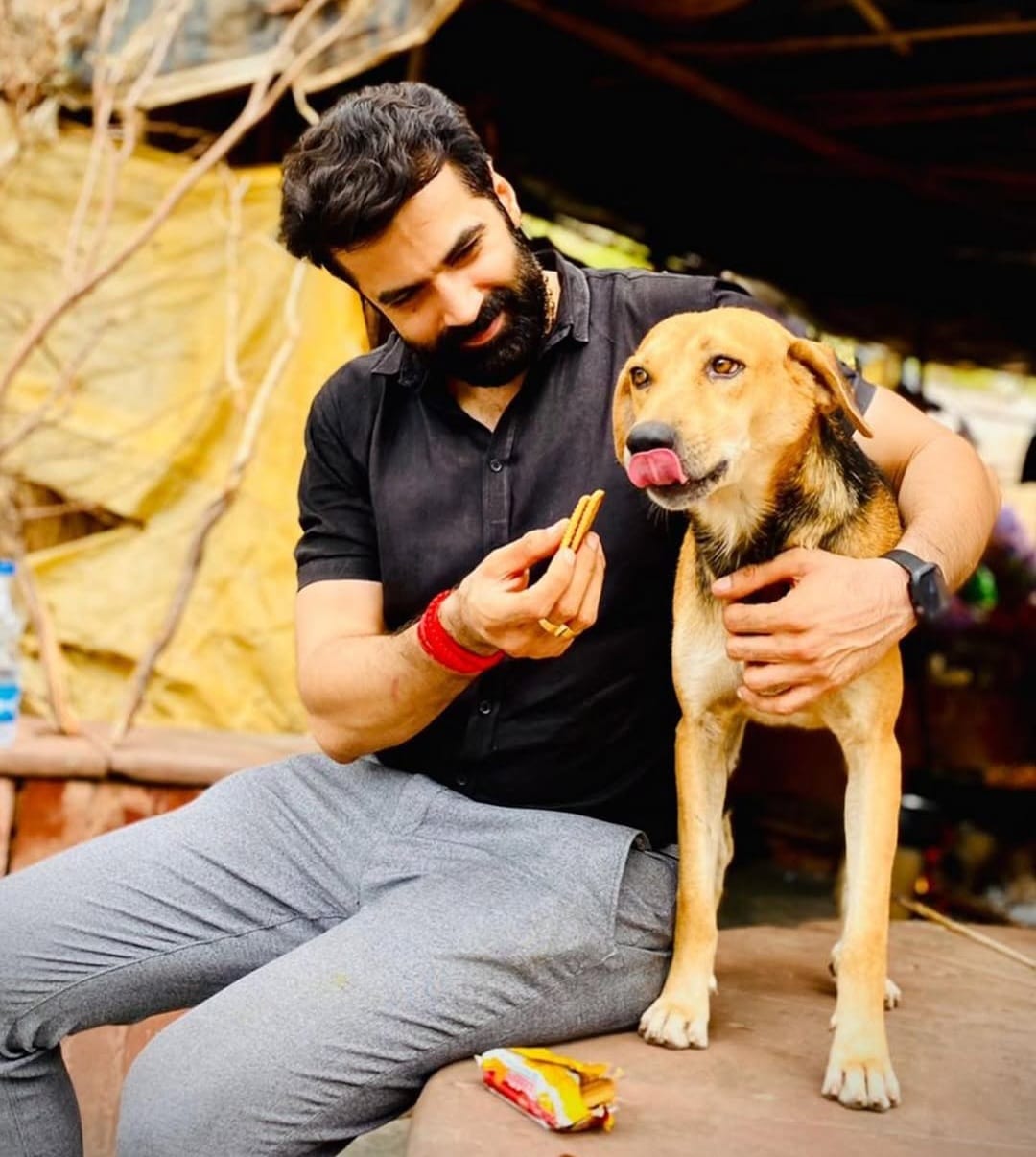
A: Honestly, I’ve never looked at myself as a businessman or an activist. I’m just someone who truly loves animals, and I feel lucky that my passion turned into my profession. Whether it’s a stray or a purebred, when I help someone bring a dog home, I feel like I’m giving them a reason to smile every single day. Back when I started, having a pet in Jaipur was considered a luxury. Over time, that mindset started shifting, and I’ve had the privilege of watching more and more people open their hearts to animals. The rescue journey began unexpectedly, about six or seven years ago. One morning, I got a call from an old client. She was crying and told me some stray dogs she used to feed had been hit by a car. A few puppies survived, and she didn’t know what to do. I asked her to bring them to me. I posted about them for adoption, and to my surprise, they were all adopted the same day. That was the moment I realised I could actually be a bridge for these animals. Since then, we’ve helped nearly 7,000 puppies find homes. And if that’s helped bring even a little more compassion into the world, then I think I’m on the right path.
Q: You’ve uniquely blended community service with business. How have you managed to do that so seamlessly?
A: The very fact that you’re sitting here talking to me is proof that this blend works. If I hadn’t found a way to make this model sustainable, I’d probably be out there chasing funds like so many others. People often romanticize the idea of becoming a Robin Hood, but before that, you have to become capable. You need the skills to take from the privileged and serve the underprivileged, not through charity but through self-reliance. Whether you’re running a shelter or a business, it takes immense effort, persistence, and discipline. If you truly want to uplift your own life, the lives of those who work with you, and those who depend on you, whether human or animal, you need to build a foundation strong enough to carry that responsibility. Compassion alone is not enough. It has to be backed by structure, strength, and vision.
Q: You are the force behind some of India’s most spectacular and soul-stirring dog carnivals and dog shows. From where did this incredible journey begin, and how do you handle the noise of criticism that often follows success?
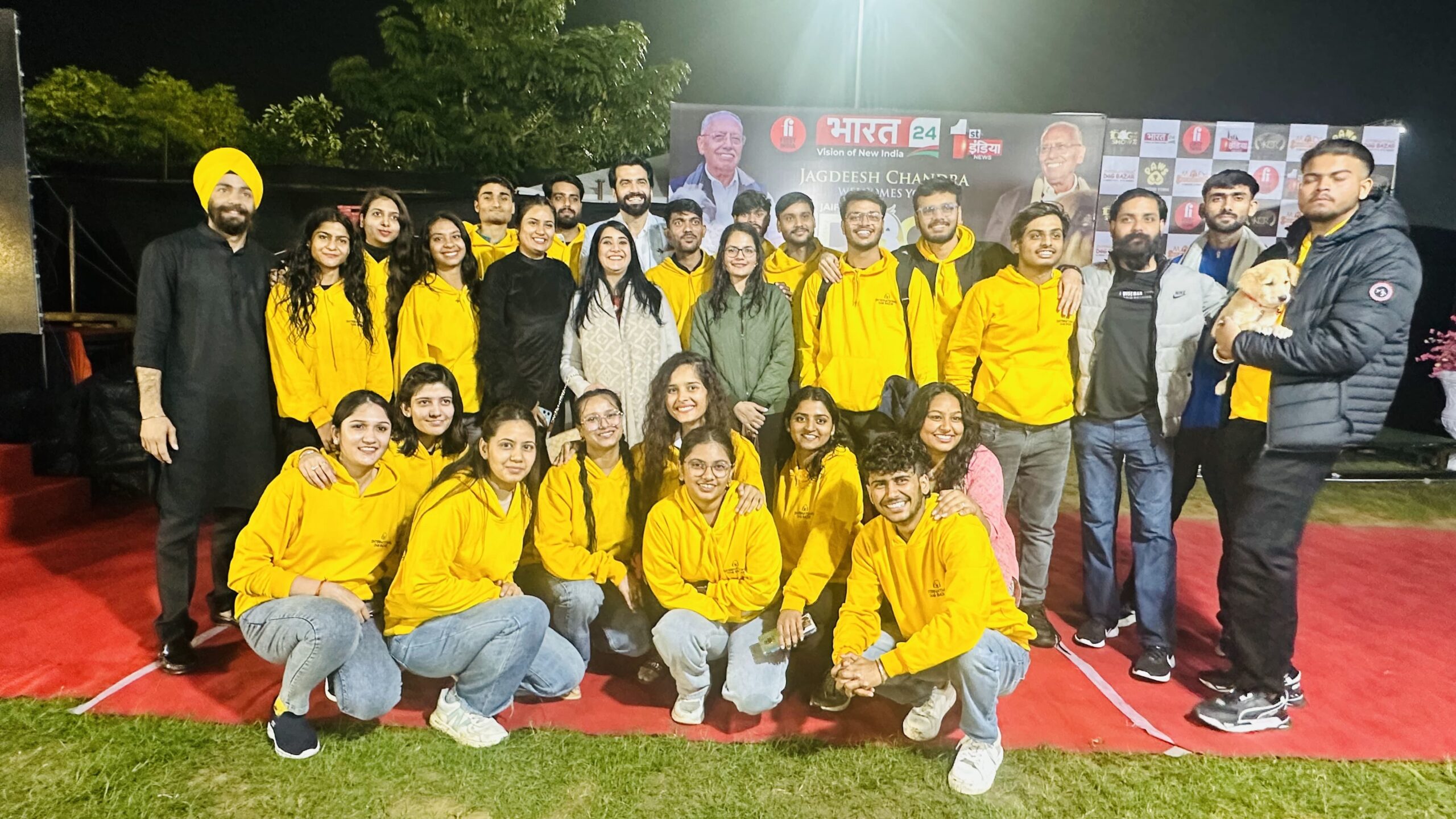
A: The journey began in 2001 at a humble dog event in Jaipur. I had no capital of my own, so I borrowed ₹5,000 from my uncle, purchased a handful of pet products from Delhi, and set up a small stall. What happened next was pure magic. People didn’t just buy products, they connected with the energy, the love, the passion I carried for dogs. That moment lit a fire in me. By 2003, I hosted my very first show. It was simple, with around 20 dogs and a small crowd. But today, that same event has grown into a grand celebration that welcomes thousands of dogs and visitors from all corners of the country. The scale may have changed but the soul remains untouched. These shows are not commercial ventures for me. They are festivals of joy. They are living, breathing spaces where love, laughter, shared memories, and the unspoken bond between humans and animals take center stage. Watching a child hug their first dog or a family celebrate their pet fills me with purpose like nothing else. And when it comes to criticism, I welcome it with open arms. My mother always reminded me that even Sita Mata was not spared from judgment in Satyug. So in Kalyug, criticism is simply part of the journey. In fact, it motivates me. As Kabir ji beautifully said:
 “निंदक नियरे राखिए, आंगन कुटी छवाय।
बिन पानी, साबुन बिना, निर्मल करे सुभाय।“
Q: What lies ahead for you and for IDB? Why haven’t you expanded with more outlets, either in Jaipur or beyond?
A: If we go strictly by the numbers, I probably have a good 20 years of active work ahead of me. I want to make every single day meaningful by adding value to my life, to the lives around me, and to the world we share. That is my simple and unwavering goal. As for expanding IDB, the reason we haven’t opened more outlets is very clear. Over the past few years, I’ve received hundreds of proposals from people wanting to open stores in my name or take on franchises. But most of them were not driven by love or purpose. They saw this space as a glamorous business opportunity, not as a responsibility, and I cannot compromise on that. This is not just a profession for me. It is a way of life. Every dog at my center is treated with the care and affection they truly deserve. I cannot risk handing over that responsibility to someone who sees animals as a product or a profit margin. It is not about growing bigger, it is about staying true to the cause. These are lives we are dealing with, and for me, that is sacred.
Q: As a businessman, what has been your biggest challenge and what message would you like to share with young entrepreneurs?
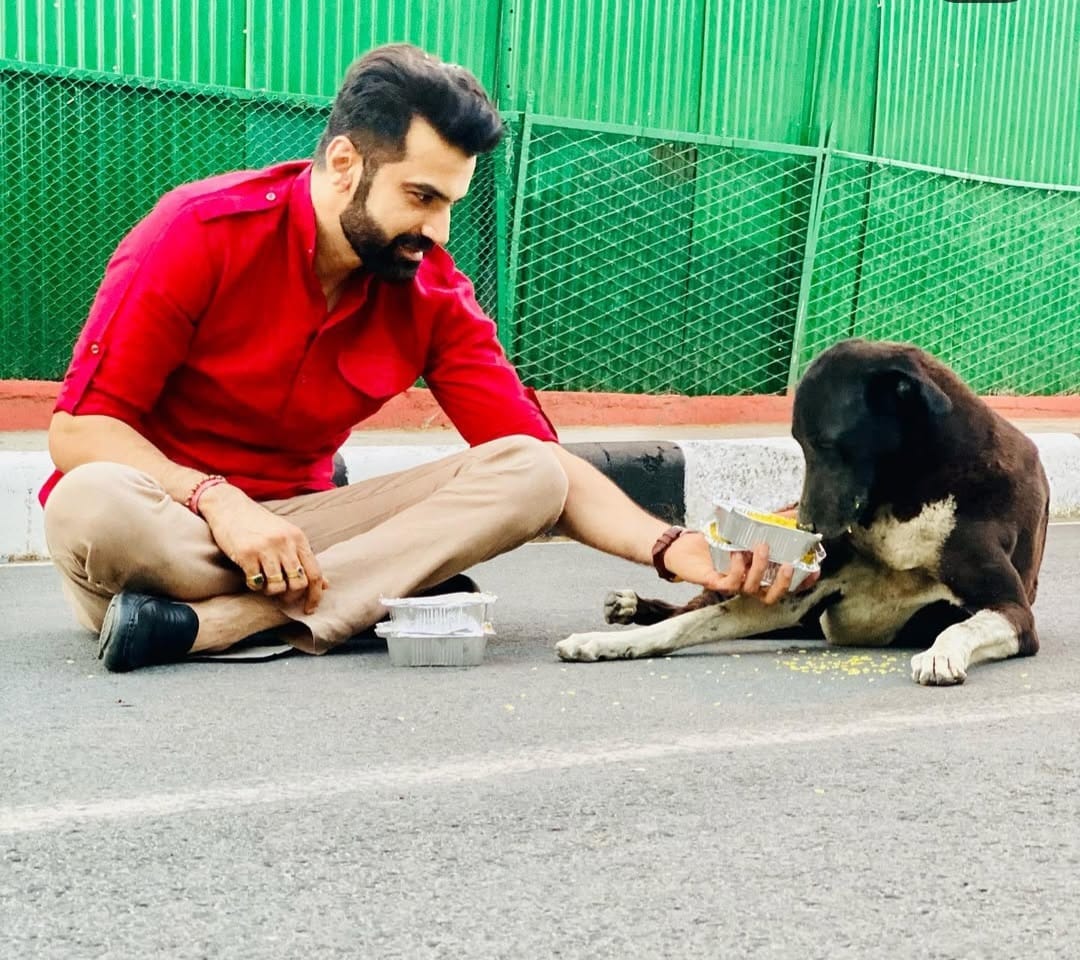
A: My biggest challenge, especially in the early days, was navigating an identity crisis. I started at a time when there was no Google, no internet, no way to instantly connect with the world or find answers to your questions. You had to learn everything the hard way. It was a different world 25 years ago. Today’s generation is fortunate. Gen Z has vision, access, exposure, and information at their fingertips. They are generations ahead in many ways. My advice to them is simple. Make the most of these opportunities, but do not be in a rush. Do not be overambitious. Nothing worthwhile happens overnight. Whether it is talent, business, or growth, everything takes time. There are no shortcuts to success. Time remains the greatest teacher. And most importantly, if you wish to live a life that is fulfilling, give back. Give back to the planet, to the people, and to the society that has enabled you to dream in the first place. True success lies in contribution, not just achievement.
 Interviewed By:
Shruti Kothari