
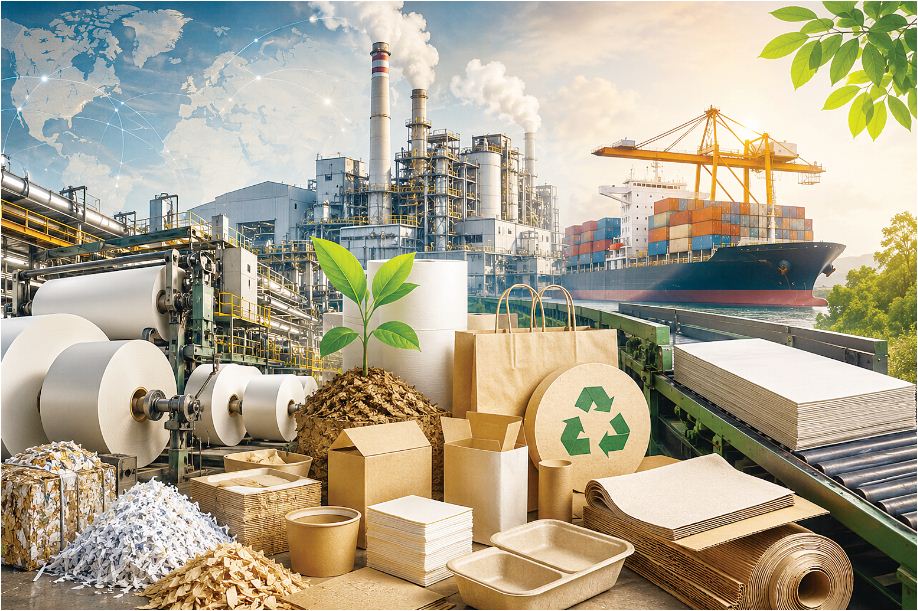
Jaipur | Charu Bhatia | India’s paper industry is entering a decisive phase as rising imports, evolving demand patterns and capacity expansion plans reshape the competitive landscape. Valued at over Rs. 80,000 crore and growing steadily, the sector is closely tied to packaging, education, hygiene and e-commerce, industries that continue to expand rapidly. Yet, the industry now faces a balancing act between protecting domestic manufacturers and staying globally competitive.
Rising Imports Challenge Local Producers
One of the biggest concerns for Indian paper manufacturers is the steady rise in imports, particularly from countries such as China, Indonesia and ASEAN nations. Cheaper raw materials, lower energy costs and scale advantages allow foreign producers to supply paper and paperboard at highly competitive prices.
Imports of coated paper, speciality paper and premium packaging grades have increased in recent years, putting pressure on domestic mills that struggle with higher input costs. Industry players argue that rising imports risk underutilising domestic capacity and could weaken long-term investments in the sector.
Energy, logistics and raw material costs in India remain significantly higher than in many competing countries. Wood availability, regulatory approvals and transport expenses continue to challenge domestic mills, reducing their pricing flexibility.
Demand Boom Encourages Expansion
Despite import pressures, the outlook for domestic demand remains strong. Growth in e-commerce, organised retail, food delivery and FMCG sectors has created unprecedented demand for paper-based packaging. At the same time, the shift away from single-use plastics is accelerating demand for paper alternatives across industries.
India’s per capita paper consumption is still significantly below the global average, indicating substantial room for long-term growth. This demand potential is encouraging major paper companies to invest in capacity expansion, modernisation and new product segments such as speciality and sustainable packaging paper.
Several large manufacturers have announced investments in new mills, recycling facilities and advanced machinery to improve efficiency and reduce environmental impact. Automation and energy-efficient technologies are becoming central to these expansion strategies.
Policy Support and Sustainability Push
Government policies promoting plastic reduction, recycling and sustainable packaging are expected to play a crucial role in shaping the industry’s future. Industry leaders are also calling for policy measures to ensure fair competition, including stricter quality checks and trade safeguards where necessary.
Sustainability is emerging as a key differentiator. Increasing use of agro-residues, recycled fibre and renewable energy is helping Indian manufacturers strengthen their environmental credentials while reducing dependence on imported raw materials.
The Road Ahead
India’s paper industry stands at a critical intersection. While import competition poses real challenges, strong domestic demand and sustainability-driven innovation present equally powerful opportunities. The sector’s ability to improve efficiency, scale up responsibly and compete globally will determine whether domestic expansion can keep pace with rising imports in the years ahead.