
Jaipur | Charu Bhatia | Mining plays a critical role in supporting economic growth, supplying essential raw materials for infrastructure, manufacturing, energy production and technology. However, alongside the formal mining sector, illegal mining continues to pose a significant challenge for governments, businesses and local communities. As countries seek to strengthen resource security and attract investments, the contrast between organised and illegal mining is becoming increasingly important from both an economic and governance perspective.
Organised mining operates within a regulated framework that includes licensing, environmental clearances, royalty payments, worker safety standards and tax compliance. These operations contribute directly to government revenues while creating formal employment opportunities and supporting local economies through infrastructure development and community welfare initiatives.
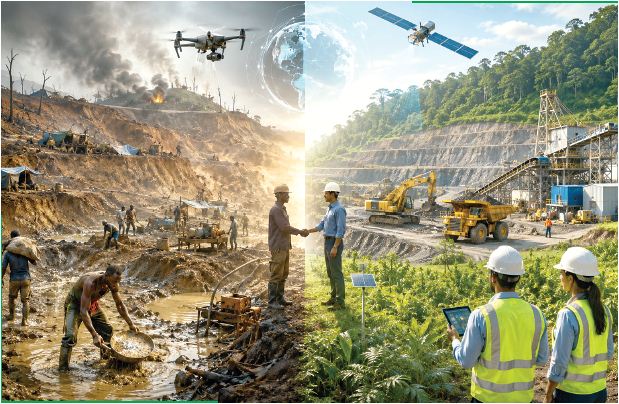
Illegal mining, on the other hand, bypasses regulatory oversight. Unauthorised extraction of minerals often takes place without permits, environmental safeguards or labour protections. While it may generate short-term profits for operators, its broader economic impact can be substantial. One of the most significant costs of illegal mining is the loss of government revenue. When minerals are extracted and sold outside formal channels, authorities miss out on royalties, taxes and other statutory payments. This reduces funds available for public infrastructure, healthcare, education and regional development.
Illegal mining also creates unfair competition for legitimate operators. Companies that comply with environmental and safety regulations incur significant operational costs. Unregulated miners, free from these obligations, can often sell minerals at lower prices, distorting markets and discouraging responsible investment.
Environmental degradation represents another major economic burden. Unregulated excavation can lead to deforestation, soil erosion, water contamination and biodiversity loss. The long-term costs of restoring damaged ecosystems frequently fall on governments and local communities, creating additional fiscal pressure.
From an investment perspective, illegal mining can undermine confidence in the sector. Investors generally favour transparent regulatory environments where resources are extracted through predictable and lawful processes. Widespread illegal activity may raise concerns about governance, resource management and operational risks, potentially affecting future capital inflows.
Technology is emerging as a key tool in addressing the challenge. Governments and mining companies are increasingly deploying satellite monitoring, drones, GIS mapping and digital tracking systems to improve oversight of mining operations and identify unauthorised activities. At the same time, organised mining is evolving beyond resource extraction. Companies are investing in sustainability initiatives, local employment, community engagement and environmental restoration, helping strengthen their social licence to operate.
As demand for critical minerals grows amid the global energy transition, ensuring that extraction takes place through transparent and regulated channels will become increasingly important. The economic benefits of mining can be maximised only when resources are developed responsibly, creating long-term value for governments, businesses and communities alike.