

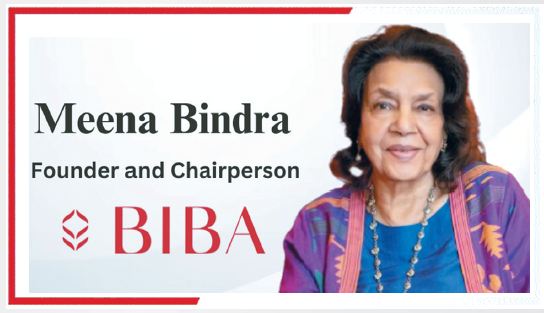
Rajshree Upadhyaya | Business Remedies | April 20,2025 | In 1988, Meena Bindra wasn’t dreaming of building a business empire. At 40, with her children away at boarding school and her husband busy with his government job, she simply found herself with spare time and a desire to do something productive. She wasn’t chasing a grand vision—just some extra spending money. With no formal training in fashion and no background in business, she started from home in Mumbai, working with printed cotton suits that she designed based on her understanding of what Indian women liked to wear, graceful, elegant, and easy outfits that blended style with comfort.
She didn’t have savings to fall back on, so her husband helped her secure a small loan of just Rs. 8,000. With that modest beginning, she began what would soon become one of India’s most recognizable ethnic wear brands. At a time when the idea of ready-to-wear ethnic clothes was still new, Meena Bindra identified a gap. Women were still stitching their suits with tailors and going fabric shopping from one market to another. She changed that by offering ready-to-wear, beautiful, well-fitted options, without compromising on tradition.
Her designs caught the attention of a few local buyers, and soon a well-known Mumbai store, Benzer, agreed to stock her pieces. That small win marked a turning point. Orders started flowing in, and word spread quickly. Meena Bindra, who had once only thought of making pocket money, found herself running a growing business. She chose to stay in Mumbai even when her
husband was transferred to Visakhapatnam as the chairman of a public sector unit. Many wondered why she didn’t follow him or enjoy the social life that came with his prestigious role. But she was determined. Her work gave her purpose, and she had begun to dream beyond herself. Naming her brand BIBA, which means “pretty woman” in Punjabi, she captured the essence of what she stood for, simplicity, grace, and timeless style.
The brand resonated deeply with urban Indian women who wanted ethnic wear that didn’t feel outdated. Over time, BIBA became a wardrobe staple, and by 2004, it had its first exclusive outlet in a Mumbai mall. The next big milestone came when BIBA began collaborating with Bollywood, designing outfits for films like Baghban, Na Tum Jaano Na Hum, and Hulchul, introducing movie-inspired fashion to the mainstream retail market.
While Meena laid the foundation, it was her son, Siddharth Bindra, who helped the brand evolve into a national retail powerhouse. He officially joined the business in 1997 and brought in a sharp retail strategy that scaled BIBA across the country. With Siddharth at the helm, BIBA expanded into children’s wear, launched a value-fashion brand called Rangriti, and even acquired a minority stake in designer Anju Modi’s label. Together, the mother-son duo built not just a brand but a movement in Indian fashion, making ethnic wear both aspirational and accessible.
Over the years, Meena Bindra’s journey has been celebrated for its authenticity and resilience. From working out of her home to building a brand with more than 400 stores across India and a turnover of over Rs. 650 crore, she remains an inspiration for women who dare to start late and build something meaningful on their terms. She still takes active interest in BIBA’s designs, ensuring each piece reflects the brand’s original spirit of elegance and femininity. Her work has earned her accolades, including the APEX Lifetime Achievement Award by CMAI in 2015 and recognition from industry leaders like Smriti Irani, who commended her contribution to Indian handloom and entrepreneurship.
In a world where women were expected to step aside for their husbands’ careers, Meena Bindra chose to stay and grow. She was once told that her lifestyle wasn’t fit for a “PSU chairman’s wife.” But she kept going, and today, she stands as a symbol of strength, vision, and quiet rebellion. Her story is not just about fashion or business, it’s about finding identity, chasing passion, and showing that it’s never too late to start something that truly matters.
 Written & Edited By:
Rajshree Upadhyaya