
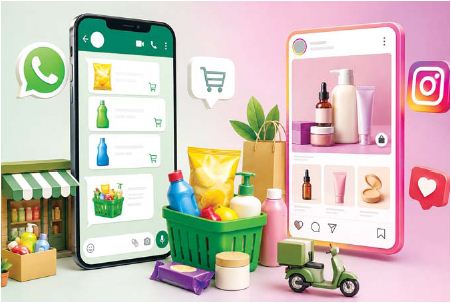
Jaipur | Charu Bhatia | Fast-moving consumer goods (FMCG) companies are rapidly moving beyond supermarkets and e-commerce marketplaces, turning messaging apps and social media platforms into powerful new sales channels. From grocery staples to personal care products, everyday essentials are increasingly being discovered, ordered and delivered through WhatsApp chats and Instagram shops.
This shift reflects changing consumer behaviour. Today’s shoppers expect speed, convenience and personalised interaction, something social platforms are uniquely positioned to offer. Instead of browsing multiple apps or visiting stores, consumers can now message a brand, browse catalogues, place orders and make payments within a single chat window.
For FMCG companies, the appeal is clear: direct access to customers without heavy dependence on marketplaces. WhatsApp Business has become a major tool in this transformation. Brands are building chat-based storefronts where customers can browse products, ask questions, receive recommendations and reorder essentials in seconds. Automated chatbots are helping manage large volumes of queries while still maintaining a personalised feel.
Instagram is also playing a crucial role in the social commerce boom. With features like product tags, in-app checkout and shoppable posts, brands can convert product discovery into instant purchases. A consumer watching a short skincare routine or cooking video can now buy featured products without leaving the app. One of the biggest drivers of this trend is the rise of quick and repeat purchases. FMCG products are typically low-cost and frequently bought, making them ideal for social commerce. Items like snacks, beverages, cleaning supplies and beauty products are increasingly being promoted through reels, stories and influencer content. The convenience of one-click reordering is encouraging customers to make impulse purchases and subscribe to recurring deliveries.
Small retailers and distributors are also benefiting from the shift. Many neighbourhood stores are using WhatsApp groups and broadcast lists to share daily deals, new arrivals and discounts with loyal customers. This digital extension of the traditional kirana model is helping small businesses compete with large online marketplaces. Data and personalisation are another major advantage. Social platforms allow brands to gather insights into customer preferences, buying patterns and feedback. This enables targeted promotions, customised offers and faster response times, strengthening customer loyalty.
However, challenges remain. Managing logistics, ensuring consistent customer service and handling returns through chat-based systems require new operational strategies. Privacy concerns and evolving regulations around digital commerce also demand careful compliance. Despite these hurdles, the momentum behind social commerce in the FMCG sector continues to grow. As consumers become more comfortable shopping through conversations and content, WhatsApp and Instagram are emerging as the new digital storefronts for everyday essentials, reshaping how brands connect, sell and build long-term relationships with their customers.