
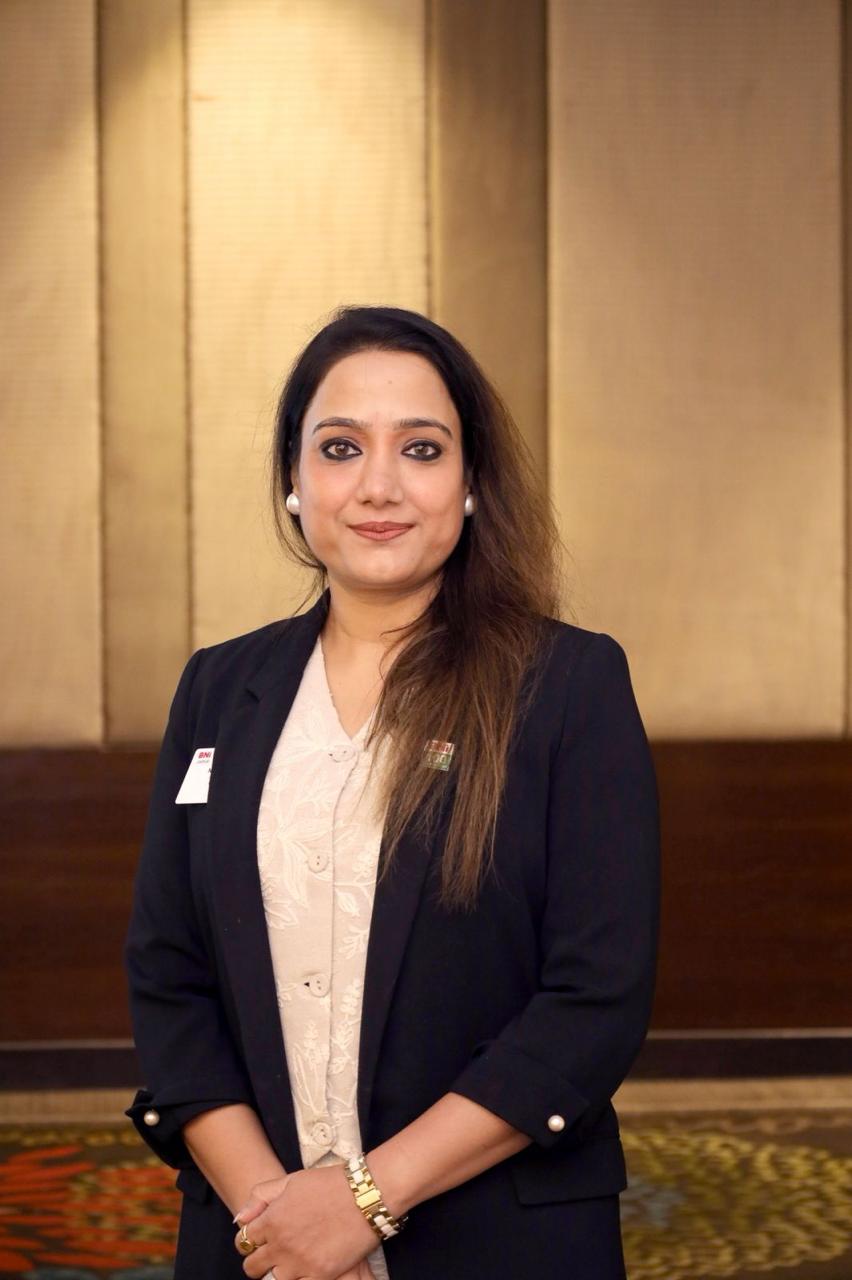
Neelam Mittal, a prominent business leader and the face of FORTI Rajasthan’s Women Wing in Jaipur, has built a multifaceted career spanning entrepreneurship, professional networking, leadership and social initiatives. As the Managing Director of CMA and Area Director of BNI, she has worked closely with entrepreneurs and professionals across sectors while also using her experience to create greater opportunities for women. Her journey, which began with an academic inclination towards architecture and hospitality,  gradually evolved through business, leadership, learning and community engagement. Today, she is particularly focused on strengthening women’s financial literacy, encouraging entrepreneurship beyond conventional sectors and helping women participate more actively in ownership and decision-making. In an interaction with Charu Bhatia, Senior News Editor, Business Remedies, Neelam Mittal speaks about her professional journey, the challenges faced by women entrepreneurs in Rajasthan, the role of technology and financial literacy, emerging opportunities for women and FORTI Women’s Wing’s vision for empowering women.
Question: You are the face of FORTI Women Wing in Jaipur. Apart from that, you are the Managing Director of CMA and the Area Director of BNI. You have built a very enriching career. Please tell us about your journey so far.
Answer: If I look back at my childhood and school years, I would say that I was always academically inclined and also actively participated in extracurricular activities. I have been a Kathak dancer and participated in debate competitions. Because I consistently performed well in academics, people around me suggested that I should opt for Science. However, I was always very sensitive and could not see blood, so I decided to pursue architecture instead.
I come from a business family and my upbringing was quite independent and unconventional. I completed my post-graduation in architecture and hospitality and later married into a highly educated family. Although I had achieved many of the things I wanted in life, I still felt that something was missing.
My life took a significant turn after the birth of my second daughter. That phase brought a sense of happiness, stability and emotional fulfilment into my life. I subsequently became associated with BNI, an organisation that conducts workshops, training sessions and meetings and brings together people from diverse professional backgrounds. It gave me an opportunity to interact with different people and gain practical knowledge. Eventually, I was chosen as an Area Director of BNI.
I have always believed that nothing is permanent and that people should have the courage to pursue their dreams. I consider myself an observant person and someone who is deeply empathetic. Over the years, I developed an interest in astrology and face reading, pursued learning in these areas and completed a PhD. I had also studied law during the initial years of my education.
My professional journey gave me opportunities to meet several prominent entrepreneurs and business leaders, including Ratan Tata, I.C. Agrawal and Vedanta Chairman Anil Agarwal. Once I reached a stage of financial satisfaction, I realised that professional success should also translate into giving back to society.
That was when I became associated with FORTI Rajasthan’s Women Wing and took on the role of Area Director. I was particularly concerned by the fact that even today many women struggle for financial independence. They may be skilled and talented but do not have individual earnings, or may not have adequate financial literacy to take independent decisions.
During the COVID-19 pandemic, I also had the opportunity to work as a frontline warrior and helped make vaccination accessible to a large number of people. Environmental conservation is another area close to my heart. I have been involved in tree plantation and awareness initiatives, and we have planted more than one lakh trees so far.
Question: If we talk about FORTI’s Women Wing, what exactly does it do for society?
Answer: FORTI’s Women Wing is a platform for women who want to develop their skills and explore opportunities in businesses, startups, industries and other professional areas.
We organise talk shows, workshops and knowledge sessions covering subjects such as freedom, dignity, skill development, mental health, women’s rights and financial independence. The platform addresses different dimensions of women’s lives, including financial, professional, health and social concerns.
The objective is not merely to encourage women to start businesses but also to help them become more aware, confident and capable of making informed decisions.
Question: What are some of the major challenges women entrepreneurs face in Rajasthan?
Answer: One of the fundamental challenges is that India continues to have a predominantly male-dominated social structure. There are many talented women, but their skills and potential do not always come to the forefront because they may not receive equal opportunities.
Women are also deeply emotionally connected to their families. For many women, family remains the first priority, and balancing family responsibilities with professional aspirations can become difficult.
Health is another important factor. Women experience several physical and hormonal changes throughout their lives, which can affect their energy, work routines and overall wellbeing. Therefore, women need support systems that recognise both their professional ambitions and personal responsibilities.
Question: How do you view government support for women entrepreneurs?
Answer: Over the last five to seven years, there have been several government initiatives concerning women’s rights, health, education, freedom and economic participation. There have been genuine efforts to create opportunities and ensure that women receive the support and rights available to them.
However, one of the biggest gaps is awareness. Many women do not know about the schemes and programmes designed for them. Even when opportunities exist, they may not know how to access them or where to seek information.
Therefore, awareness and handholding are extremely important. Policy support becomes more effective when women have the knowledge and platforms required to make use of it.
Question: How can women use technology to reach larger markets and audiences?
Answer: Technology offers enormous opportunities. Women can use tools such as cloud platforms, artificial intelligence and digital marketing to market their skills and businesses more efficiently.
For women who cannot always step out of their homes because of family responsibilities or other circumstances, technology can provide an alternative route to participate in the economy. Digital platforms allow them to reach customers, build brands and conduct business remotely.
The challenge once again is knowledge. Many women are not fully aware of the digital platforms and technologies available to them. Educating women about technology and its role in career development should therefore become an important part of women’s empowerment programmes. Knowledge series and practical training can help bridge this gap.
Question: How does financial literacy differ from financial independence, and why is financial literacy important for women?
Answer: Financial independence and financial literacy are related but different concepts. Earning money is important, but knowing how to manage that money is equally important.
A woman should understand her expenses, savings, investments, taxation and financial planning. She should be able to understand instruments such as mutual funds and should have the confidence to make decisions regarding her own earnings.
In many households, women still depend on a father, husband or another family member even for basic financial tasks such as filing an income-tax return. The objective should be to ensure that women understand their own finances and are capable of making informed decisions.
Financial empowerment is not simply about earning. It is also about understanding, managing and taking responsibility for one’s financial resources.
Question: Which sectors do you see as promising opportunities for women entrepreneurs in Rajasthan?
Answer: Rajasthan has several untapped opportunities. Export-import is one such area. Traditionally, many women have avoided it because it involves documentation, regulatory processes, different currencies and other complexities. However, women are now gradually breaking these barriers.
Gems and jewellery and handicrafts are also significant opportunities, particularly in Jaipur. These sectors have a strong connection with the city’s economic ecosystem. In the last two years, I have also observed increasing interest among women in the silver jewellery business.
There are other sectors such as FMCG and grocery businesses where women’s participation can increase significantly. However, these businesses require financial knowledge, ownership and decision-making capabilities.
Women are already performing well in areas where intellectual skills are required. The next step is to encourage greater participation in businesses involving ownership, capital management and decision-making.
Question: Which cities in Rajasthan are showing positive signs of women’s entrepreneurial activity?
Answer: Kota has recently shown encouraging activity, with women increasingly upgrading their skills and exploring entrepreneurial opportunities. Jodhpur and Udaipur are also showing positive trends.
What is particularly encouraging is that entrepreneurial awareness is not restricted to urban centres. Women in villages are also becoming more aware of business opportunities and are trying to establish themselves economically.
Ajmer also has a strong educational environment, including a high female literacy rate compared with men, which can contribute to greater economic participation by women.
Question: How is the approach of young women towards entrepreneurship different from that of older generations?
Answer: Women from older generations often had a stronger emotional commitment towards their families. They had multiple responsibilities and tried to balance social, professional and personal expectations.
The younger generation, particularly Gen Z, is more business-oriented and tends to focus strongly on outcomes. They are also more comfortable with technology and social media, which allows them to promote their businesses and build audiences more quickly.
Young women are more willing to experiment, innovate, establish startups and take risks. They also have a clearer distinction between legacy and entrepreneurship. They understand that running an inherited business and creating something independently are two different journeys.
Technology has further accelerated this process. What may have taken an older generation a decade to establish can sometimes be built much faster today because of digital tools, social media and access to information.
Question: What skills are essential for a woman who wants to become a successful entrepreneur?
Answer: An entrepreneur needs a combination of practical and managerial skills. Labour management, financial management and time management are extremely important.
Apart from these, entrepreneurs must have adequate knowledge of their industry and understand how their business operates. Decision-making, communication and the ability to continuously learn are equally important.
For women, financial knowledge is particularly significant because it helps them participate more confidently in ownership and business decisions.
Question: What is FORTI’s long-term vision for women?
Answer: FORTI’s long-term vision is to increase women’s participation in industries and create more opportunities for them to occupy positions involving ownership and decision-making.
The organisation is also focusing on workshops and knowledge sessions around women’s empowerment, financial literacy and financial independence. Medical and health-related sessions are another important component because women’s professional participation is closely connected with their overall wellbeing.
We also want women to explore businesses that have traditionally been considered unconventional for them, including sectors such as import-export and other industrial and commercial activities.
The larger objective is to create an ecosystem in which women have knowledge, confidence and access to opportunities.
Question: What message would you like to give emerging women entrepreneurs?
Answer: My message to emerging women entrepreneurs is simple: if you want to achieve your dreams, you have to be willing to step outside your comfort zone.
A woman needs strong willpower and the ability to make decisions for herself. She should be willing to learn, take calculated risks and continuously upgrade her skills.
It is also important to understand the difference between legacy and entrepreneurship. Inherited opportunities can provide a foundation, but entrepreneurship is about creating value, taking responsibility and building something with your own vision.
At the same time, women should not ignore their personal lives. Maintaining a healthy work-life balance is important. Success should not come at the cost of one’s health, family or emotional wellbeing.