

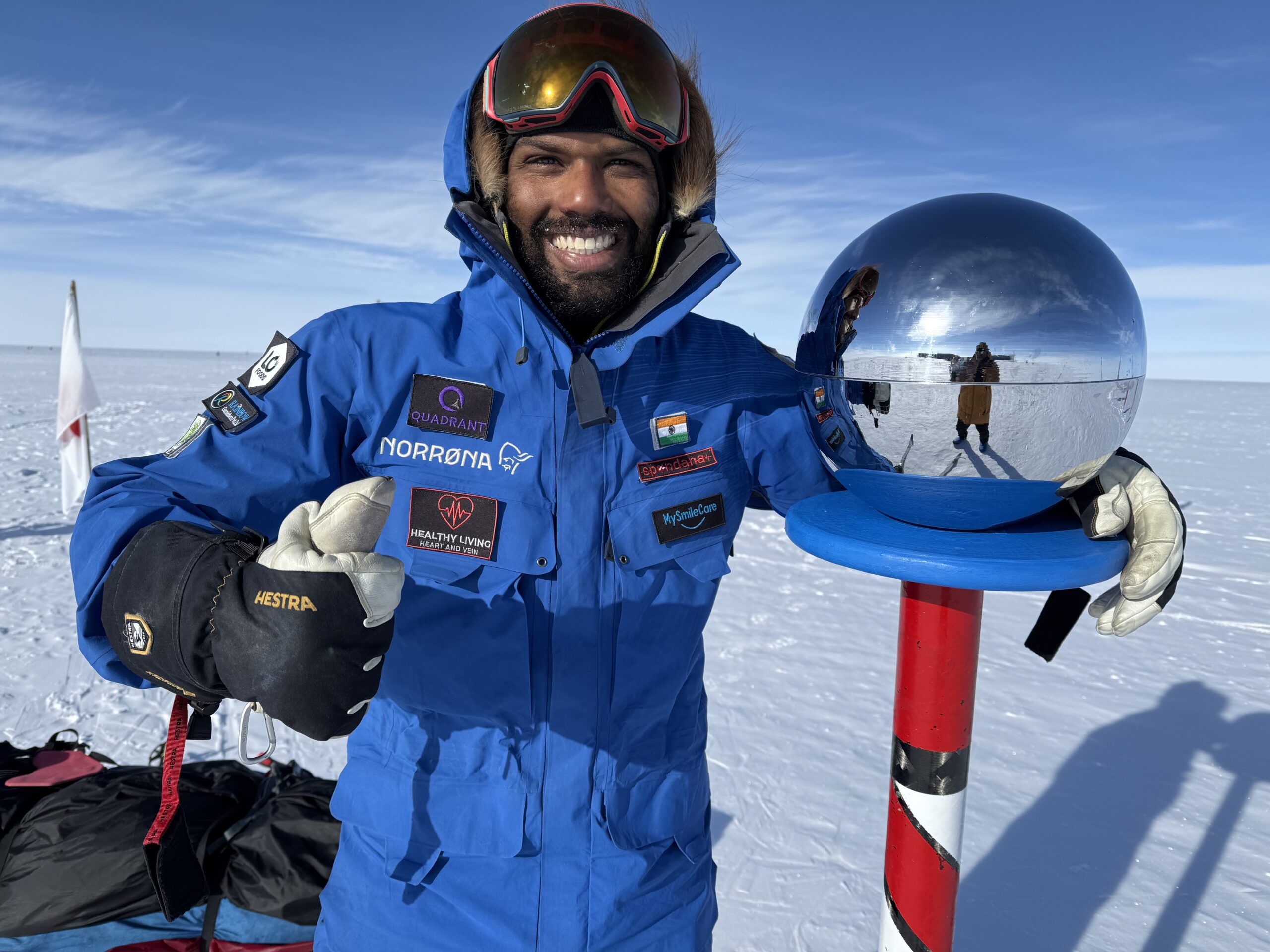
Rajshree Upadhyaya | Business Remedies | Satish Gogineni’s journey departs sharply from the conventional narrative of corporate advancement. Trained as an engineer and once committed to a stable professional trajectory, he now stands among a select group of Indian explorers undertaking some of the most demanding polar expeditions in the world. His shift from structured corporate life to extreme environments was not motivated by adventure alone. It emerged from a period of profound personal loss and introspection following the death of his mother — a moment that compelled him to confront the cultural reticence around grief and mental health within South Asian households. He spoke about this transformative phase in a candid conversation with the Business Remedies team.
Through True North Expeditions and Project Spandana, Gogineni has positioned exploration as a medium for public engagement rather than personal accomplishment. By navigating some of the most unforgiving terrains on the planet, he seeks to advance conversations on emotional resilience, mental-health awareness, inclusivity and the therapeutic potential of the natural world. His work underscores how outdoor experiences can serve not only as tests of endurance but also as frameworks for healing and community dialogue.
Here are some excerpts from the conversation.
Q1. From engineering to exploration, what made you leave your corporate career?
A. My journey was not driven by a desire to leave engineering. It began when I sensed a quiet shift within myself. My work gave me structure and stability, but after losing my mother and holding my grief alone, a growing emptiness settled into my daily life. Adventure started as an escape, but it quickly became a mirror that showed me who I truly was. In the mountains and in the polar regions, I felt present, grounded, and connected to myself in a way I had never experienced before. Each expedition helped me heal and process grief that I had been carrying for years. Eventually, I realised that exploration gave me purpose, clarity, and a way to transform my struggles into something meaningful. Leaving my corporate life was not about running away. It was about moving towards a life that felt honest and aligned with my values.
Q2. What are the objectives behind True North Expeditions?
A. True North Expeditions was born from my own journey of finding strength in the outdoors. When adventure changed my life, I realised how many people never get that chance because they feel excluded, intimidated, or believe it is only for the wealthy or highly experienced. I wanted to change that. True North focuses on giving people the skills, mindset, and confidence they need to step into nature safely and meaningfully. We teach outdoor preparation, safety, emotional resilience, and the deeper lessons that come from being outside your comfort zone. My hope is that others can experience the same clarity and self-belief that adventure gave me. The aim is not just to reach mountains. It is to help people discover their potential, build inner strength, and create a community where the outdoors becomes a source of healing, leadership, and true self-discovery. True North is my way of sharing the path that helped me rebuild my life.
Q3. What is mental health according to you, and how has its meaning changed?
 A. Mental health, to me, is the base on which everything else in life rests. It shapes how we think, feel, act, and connect with the world. For most of my life, I treated it as something to endure quietly. I believed that discipline, toughness, and silence would carry me through anything. That belief shattered when I lost family members to suicide and faced my own breaking point. Therapy opened my eyes. It taught me that mental health is not about being strong or weak. It is about understanding our emotions, making space for pain, and learning healthy ways to cope. Today, mental health means self-awareness, honesty, and the courage to seek help when life becomes overwhelming. It means accepting that struggle is human and that healing begins when we stop hiding. My perspective shifted from shame to compassion, from avoidance to conversation, and from simply surviving to truly rebuilding.
Q4. How is your physical environment connected to emotional health, especially in Project Spandana?
A. Physical and emotional environments deeply influence each other. When I am skiing alone across Antarctica or climbing in silence at high altitude, all distractions disappear and I am left with my own thoughts without escape. The cold, the wind, and the isolation reflect what emotional struggle feels like. Project Spandana uses this connection intentionally. The physical hardship of long expeditions mirrors the weight people carry inside when dealing with pain or grief. When I push through difficult terrain, I often think about how emotional resilience is built in the same way. Step by step and moment by moment. Being outdoors helped me face the emotions I avoided for years. Through Project Spandana, I hope to show people that healing can grow from discomfort and that resilience can be learned through presence, patience, and self-compassion.
Q5. How do your expeditions raise awareness about mental health and suicide prevention in South Asian communities?
A. I speak openly about my experiences because silence nearly destroyed me. When I share my history with therapy, grief, and losing family members, it helps break the stigma that still exists in many South Asian homes. People often believe that speaking about mental health is shameful or unnecessary, but seeing someone from our own community undertaking extreme expeditions while openly discussing these topics changes that perception. Through Project Spandana and partnerships with organisations like Mpower Minds, I combine adventure with education and conversation. My expeditions give me a platform to reach people who may never seek help on their own. When they see someone carrying emotional pain and still finding strength to stand at the South Pole, it inspires them to speak, to seek support, and to believe that they are not alone.
Q6. What obstacles did you face when quitting your job for full-time adventure, and what life skills helped you?
 A. The biggest obstacles were uncertainty and fear. Leaving a stable income and predictable routine created anxiety. I worried about disappointing people who supported me. I questioned whether I was making a reckless choice. But I also understood that staying where I was would eventually make me feel smaller. The skills that helped me were discipline, planning, problem solving, and resilience. These came from engineering, endurance training, and years of working in a high-pressure environment. I approached adventure the same way I approached large projects. I broke the goal into smaller steps, prepared with intention, and accepted that discomfort was part of growth. The transition was challenging, but trusting my values and believing in the purpose behind my work made every risk worthwhile.
Q7. Which achievement among all your records touched you the most?
A. Skiing solo and unsupported to the South Pole holds a special place in my heart. The journey forced me to confront every emotion I had avoided for years. Day after day, in complete solitude, I carried the memories of my mother and cousin and the pain that shaped my life. Reaching the Pole was not only a physical accomplishment. It was a personal transformation. It reminded me that healing is possible even when the journey feels impossible. It also gave me a powerful platform to speak about mental health and suicide prevention. The achievement became meaningful because it allowed my personal story to help others feel less alone.
Q8. What are your future goals for exploring and adventure?
A. My next major goal is a two-thousand-kilometre solo unsupported crossing of Antarctica. This journey will take close to eighty days and will test every part of my endurance and mental resilience. Beyond this expedition, I want to explore more remote parts of the world and continue building True North Expeditions so more people can access the outdoors safely. I also want every future journey to amplify the message of Project Spandana. Adventure gives me a stage, but raising awareness for mental health gives that stage purpose. The long-term goal is to blend exploration, education, and emotional well-being into a meaningful movement.
Q9. What changes do you hope to see in adventure sports regarding diversity and inclusion?
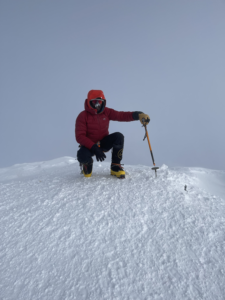 A. I hope to see a world where the outdoors feels accessible to everyone, not just people with certain backgrounds or resources. Many individuals from underrepresented communities never see themselves in adventure because they lack role models, financial access, or supportive environments. Representation matters. When someone sees an Indian skier crossing Antarctica, it expands their belief about what is possible. I want more training opportunities, mentorship programs, scholarships, and community spaces where beginners feel welcome. Adventure should not feel exclusive or intimidating. It should be a space where everyone can grow, heal, and discover their potential.
Q10. What advice do you have for young Indians who dream of exploring but feel limited by resources or fear?
A. Start small and stay consistent. You do not need expensive equipment or international expeditions to begin your journey. Start with local hikes, basic endurance training, or simple outdoor activities that build confidence. Fear is natural and I feel it as well. What matters is how you respond to it. Look for mentors, join communities, and learn from others who started with the same doubts. Resources will grow as your commitment grows. Your background does not define your potential. If someone like me, with no traditional outdoor foundation, can stand at the South Pole, then you can move toward your dream step by step. What matters most is belief, patience, and the willingness to start.
As Satish Gogineni prepares for some of the most demanding expeditions on Earth, his mission extends far beyond breaking records. His work blends exploration with advocacy, using the stark silence of the polar regions to amplify conversations that are often muted at home. In reframing adventure as a tool for healing and empowerment, Gogineni is carving a space where courage is measured not only in kilometres crossed, but in emotions confronted and communities inspired. His story is a reminder that resilience is built one step at a time, and that sometimes, the hardest journeys lead us back to ourselves.
 Interviewed & Edited By:
Rajshree Upadhyaya