
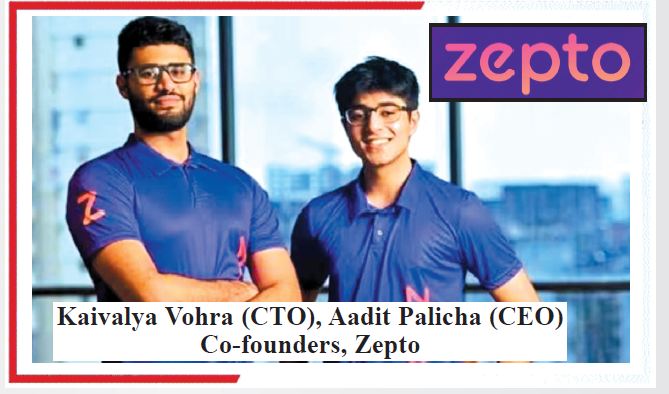
Business Remedies | Rajshree Upadhyaya | Jaipur | May 10,2025 | During the early months of the COVID-19 pandemic, as much of the world came to a standstill, two childhood friends found themselves back in Mumbai, far from the prestigious Stanford University where both had recently enrolled. Aadit Palicha and Kaivalya Vohra, childhood friends from Mumbai who grew up in Dubai, were no strangers to ambition. As teenagers, they had already launched and exited a ride-sharing startup called GoPool. But it was the forced pause of the pandemic that gave them the time and motivation to rethink their path. Frustrated by the inefficiencies in online grocery delivery during lockdown, they saw an opportunity that would soon reshape India’s commerce landscape.
Initially, they launched KiranaKart, a startup aimed at delivering groceries within 45 minutes by partnering with local kirana stores. While promising, the model lacked consistency and scalability. However, the experience taught them crucial lessons in supply chain logistics, consumer behavior, and the challenges of India’s retail ecosystem. These lessons became the foundation for their next, much bolder move. In 2021, they launched Zepto, a name inspired by the “zeptosecond,” one of the smallest units of time, symbolizing the company’s mission: ultra-fast delivery, promised in just 10 minutes.
Zepto didn’t begin as a fully formed business but as a WhatsApp group where early orders were fulfilled during lockdown. Yet the demand and enthusiasm were immediate. The founders quickly realized that to meet 10-minute delivery promises consistently, they needed more than just tech, they needed infrastructure. This led to the deployment of dark stores: small, strategically placed warehouses optimized for speed, stocked with a curated inventory, and powered by AI-driven logistics. Within months, Zepto began delivering at scale in major cities, meeting the needs of urban consumers who craved instant gratification.
Investor confidence followed quickly. In October 2021, Zepto secured $60 million in Series A funding, and by the end of the year, another $100 million had rolled in, pushing its valuation to over half a billion dollars. The company reached unicorn status in August 2023, valued at $1.4 billion, and just a year later, in December 2024, Zepto’s valuation had soared to $5 billion. Major investors such as Nexus Venture Partners, Lightspeed, and General Catalyst backed the startup, drawn to its relentless growth and operational discipline.
By early 2025, Zepto had built a network of over 900 dark stores, fulfilling more than a million orders daily across multiple cities. Its product catalog had grown to over 25,000 items, including not just groceries but also ready-to-eat meals, fresh produce, and personal care essentials. The company launched verticals like Zepto Café and Zepto Bloom, expanded its subscription-based Zepto Pass, and introduced tech-powered solutions to help farmers streamline production. Through it all, Zepto managed to retain a customer-first mindset, driven by real-time data, machine learning, and a highly optimized last-mile delivery network.
What sets Zepto apart isn’t just speed, it’s consistency. While competitors like Blinkit and Swiggy Instamart have chased similar goals, Zepto has carved out nearly 28% of the market by delivering not just fast, but reliably. This operational excellence is a result of rigorous execution, a lean mindset, and a tech-first culture. At the core of it all remain Aadit and Kaivalya, now just 22 and 21, who made headlines as two of the youngest founders on the Hurun India Rich List.
Their journey wasn’t without resistance. Convincing their families that dropping out of Stanford to chase a grocery startup was the right move wasn’t easy. But results silenced doubts. Today, Zepto is not only gearing up for a public listing in 2025 but is also eyeing international expansion, particularly in Southeast Asia and the Middle East. With a growing team, profitability in sight, and a model built for speed, Zepto isn’t just delivering goods—it’s delivering on the promise that youth, technology, and timing can still rewrite the rules of business.
 Written & Edited By:
Rajshree Upadhyaya