
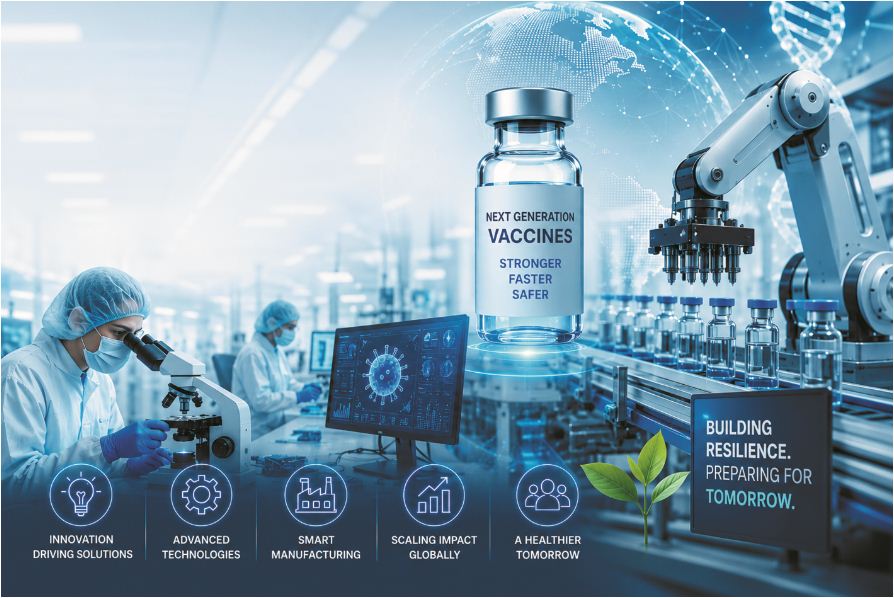
Jaipur | Charu Bhatia | The Covid-19 pandemic fundamentally transformed the global vaccine industry, accelerating innovation, investment and manufacturing capacity at an unprecedented pace. What was once considered a slow-moving sector has evolved into one of the fastest-growing segments of the pharmaceutical industry, driven by technological advancements, public-private partnerships and the need for stronger healthcare preparedness. As countries shift from pandemic response to long-term resilience, vaccine manufacturing is entering a new era, one focused on speed, flexibility and global accessibility. One of the biggest changes has been the rise of platform technologies such as mRNA vaccines. While these technologies gained prominence during the pandemic, pharmaceutical companies are now exploring their use for influenza, respiratory syncytial virus (RSV), cancer immunotherapy and rare diseases. Experts believe platform-based vaccine development could significantly reduce the time required to respond to future outbreaks.
Another major trend is the expansion of manufacturing infrastructure. Governments across the world are investing in domestic vaccine production to reduce dependence on imports and strengthen supply chain resilience. India, already known as the “pharmacy of the world,” has emerged as a key manufacturing hub, with companies expanding facilities for both traditional and next-generation vaccines.
The industry is also witnessing greater adoption of digital manufacturing technologies. Artificial intelligence, automation and data analytics are helping manufacturers optimise production, monitor quality in real time and reduce operational costs. Smart factories equipped with advanced monitoring systems are expected to improve efficiency while ensuring compliance with stringent regulatory standards. Diversification has become another strategic priority. Rather than focusing solely on Covid-19 vaccines, manufacturers are building portfolios targeting diseases such as dengue, malaria, tuberculosis, HPV and antimicrobial resistance. Rising demand for adult immunisation and booster programmes is also creating new commercial opportunities beyond childhood vaccination.
Contract Development and Manufacturing Organisations (CDMOs) are expected to play a larger role in the coming years. Many pharmaceutical companies are increasingly outsourcing vaccine production to specialised manufacturers, enabling faster scale-up while reducing capital expenditure. Despite these opportunities, challenges remain. High research and development costs, evolving regulatory requirements, cold-chain logistics and equitable access continue to influence the industry’s growth. Manufacturers are also working to address vaccine hesitancy through greater transparency and public engagement. According to industry estimates, the global vaccine market is expected to witness sustained growth over the next decade, supported by increasing government healthcare spending, emerging infectious diseases and advances in biotechnology.
The post-Covid landscape has made one thing clear: vaccine manufacturing is no longer viewed solely as a public health necessity but as a strategic industry with significant economic and technological value. Companies that invest in innovation, scalable production and resilient supply chains are likely to shape the future of global healthcare while strengthening preparedness for the next public health emergency.