


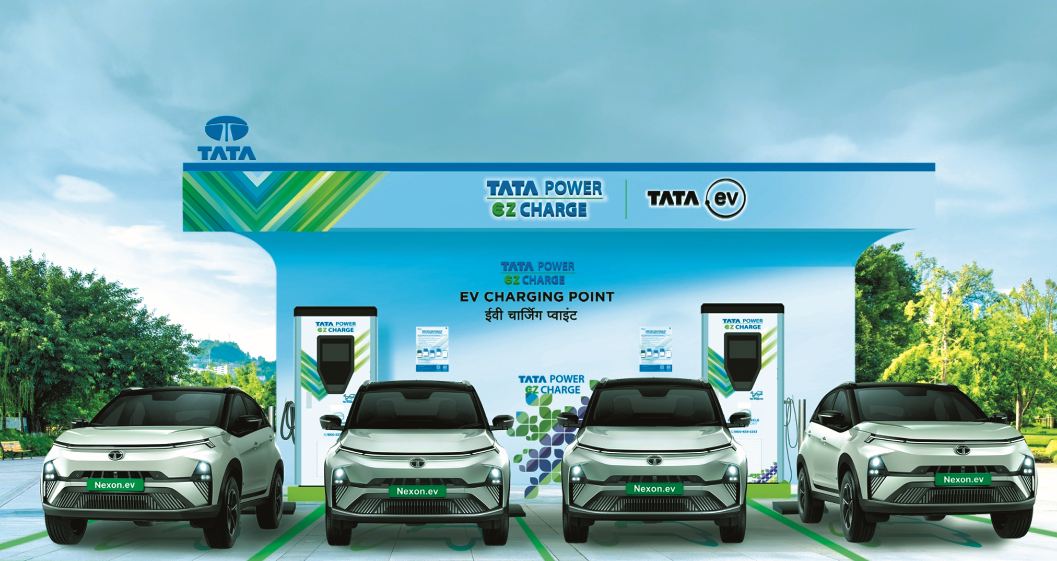
Shruti Kothari | Jaipur, March 1 | In a significant push towards boosting India’s electric vehicle (EV) ecosystem, Tata Motors has announced plans to expand its EV charging station network to 400,000 stations across the country by 2027. This move aligns with the company’s vision to accelerate EV adoption and support India’s clean mobility goals. The initiative will more than double the current number of charging stations, addressing range anxiety and enhancing the overall EV user experience.
Expansion of Charging Infrastructure
Currently, India has approximately 18,000 public EV charging stations. Tata Motors, through its subsidiary Tata Power, has already deployed over 50,000 charging points across various cities and highways. The company now aims to install an additional 30,000 public charging points, focusing on highways, metro cities, and rural areas to ensure seamless long-distance EV travel. Furthermore, a ‘Mega Charger’ network with 120-kilowatt fast-charging units will be introduced across 500 strategic locations, making high-speed charging more accessible to all EV users.
“We are committed to strengthening India’s EV infrastructure to encourage widespread adoption. Expanding our charging network will address range anxiety and enhance customer confidence in EVs,” said a senior executive at Tata Motors.
Collaborations and Investment Strategy
To achieve this ambitious target, Tata Motors is strengthening partnerships with key charging point operators (CPOs), fuel station networks, and retail chains. The company is also engaging with state governments to facilitate incentives and subsidies that will fast-track charging station installations. Industry analysts estimate that this expansion will require an investment of over Rs. 15,000 crore over the next five years. The ‘Open Collaboration 2.0’ framework, launched in 2023, has already facilitated the installation of over 18,000 public charging points in just 15 months. Tata Motors aims to further leverage this model to scale up its EV infrastructure at an accelerated pace.
Government Support and Future Outlook
The Indian government has been actively promoting EV adoption, with a goal of achieving 30% EV penetration in the passenger vehicle
segment by 2030. To support this vision, the government has allocated Rs. 2,000 crore (approximately $230 million) under the PM E-Drive Scheme for setting up public fast-charging stations, valid until March 2026. This financial backing is expected to complement Tata Motors’ expansion plans, making charging infrastructure more robust and accessible nationwide.
Impact on EV Adoption in India
Tata Motors has been at the forefront of India’s EV market, leading the segment with popular models such as the Nexon EV and Tigor EV. With a well-established charging network, the company aims to further boost consumer confidence in electric mobility, driving India closer to its clean energy goals. A comprehensive and widespread charging infrastructure is essential to eliminating range anxiety, which remains a key barrier to EV adoption.
“With a reliable charging network, we anticipate a massive shift towards electric mobility in the coming years,” said an industry analyst. Tata Motors’ commitment to expanding EV infrastructure is expected to play a pivotal role in transforming India’s automobile sector.
Way Forward
Tata Motors’ ambitious plan to scale India’s EV charging infrastructure to 400,000 stations is set to revolutionize the country’s electric mobility landscape. By collaborating with stakeholders and leveraging government support, the company is poised to create a sustainable and
well-connected EV ecosystem. As both the public and private sectors work towards a greener future, India’s EV infrastructure is set for a transformative shift, making clean mobility a mainstream reality.