


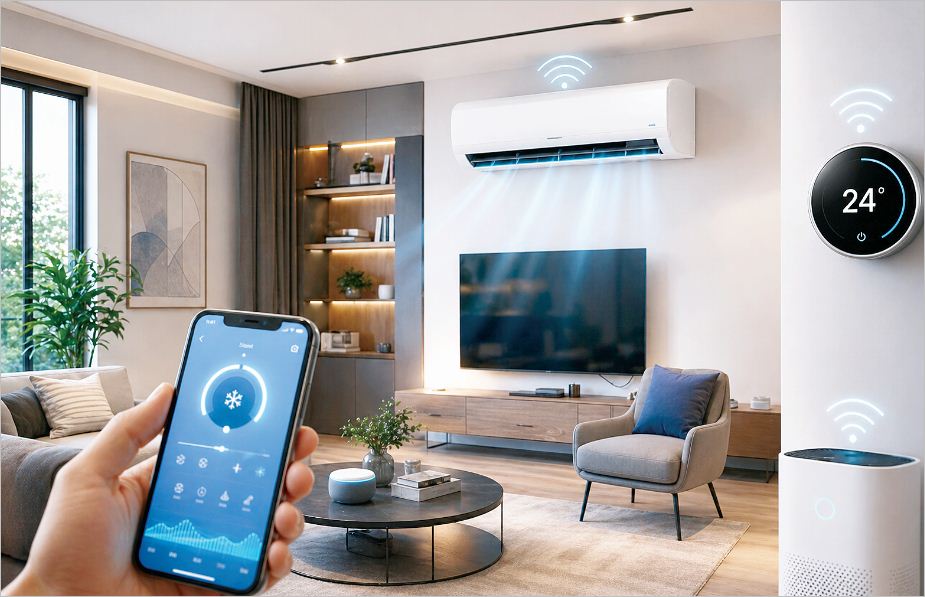
Jaipur | Charu Bhatia | As summers grow longer and heatwaves intensify, keeping homes cool is no longer just about comfort, it’s becoming a necessity. This shift is quietly transforming the consumer electronics market, giving rise to a fast-growing category: smart home cooling systems. From app-controlled air conditioners to AI-powered climate automation, cooling technology is evolving into one of the most promising segments in the smart home ecosystem.
For years, smart homes were associated with lighting, security cameras, and voice assistants. Today, cooling solutions are joining that list as consumers look for ways to manage rising temperatures while keeping electricity bills under control. With energy costs climbing and sustainability concerns growing, smart cooling is quickly moving from luxury to mainstream.
At the centre of this trend are smart air conditioners and connected thermostats. Unlike traditional cooling appliances, these systems allow users to control temperature remotely through smartphone apps or voice assistants. Homeowners can turn on the AC before arriving home, schedule cooling cycles, or monitor energy usage in real time. This level of control is especially appealing in countries with extreme summers, where cooling accounts for a large portion of household electricity consumption.
Artificial intelligence is taking this technology a step further. Many new systems now learn user behaviour and automatically adjust cooling patterns. For instance, AI-powered climate control can reduce cooling when residents leave the house and resume it before they return. Over time, these systems optimise usage to maintain comfort while reducing energy waste.
Another driver of growth is the increasing popularity of smart fans, air purifiers, and hybrid cooling devices. Smart ceiling fans and air coolers can sync with weather data, humidity levels, and indoor air quality sensors to create a more balanced indoor environment. This integration turns cooling into a holistic climate-management system rather than a single appliance.
Energy efficiency is a major selling point. Smart cooling systems promise lower electricity bills by preventing unnecessary usage and providing detailed consumption insights. As governments and consumers push for greener lifestyles, energy-saving features are becoming a strong purchase motivator. The rise of remote work has also boosted demand. With more people spending long hours at home, the need for comfortable indoor environments has increased significantly. Consumers are now investing in technology that ensures consistent comfort throughout the day. Industry experts believe the next phase will focus on fully automated climate ecosystems, where cooling systems interact seamlessly with smart windows, blinds, and solar panels. This integrated approach could redefine how homes manage temperature and energy. As smart home adoption accelerates, cooling technology is emerging as a key battleground for consumer tech brands. In a world facing rising temperatures, smart cooling may soon become an essential part of everyday living.