
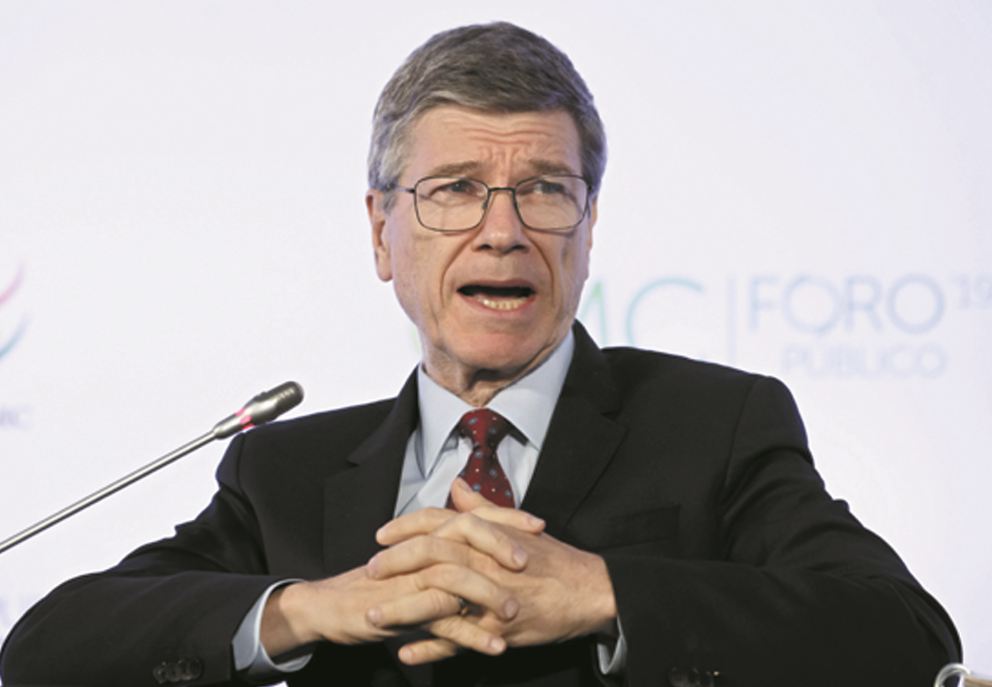
Shruti Kothari | Jaipur | Renowned economist and Columbia University professor Jeffrey Sachs has emphasized that India is unlikely to align with the United States in opposition to China, highlighting India’s distinct and independent foreign policy objectives. In a discussion with Professor John Mearsheimer, Sachs remarked, “I do not believe India is an ally of the United States. India is a superpower; India is not going to be an ally of the United States; India is going to have its own very distinctive interests.”
Sachs further elaborated on the strategic dynamics, noting that the U.S. aims to draw India into an anti-China coalition. He cautioned against this approach, stating, “Aligning with the United States… against China would be a dreadful mistake, economically and geopolitically.” He advocated for strengthened economic and diplomatic ties between India and China, emphasizing that cooperation within the Asian region is crucial for sustainable development. India’s foreign policy has consistently reflected a commitment to strategic autonomy. This is evidenced by its simultaneous participation in diverse international groupings such as the Quadrilateral Security Dialogue (QUAD), BRICS, and the Shanghai Cooperation Organization (SCO). This multifaceted engagement underscores India’s intent to maintain balanced relations globally, rather than aligning exclusively with any single power bloc. Furthermore, India’s decision to abstain from the Regional Comprehensive Economic Partnership (RCEP) was highlighted by Sachs as indicative of the nation’s cautious approach to regional agreements. He expressed disappointment over this move, suggesting it reflects a lack of clarity in India’s long-term economic strategy.