

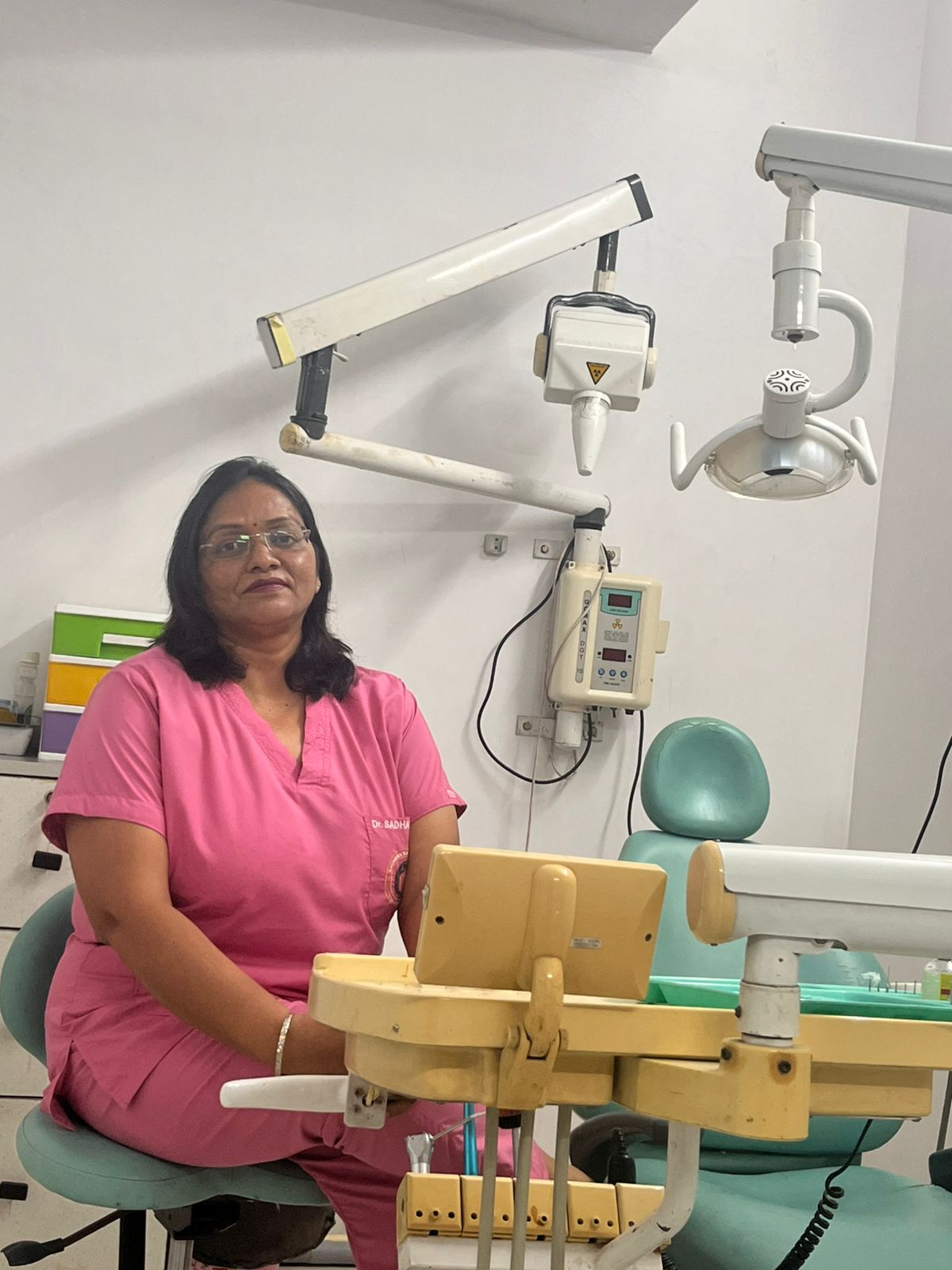
Exclusive Interview | Dr. Sadhana Jain Discusses AI in Dentistry, Oral Hygiene, Dental Awareness, Patient Care and the Future of Dental Science with Charu Bhatia, Senior News Editor, Business Remedies
Dentistry has witnessed a remarkable transformation over the years, with advancements in artificial intelligence, digital imaging, implants and minimally invasive procedures making treatments more accurate and accessible. Yet, a lack of awareness and delayed treatment continue to pose major challenges.
In this exclusive interview, Dr. Sadhana Jain, a renowned Dentist at Pradaksh Hospital, Jaipur, shares her journey in dentistry, discusses the impact of technology on oral healthcare, highlights the importance of preventive dental care, and explains why regular check-ups can make all the difference in maintaining overall health.
Q. Could you tell us about your journey in dentistry and what inspired you to pursue this profession?
A. Like many students, my initial aspiration was to study medicine. Dentistry was not my first choice, but life often takes us in unexpected directions. After counselling, I was offered admission to Modern Dental College in Indore, and that became the beginning of my professional journey.
Throughout my academic years, I remained sincere and committed to learning. After completing my internship in Dental Sciences in 2007, I took a year’s break to prepare for postgraduate studies. In 2008, I joined Shraddha General Hospital, Ratlam, which became my real training ground. Beyond dentistry, I gained exposure to multidisciplinary patient care and learnt aspects of nursing, physiotherapy and holistic healthcare that shaped my understanding of treating patients comprehensively.
Following marriage, I moved to Jaipur and worked at Jain Dental Hospital, where I had the opportunity to further refine my clinical skills. Later, in 2021, I joined ML Spine Center, where I became familiar with modern dental equipment, digital technologies and advanced treatment techniques. The experience helped me update my clinical knowledge and embrace technological innovations.
Eventually, I established my own dental practice at Pradaksh Hospital in Jaipur, where my focus has remained on delivering ethical, patient-centred and evidence-based dental care.
Q. What were the biggest challenges you faced during the early years of your career?
A. The dental profession has changed dramatically over the last two decades. When I completed my internship in 2007, smartphones were not widely available, online learning 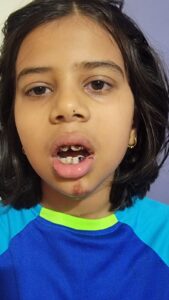 resources were limited and staying updated with the latest research required tremendous effort.
Technology itself was evolving. Digital X-rays were not common, and many procedures that are routine today required more time and precision back then. One of the greatest challenges has been continuously adapting to new technologies and treatment methods.
For example, root canal treatment has undergone tremendous advancement. Between 2010 and 2020 alone, dentistry witnessed major innovations, including rotary instruments, advanced implant systems and clear aligners replacing conventional braces for many patients.
Today’s dental graduates are introduced to advanced technology much earlier than previous generations. For practising dentists, however, continuous learning through seminars, workshops and professional training remains essential.
Another challenge is patient awareness. Many people rely on painkillers or home remedies instead of consulting a dentist. By the time they seek treatment, the condition has often progressed significantly, making procedures more complicated.
Even routine practices like brushing twice daily, especially before bedtime, are ignored by many. While technologies like AI, digital imaging and advanced instruments have simplified treatments, certain clinical situations, such as difficult tooth alignment, excessive saliva or anatomical variations, continue to present challenges that patients may not fully appreciate.
Q. How is artificial intelligence transforming dentistry?
A. Artificial intelligence is becoming an important tool in modern dentistry, although it complements rather than replaces clinical judgement. AI can assist in smile designing by helping patients visualise expected treatment outcomes. It also supports clinicians by analysing CBCT scans, digital X-rays and CT images with greater efficiency, allowing more accurate diagnosis and treatment planning.
Modern dentistry now uses technologies such as rotary instruments for root canal procedures, intraoral scanners, advanced dental implants, veneers, ultrasonic devices and Cone Beam Computed Tomography (CBCT), which provides highly detailed three-dimensional images of teeth, jawbones and surrounding structures. These technologies enable dentists to plan treatments with greater precision, minimise complications and improve patient comfort. AI can also assist in locating root canals and interpreting imaging data, making procedures faster and more predictable.
Q. How do modern lifestyles influence oral health?
A. Lifestyle plays a crucial role in maintaining healthy teeth and gums.
Earlier, pyorrhoea, mainly caused by poor oral hygiene, was among the most common dental conditions. Today, dietary habits have changed considerably. Increased consumption of sugary drinks, processed foods and junk food has led to a rise in cavities and gum diseases.
Simple lifestyle changes can make a significant difference. Eating a balanced diet rich in fresh fruits, vegetables and salads, staying well-hydrated and limiting sugary snacks help reduce the risk of dental problems. Another noticeable trend is the increasing number of impacted wisdom teeth. Changes in jaw structure over generations mean there is often insufficient space for wisdom teeth to erupt properly, leading to pain, infection and the need for surgical removal. Cosmetic awareness has also increased. Many people today seek aligners to correct crowding and improve their smile, reflecting growing interest in both dental health and aesthetics.
Q. How would you assess Rajasthan’s dental healthcare landscape today?
A. Rajasthan has made considerable progress over the years. More dental colleges and educational institutions have been established, creating opportunities for professional education and improving the availability of dental services.
India has also emerged as a destination for dental tourism because it offers high-quality treatment at comparatively affordable costs. Patients from different parts of the world increasingly visit the country for procedures such as implants, cosmetic dentistry and full-mouth rehabilitation.
However, one significant gap remains the absence of comprehensive dental insurance coverage. Many patients still pay out of pocket, which can discourage timely treatment.
Q. Do you think the government provides adequate support to dentistry?
A. There is certainly room for improvement. Although dental colleges have increased in number, employment opportunities have not expanded proportionately. Every year, many graduates complete their studies, but government vacancies remain limited.
Certain healthcare schemes also have eligibility criteria and reimbursement structures that make participation difficult for many dental practitioners. Inseveral cases, reimbursement rates do not adequately cover the actual cost of treatment, making quality dental care financially challenging.
Greater policy support, better employment opportunities and practical reimbursement models could strengthen the dental healthcare system considerably.
Q. How has the doctor-patient relationship evolved over the years?
A. Patients today are more informed than before, which is a positive development. However, there is often a gap between expectations and the actual cost of quality dental care.
Becoming a dentist requires years of education, followed by substantial investments in setting up a clinic, purchasing advanced equipment and maintaining high standards of sterilisation and patient safety.
Many patients understandably seek affordable treatment, but quality dentistry involves significant costs related to materials, technology and expertise. A balance must be maintained where patients receive effective treatment while understanding the value of professional dental care.
Building trust through communication remains one of the most important aspects of the doctor-patient relationship.
Q. What are your recommendations for maintaining good oral hygiene?
A. Prevention is always better than treatment. Brushing twice a day is perhaps the single most important habit for maintaining healthy teeth. Night-time brushing is particularly essential because it removes food particles and plaque accumulated during the day.
Regular dental check-ups every six months help identify problems before they become serious. Professional scaling is equally important because it removes tartar deposits that cannot be eliminated through brushing alone and helps maintain healthy gums.
Oral care should begin early in life. Even infants benefit from gentle cleaning of the gums using soft cotton, while young children should gradually be introduced to brushing with parental guidance.
Q. How closely is oral health connected with overall health?
A. Oral health and general health are deeply interconnected. Many people believe that dental care is necessary only when there is pain. In reality, infections originating in the mouth can affect other parts of the body if left untreated.
The mouth naturally contains a complex ecosystem of bacteria, known as the oral flora. Maintaining its balance is essential because untreated infections can contribute to systemic health issues. Regular dental examinations are important even in the absence of symptoms, as many conditions develop silently before becoming painful.
Q. What are your views on research and education in dental science?
A. Dentistry is evolving rapidly through research. Scientists in countries such as Japan are exploring the possibility of regenerating teeth using stem-cell-based technologies. Such breakthroughs have the potential to transform dental treatment in the future.
In India, expanding postgraduate seats, creating more employment opportunities and providing practical clinical training would strengthen the profession. Primary Health Centres (PHCs) and Community Health Centres (CHCs) should also receive basic dental training so that patients in rural areas receive preliminary care before reaching specialised centres. Investment in research, education and clinical exposure will benefit both dental professionals and patients.
Q. What message would you like to give aspiring dentists?
A. Dentistry is a rewarding profession, but it demands commitment, patience and continuous learning. Success requires dedication, attention to detail and genuine concern for patients. The profession is physically and mentally demanding, and keeping pace with technological advancements is essential.
For those who are passionate about healthcare and willing to work hard, dentistry offers the opportunity to transform lives by restoring both oral health and confidence.
Patient Success Stories: Cases That Highlight the Importance of Timely Dental Care
One of the most memorable cases involved a young child, Harshvardhan Singh, who lost his front teeth after a fall in 2021. Because the roots of the teeth had not fully developed, Root Canal was not possible immediately but implantation was done. Instead, a dental splint was used to stabilise the injured teeth, allowing proper healing before definitive treatment. Careful planning ultimately resulted in successful restoration.
Another remarkable case was that of seven-year-old Dhani, who suffered complete tooth avulsion following an accident. During the emergency consultation, her family was advised to retrieve the displaced teeth immediately and transport them in milk or saline solution. Because they reached the clinic within the critical “golden hour,” the natural teeth could be successfully replanted, preserving the child’s original smile.
A third case involved Zaheen Khan, who had lived with extensive tooth loss for several years due to hesitation and social stigma. After seeking treatment, she underwent comprehensive full-mouth rehabilitation. Multiple root canal treatments were performed, followed by crowns on numerous teeth, restoring both oral function and self-confidence. The transformation significantly improved her quality of life and highlighted the importance of seeking timely dental care rather than delaying treatment.


