

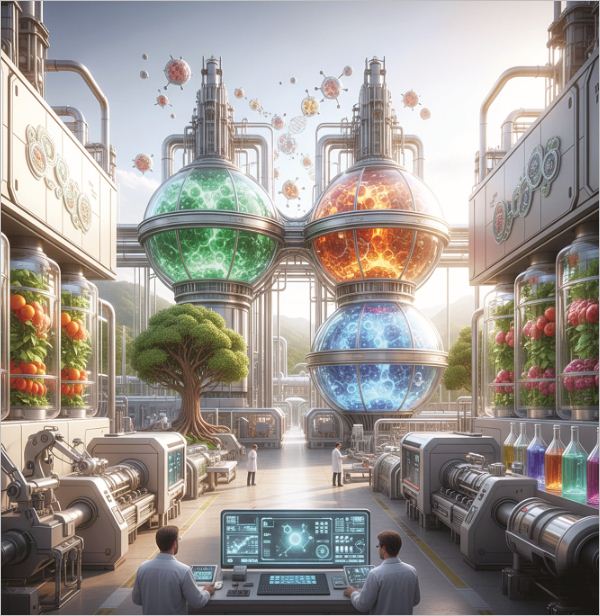
Charu Bhatia | Business Remedies | Biotechnology is rapidly emerging as a transformative force in food and chemical processing, redefining how industries manufacture, preserve and enhance products. Once confined largely to pharmaceuticals and healthcare, biotech applications are now driving efficiency, sustainability and innovation across industrial production lines.
In food processing, enzymes and microbial technologies are streamlining operations while improving product quality. Enzyme-based solutions are being widely adopted in dairy, baking and beverage manufacturing to enhance texture, flavour and shelf life. For instance, lactase enzymes enable the production of lactose-free dairy, while specialised cultures improve fermentation processes in products ranging from yogurt to plant-based alternatives. These technologies not only optimise output but also reduce waste and energy consumption.
The rise of alternative proteins and plant-based foods has further accelerated biotech integration. Precision fermentation and cellular agriculture are enabling manufacturers to replicate animal-based ingredients without traditional livestock farming. This shift is attracting significant venture capital and strategic investments, positioning biotech-enabled food processing as a high-growth segment globally.
In the chemical processing sector, biotechnology is supporting the transition towards greener and more sustainable production models. Bio-based chemicals derived from renewable feedstocks such as agricultural waste are replacing petroleum-based inputs in plastics, solvents and specialty chemicals. Industrial biocatalysts are helping reduce high-temperature and high-pressure processing requirements, lowering carbon emissions and operational costs.
Governments and regulators are also playing a role in shaping this transition. Incentives for sustainable manufacturing, stricter environmental norms and growing ESG expectations are encouraging companies to adopt bio-based processes. For emerging economies aiming to strengthen export competitiveness, biotech integration offers a pathway to meet global sustainability benchmarks.
However, scaling biotechnology in industrial processing is not without challenges. High initial capital expenditure, regulatory approvals and the need for specialised technical expertise can slow adoption. Supply chain readiness for bio-based raw materials also remains a concern in certain markets.
Despite these hurdles, the long-term outlook remains strong. As consumer demand shifts towards cleaner labels, sustainable sourcing and environmentally responsible production, biotech-driven processing solutions are becoming less optional and more strategic. For food and chemical processors seeking cost optimisation, innovation and regulatory alignment, biotechnology is no longer a niche experiment, it is fast becoming central to the industry’s next growth cycle.