


Jaipur | Charu Bhatia | For decades, India’s agricultural landscape has been dominated by wheat and rice, supported by government procurement, subsidies, and established supply chains. However, changing consumer preferences, climate challenges, and rising export opportunities are prompting farmers to explore alternative crops that offer better profitability and long-term sustainability. Agriculture experts believe the next phase of India’s farm economy will be driven by diversification rather than dependence on traditional staples.
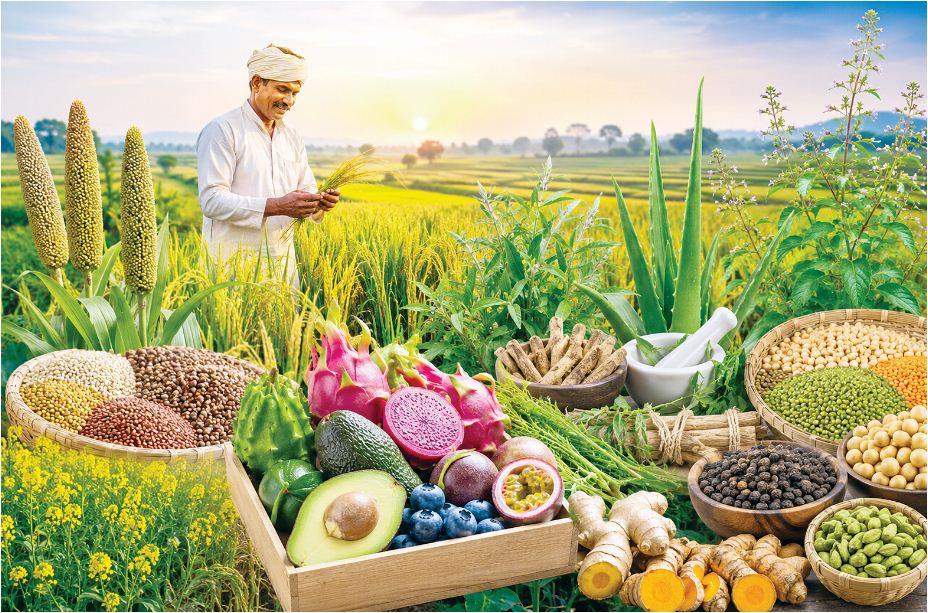
One of the biggest beneficiaries of this shift is the millet sector. Once considered a coarse grain, millets have gained popularity among health-conscious consumers due to their high nutritional value and lower water requirements. The government’s promotion of millets and growing global demand for gluten-free foods have opened new opportunities for farmers in states such as Karnataka, Rajasthan, and Maharashtra.
Another emerging category is exotic and high-value fruits. Dragon fruit, avocado, blueberries, and passion fruit are increasingly finding buyers in urban retail chains and premium hospitality markets. Farmers are being attracted by higher margins compared to conventional crops, especially as cold-chain infrastructure and organised retail networks expand.
Medicinal and aromatic plants are also gaining traction. Crops such as ashwagandha, lemongrass, stevia, aloe vera, and tulsi are witnessing growing demand from the pharmaceutical, nutraceutical, and wellness industries. With India’s herbal products market expanding rapidly, cultivation of medicinal plants is becoming a viable business opportunity for small and medium-sized farmers.
The rise of plant-based foods and health supplements is creating fresh demand for pulses and protein-rich crops as well. Soybean, chickpeas, and specialty lentils are increasingly being used by food manufacturers catering to consumers seeking healthier diets. Meanwhile, spices continue to offer strong export potential. Turmeric, ginger, black pepper, cardamom, and cumin are benefiting from rising global demand for natural ingredients and functional foods. India remains one of the world’s largest spice exporters, creating opportunities for farmers willing to invest in quality and traceability.
Climate change is another factor influencing crop choices. Water-intensive crops such as rice are becoming harder to sustain in several regions due to declining groundwater levels and erratic rainfall. Drought-resistant crops, including millets, pulses, and oilseeds, are emerging as practical alternatives. The trend reflects a broader transformation in Indian agriculture, from volume-driven production to value-driven farming. As consumers seek healthier foods, global markets demand specialised products, and climate pressures reshape cultivation patterns, farmers are increasingly looking beyond wheat and rice. For many, the future of farming may not lie in growing more of the same crops, but in cultivating what the market and environment increasingly demand.


