
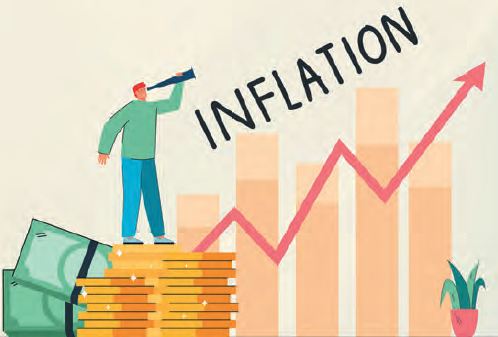
Charu Bhatia | Jaipur | Business Remedies | Inflation is the overall rise in the prices of goods and services over time. It has significant effects on consumers, businesses, investors, and the overall economy. Moderate inflation has been a fact of life for more than a century. It’s important to distinguish between the inherent effects of inflation at any rate and those that only come into play when inflation runs unusually high.
Inflation has some major impacts on the economy and people.
1. Inflation Erodes Purchasing Power
This is inflation’s primary and most pervasive effect. An overall rise in prices over time reduces the purchasing power of consumers because a fixed amount of money will afford progressively less consumption. Consumers lose purchasing power regardless of whether the inflation rate is 2% or 4%. They simply lose it faster when it’s a higher rate.
2. Inflation Impacts Lower-Income Consumers
Low-income consumers tend to spend a higher proportion of their incomes on necessities than those with higher incomes. They have less of a cushion against the loss of purchasing power that’s inherent in inflation.
Policymakers and financial market participants often focus on core inflation. This measurement of inflation excludes the prices of food and energy because they tend to be more volatile and less reflective of longer-term inflation trends. But earners with lower income spend a relatively large proportion of their weekly or monthly household budgets on food and energy, commodities that are hard to substitute or go without when prices spike.
3. Inflation Feeds on Itself When It’s High
A little inflation can signal a healthy economy, so, it’s not likely to cause inflation expectations to rise. It’s mostly background noise if inflation was 2% last year and is 2% this year. Businesses, workers, and consumers would likely expect inflation to remain at 2% next year in that scenario.
But expectations of future inflation will begin to rise accordingly when the inflation rate accelerates sharply and stays high. Workers start demanding larger wage increases as those expectations rise and employers pass those costs on by raising prices on output, setting off a wage-price spiral.
4. Inflation Raises Interest Rates
Governments and central banks have a powerful incentive to keep inflation in check. A common approach over the past century has been to manage inflation by using monetary policy. Policymakers can raise the minimum interest rate, driving borrowing costs higher across the economy, by constraining the money supply when inflation threatens to exceed a central bank’s target.
5. Inflation Can Cause Painful Recessions
The trouble with the trade-off between inflation and unemployment is that prolonged acceptance of higher inflation to protect jobs can cause inflation expectations to rise to the point where they set off an inflationary spiral of price hikes and pay increases.
6. Inflation Boosts Real Estate, Energy, and Value Stocks
Real estate has historically served as a hedge against inflation because landlords can protect themselves by raising rents even as inflation erodes the real cost of fixed-rate mortgages.
Rising commodity prices can cause inflation to accelerate. Commodities can change when growth slows.This is particularly true of energy commodities that tend to continue to outperform. Energy equities, real estate investment trusts (REITs), and value stocks have historically outperformed during episodes of high or rising inflation.


